.webp)
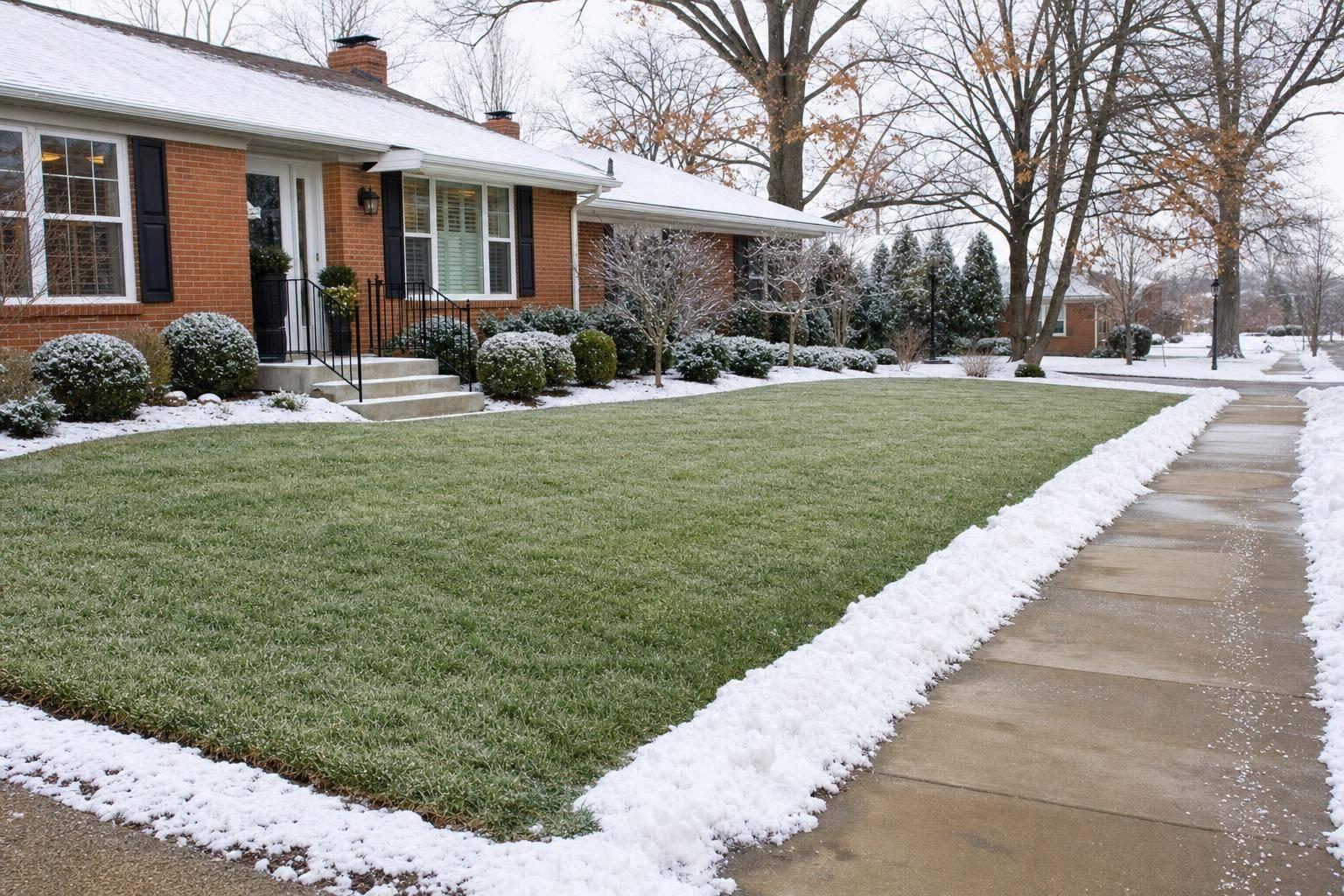
Your Louisville lawn gets through winter best when you stop focusing on the date and start watching the soil.
If you want to limit winter turf damage, your main jobs are simple: keep mowing until growth stops, finish the last cut at 2–3 inches, remove leaves and debris, stay off frozen or soaked grass, control snow piles and salt near lawn edges, water only during dry spells when soil is thawed, and finish aeration, overseeding, drainage work, and irrigation shutdown before hard freezes.
Louisville lawns often use cool-season grass such as tall fescue, Kentucky bluegrass, and perennial ryegrass. These grasses slow down when soil temperatures stay around 45°F to 50°F. Winter stress often comes from wet soil, freeze-thaw swings, foot traffic, leaf buildup, salt runoff, and ice in low spots.
Here’s the short version:
- Late October to mid-November is often the window for final mowing and cleanup
- Set the last mow at 2–3 inches
- Avoid walking or driving on frozen or saturated turf
- Water only if there has been about 3 weeks without solid rain or snow, and only when the ground is not frozen
- Use a screwdriver or soil probe; if it goes in 4–6 inches, the soil can take water
- Move snow away from turf when possible and keep salt off grass edges
- Finish irrigation winterization before the first hard freeze
- Check the lawn during winter thaws and note thin, wet, or icy spots for spring repair
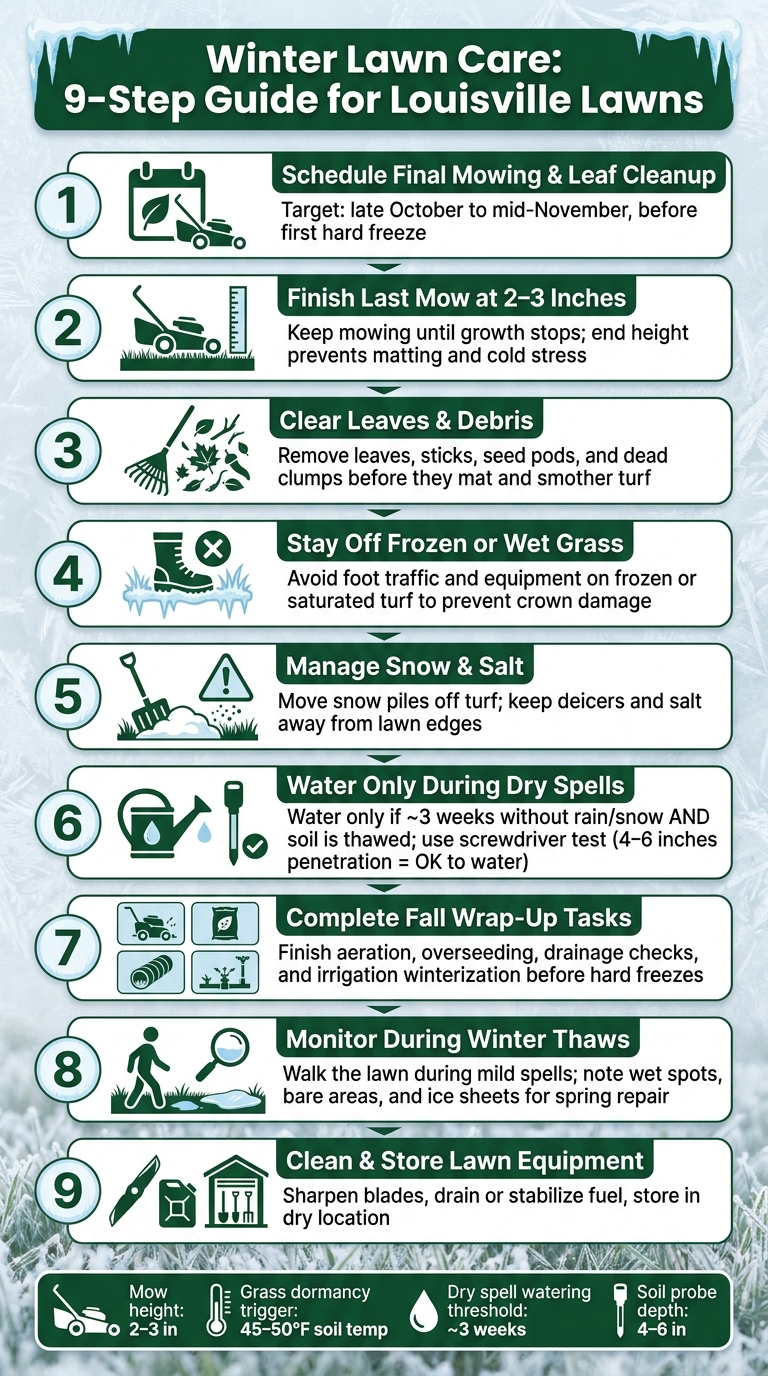
Winter Lawn Care Checklist for Louisville Properties
Master Cool-Season Lawn Care Before Winter
sbb-itb-1c58166
Quick Comparison
| Winter lawn task | What to do | Why it matters |
|---|---|---|
| Final mowing | Keep mowing until growth stops; end at 2–3 inches | Helps limit matting and cold stress |
| Leaf cleanup | Remove leaves, sticks, seed pods, and dead clumps | Cuts down on smothering and trapped moisture |
| Foot traffic | Keep people and equipment off wet or frozen grass | Helps avoid crown damage, bruising, and soil packing |
| Snow and salt | Keep snow piles and deicer away from lawn edges | Helps limit salt burn and meltwater trouble |
| Winter watering | Water only during dry spells and only on thawed soil | Helps avoid wasted watering on frozen ground |
| Fall wrap-up | Finish aeration, overseeding, drainage checks, and irrigation shutdown before freezes | Helps the lawn head into winter with fewer weak spots |
| Winter checks | Inspect during mild thaws | Makes spring problem spots easier to find |
The rest of the article explains how to time each step and what to watch for during Louisville’s winter swings.
Why Winter Lawn Care Matters in Louisville
Winter lawn care helps reduce damage now and saves you from extra repair work in spring.
The main trouble starts when the lawn stays wet or frozen and people keep walking or driving on it.
Traffic on frozen turf can damage the base of the grass. Traffic on wet soil packs the ground down, which slows drainage and makes it harder for roots to bounce back.
Wet leaves, heavy snow piles, and road salt can smother, stress, or burn grass that's already under pressure. That’s why timing and cleanup come first.
1. Schedule Final Mowing and Leaf Cleanup Before Turf Stops Growing
For Louisville properties, the best time to wrap up mowing and leaf cleanup is late October through mid-November. That usually lines up before the first hard freeze or a major snowfall, and before cool-season grasses like tall fescue and Kentucky bluegrass fully stop growing.
These grasses don’t shut down all at once. They keep growing until soil temperatures stay below 45°F to 50°F. Once temperatures hit that range on a steady basis, growth starts to slow and the lawn begins moving toward dormancy. That’s your cue to finish the job.
Timing matters for a pretty simple reason: thick layers of leaves and grass that’s left too long can smother the lawn as it goes dormant. Cleaning up both before winter sets in helps the turf head into the cold season in better shape.
2. Keep Mowing Until Growth Stops, Then Finish at 2 to 3 Inches
For the last few mowings of the season, bring the mower height down a little for that final pass. Keep mowing as long as the grass is still growing, then stop when steady cold weather has clearly slowed things down.
In Louisville, cool-season grasses like tall fescue and Kentucky bluegrass should end the season at 2 to 3 inches. That height is short enough to help prevent matting from winter moisture, but not so short that it puts extra strain on the roots as the lawn heads into freeze-thaw weather.
If you cut the grass too short before dormancy, the turf is more likely to deal with cold stress and a slower comeback in spring. After that last mow, shift to leaf cleanup and debris removal before winter moisture settles in.
3. Clear Leaves and Debris Before They Smother the Lawn
Next comes leaf cleanup. In Louisville, wet leaves can mat down fast once winter sets in.
When leaves sit on the lawn, they block light and hold moisture against the grass. And with Louisville's damp winter weather, those leaf mats settle in even faster. That puts extra strain on turf during the cold months and can leave it weaker by the time spring rolls around.
It’s not just leaves, either. Clear away sticks, seed pods, and dead clumps too. Small stuff adds up, and a messy lawn can smother grass more than people think.
4. Keep Foot Traffic and Equipment Off Frozen or Wet Grass
Once the leaves are gone, the next step is simple: stay off the lawn when it's frozen or soaked.
Frozen grass is easy to snap. Even a few footsteps or tire tracks can leave brown marks behind. It doesn’t take much - walking or driving across frozen turf can bruise it and break the blades, even when the lawn looks fine at first glance.
Wet soil causes a different problem. Louisville winters often bring freeze-thaw swings that leave lawns saturated or waterlogged. When people or equipment move across that kind of ground, the soil gets packed down and water has a harder time draining. On top of that, traffic can crush the crown - the grass plant’s growing point - which slows spring recovery.
The safest move is to keep people, mowers, carts, and other equipment on walkways, driveways, and other paved surfaces until the lawn has thawed and drained.
5. Manage Snow and Ice to Protect Turf from Meltwater and Salt
After you avoid walking on frozen turf, the next problem tends to show up around driveways, sidewalks, and low spots.
Keep snow piles and road salt off lawn edges near driveways and sidewalks. In Louisville’s freeze-thaw weather, salt runoff can dry out and burn turf along the border first. And once that cycle starts, it can keep hitting the same strip of grass over and over. Snow melts, water runs off, temperatures drop, and that edge takes another hit.
Freeze-thaw swings can also hurt grass after it absorbs meltwater and then freezes again. Low spots are often the first place this shows up. Water collects there, turns into a sheet of ice, and cuts off oxygen from the grass underneath. That’s bad news for turf that’s already under winter pressure.
A couple of small moves can help:
- Move snow piles off turf
- Don’t pile snow where meltwater will drain into the lawn
Once snow and ice are under control, keep checking for wet spots and other signs of winter stress.
6. Water Only During Dry Spells When the Ground Is Not Frozen
Only water during dry spells. If Louisville goes about 3 weeks without meaningful rain or snow, the turf may need a light watering, but only after the soil has thawed.
A simple way to check? Use a screwdriver or soil probe. If it slides into the ground 4 to 6 inches, you're good to water. If it won't go in, the soil is still frozen, and watering won't help.
7. Complete Aeration, Overseeding, Drainage Checks, and Irrigation Winterization Before Hard Freezes
Before the first hard freeze, wrap up the last big fall jobs. Finish aeration, overseeding, and drainage checks, then drain and shut down the irrigation system before the ground freezes.
These late-season tasks help Louisville lawns get through wet winter weather with less stress and can cut down on spring damage.
Once that work is finished, winter lawn care becomes much simpler. At that point, the focus shifts to light monitoring during mild spells.
8. Check Dormant Turf During Mild Weather and Note Issues for Spring
Once your winter prep is finished, use mild thaws as a chance to check on the lawn. Take a walk around the yard and look for problems that dormancy can hide.
Pay close attention to spots that stay wet after the ground thaws, bare or thin areas, and ice sheets sitting on top of the grass. Those are usually the places that need work in spring.
Take a few photos and save notes on your phone. Mark those trouble spots now so spring repairs are a lot easier.
9. Clean, Sharpen, and Store Lawn Equipment Before Winter
Once the lawn is set for winter, turn to the equipment that helped you get there. Give your mower, trimmer, and hand tools a good cleanup. Wash off mud, scrape away stuck grass, and wipe everything down before it goes into storage.
It also helps to do a little tune-up now instead of dealing with headaches in spring. Sharpen mower blades, look over the equipment for worn parts, and either drain the fuel or add a fuel stabilizer. Then store everything in a dry spot.
That small bit of work now can help you avoid startup issues later and keep your cuts even next season.
Winter Turf Care: Do's and Don'ts for Louisville Lawns
Winter lawns in Louisville can look quiet on the surface, but a lot is still going on down at the turf level.
Some winter conditions are perfectly fine. Others can stress grass or leave marks that stick around into spring. And a few are just worth keeping an eye on before they turn into bigger problems.
This section breaks winter turf conditions into three simple buckets: safe, risky, and worth monitoring. That way, you can tell when to leave the lawn alone and when it makes sense to step in.
Louisville Winter Lawn Checklist
Use this checklist before hard freezes, winter thaws, and salt season cause fresh lawn issues. It’s a quick way to double-check the winter prep covered earlier.
| Task | Details |
|---|---|
| Final mowing height | Finish your last mow at 2–3 inches. |
| Leaf and debris removal | Clear leaves and debris before they mat down. |
| Clear furniture, toys, hoses, and decorations from the lawn. | Pick up furniture, toys, hoses, and decorations. |
| Avoid traffic on frozen or wet grass | Stay off frozen or saturated turf. |
| Snow pile placement | Pile snow on higher ground, away from low spots and drains. |
| Limit deicer near lawn edges | Keep deicer off turf edges. |
| Winterize irrigation | Blow out and shut down irrigation before the first hard freeze. |
After the checklist, the next step is to watch how dormant turf responds during mild winter weather.
Conclusion
Louisville winters don’t stick to a neat schedule. That’s why winter lawn care should follow soil and weather conditions, not the calendar.
Once mowing, cleanup, and winterization are done, winter care gets pretty simple. Stay off wet or frozen turf, and only check the lawn during mild thaws.
Follow those steps, and your Louisville lawn will be better protected during dormancy, with less winter damage and fewer spring repairs.
FAQs
How do I know when my lawn is truly dormant?
Your lawn is truly dormant when growth stops and the grass turns brown or straw-colored. That change is a normal response to winter cold, not a sign that the lawn has died.
Even though the blades lose their green color, the root system stays alive underground. Once spring temperatures return, it starts growing again.
What winter damage should I watch for first?
In Louisville, the first thing to watch is crown hydration. This happens when wet soil freezes and ice crystals form inside the grass plant cells.
You’ll also want to watch for winter desiccation, which comes from dry, cold winds, and snow mold. Snow mold shows up as matted, discolored turf after the snow melts, especially in spots where snow piles sit the longest.
When should I call for spring lawn repairs?
Contact us for spring lawn repairs when the ground thaws and your grass starts coming out of dormancy. Early spring is the best time to check for winter damage, fix compacted soil, and get your turf ready for the growing season.
Once the risk of deep freezes has passed, reach out to JTs Lawn and Landscaping to help bring your property back into shape and keep your lawn healthy through the year.
Related Blog Posts

How do I get started?

Request a quote — most companies do a free property assessment, walk you through recommended services, and can usually start within a week or two.
Do you take away the grass clippings?
Usually clippings are mulched back into the lawn, they return nutrients and are good for turf health. Bagging and removal is typically available on request or when growth is heavy.
Why does my lawn have brown patches?
Common causes include grubs or other pests, fungal disease, pet urine, drought stress, or mowing too short. Diagnosing the actual cause matters, because the treatments are completely different.
Are your products safe for kids and pets?
Most professional treatments are safe once dry, usually within a few hours of application. Your provider should tell you after each treatment how long to keep kids and pets off the lawn.
When should I fertilize my lawn?
It depends on your grass type and region, but most lawns benefit from feeding in early spring, late spring, and fall. A soil test or professional assessment tells you exactly what your lawn needs.

Book an Appointment
Reach out, we'll come look at your yard, and we'll tell you straight what it needs and what it costs. No pitch, no pressure.
We're a family business in Louisville, and most of our work comes from neighbors referring neighbors. That means you get the same crew every time and a price that won't change on you.
Grab a time that works. Let's take a look.
Request your free quote
We have received your estimate request and will be reaching out to you shortly.