.webp)
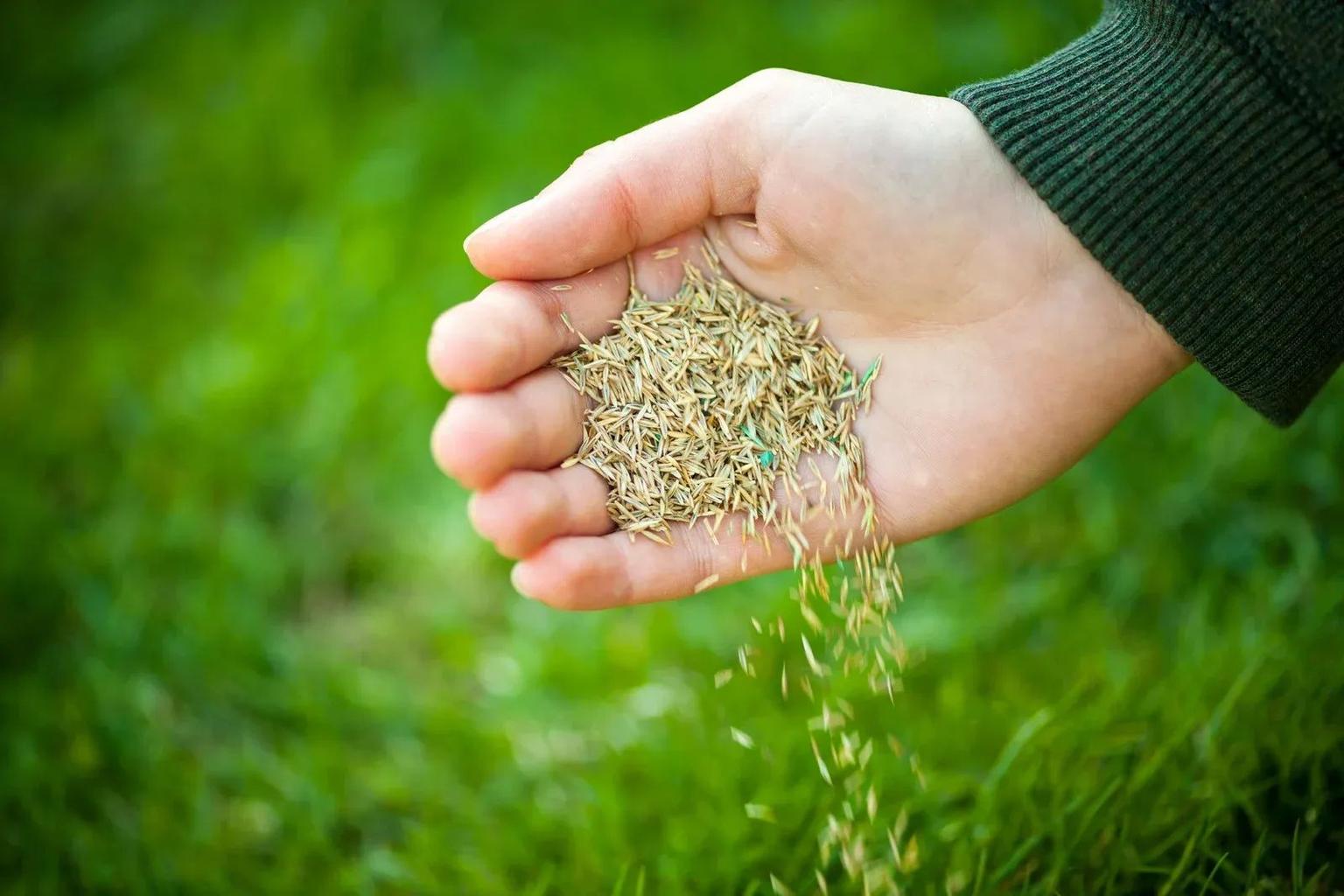
If your Louisville lawn is thin or patchy, overseed in fall - usually from mid-August through late September - not in spring.
Spring seeding often fails for one simple reason: young cool-season grass does not have enough time to root before Louisville’s hot, humid summer arrives. Fall gives you warm soil, cooler air, less weed pressure, and 4–6 weeks before the first hard frost to get seed started. That matters even more in clay-heavy soil, where drainage and compaction can make seedling growth harder.
Here’s the short answer:
- Best window: mid-August to late September
- Finish seeding: 4–6 weeks before first hard frost
- Best lawn types: turf-type tall fescue and tall fescue/Kentucky bluegrass blends
- Main signs you need overseeding: bare soil, thin turf, worn paths, faded color, and weeds moving in
- Main prep steps: mow to 1.5–2 inches, core aerate, improve seed-to-soil contact, then seed
- Watering after seeding: keep the top 0.5–1 inch of soil moist until germination
- First mow: when new grass reaches 3–4 inches
- Avoid in spring: pre-emergent weed control, excess nitrogen, and skipping aeration
Complete Fall Overseeding Guide: Transform Your Lawn in 10 Days!
sbb-itb-1c58166
Quick Comparison
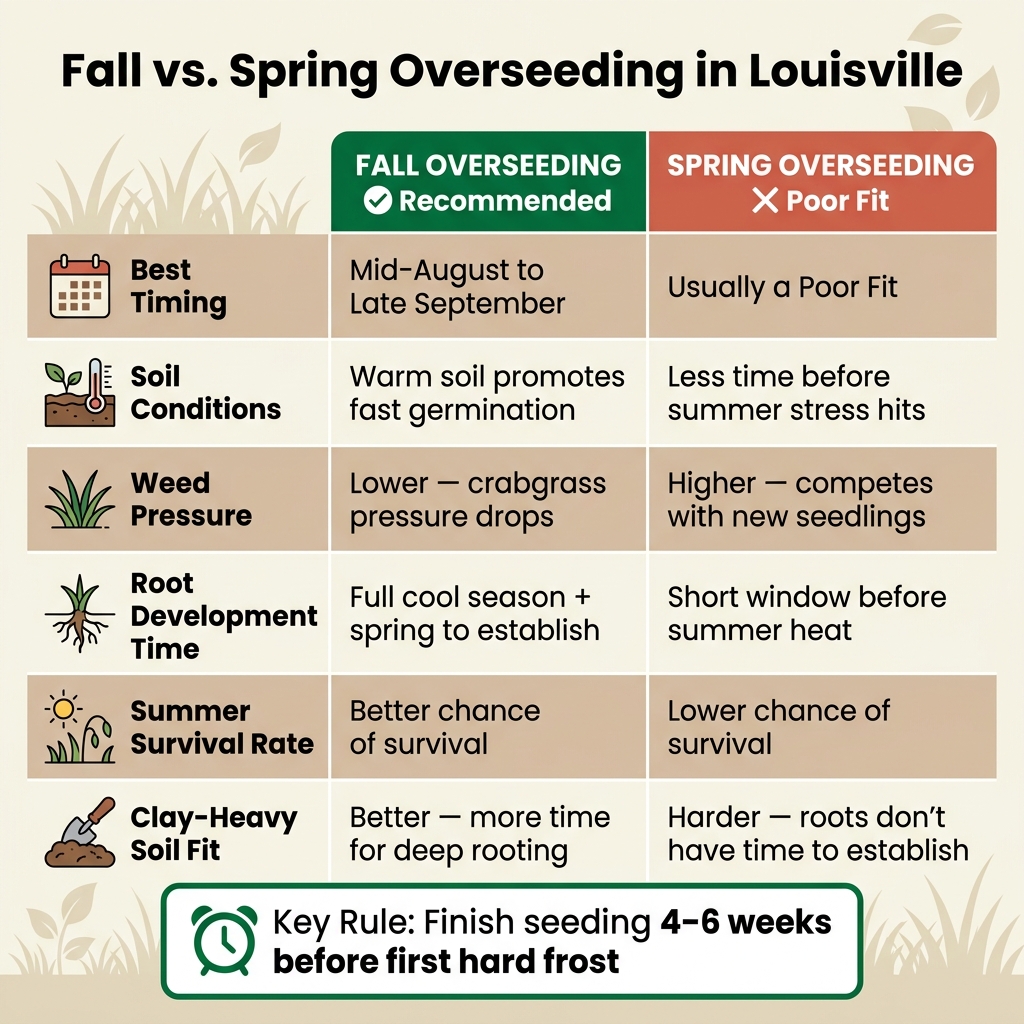
Fall vs. Spring Overseeding in Louisville: Which Works Better?
| Topic | Fall Overseeding | Spring Overseeding |
|---|---|---|
| Best timing in Louisville | Mid-August to late September | Usually a poor fit |
| Soil conditions | Warm soil helps germination | Less time before summer stress |
| Weed pressure | Lower | Higher |
| Root development time | Full cool season and spring | Short window before heat |
| Summer survival | Better chance | Lower chance |
| Fit for clay-heavy soil | Better | Harder |
If your lawn showed damage after summer, this is the season to act. The rest of the article breaks down the right timing, seed choice, and care steps so your new grass has a better shot at making it through next summer.
Why fall overseeding works better than spring in Louisville
In Louisville, timing makes a big difference.
Fall gives cool-season grass seed the setup it wants: warm soil, cooler air, and enough time to root before summer heat comes back. Crabgrass pressure also drops, so new grass deals with less weed competition. Just as important, fall leads into a full spring before the next stretch of summer heat. That gives seedlings months to grow deeper roots, which matters a lot in Louisville’s hot, humid summers.
Spring doesn’t offer the same runway. Seedlings come up as temperatures climb, with only a short window to root before July and August heat hit. Weed pressure is heavier, and pre-emergent can block new seed. In short, fall gives warm soil, cooler air, less weed pressure, and a full cool season for root growth. Louisville’s clay-heavy soil makes that tight spring window even harder to work with.
How Louisville's transition-zone climate stresses cool-season lawns
Louisville’s hot, humid summers are hard on cool-season turf. Long stretches of heat, humidity, and drought stress can wear a lawn down fast. When turf is under pressure, it’s also more likely to run into fungal problems like brown patch and summer patch. By late summer, bare spots often start showing up.
Fall is the point when those lawns naturally start to bounce back. Cooler temperatures push new growth, so overseeding at that time works with the grass’s normal cycle instead of fighting it.
Why clay-heavy soil makes spring seeding harder
Clay soil makes deep rooting tougher, which is a big reason fall timing matters. Louisville’s clay-heavy soil limits root depth, so seedlings need as much time as they can get to build drought resistance. Fall gives them that extra time, letting roots grow through the cool season before summer stress returns.
When to overseed and how to tell your lawn needs it
If fall is the right season, the next step is picking the right seeding window. In Louisville, the best time for overseeding is mid-August through late September. Try to finish seeding 4–6 weeks before the first hard frost so new grass has time to sprout and take root before winter sets in.
For most Louisville lawns, the timing usually looks like this:
- Tall fescue: mid-August to late September
- Kentucky bluegrass: late August to mid-September
- Perennial ryegrass: September to early October
Signs your lawn is thin enough to need overseeding
Don’t rely on the calendar alone. Look at the lawn itself. The big thing to watch for is bare soil showing between grass blades. That’s a clear sign the turf has thinned out enough to make overseeding worth it.
A few other clues can point the same way: worn paths from foot traffic, dull or faded color, and weeds moving into spots where grass used to grow. After Louisville’s hot, humid summers, that kind of thinning is exactly why fall overseeding makes sense instead of waiting for spring.
Maintenance overseeding vs. full lawn renovation
Not every thin lawn needs a full reset. In many cases, overseeding is enough.
Light overseeding makes sense when the lawn is still mostly in one piece but has lost some thickness. Think minor patchy areas or light thinning after a rough summer.
A full renovation is a different story. If you’re dealing with large bare sections or damage that seed alone won’t solve, you’ll likely need more prep. That can mean soil treatment, leveling with topsoil, and heavier ground work before seeding starts.
If you’re not sure which one fits your yard, it’s smart to get a local lawn assessment before the fall window closes.
Once you know overseeding is the right move, the next step is getting the lawn ready for seed contact and watering.
How to overseed a Louisville cool-season lawn in fall
When the timing is right, the prep work does most of the heavy lifting.
Start by mowing the lawn down to 1.5–2 inches and bagging the clippings. Then core aerate to open up the soil. If you have bare patches or bumpy spots, level them with screened topsoil and rake lightly so the seed can touch the soil. In Louisville’s clay soil, that contact matters a lot. It helps seed settle in and cuts down on washout.
Next, spread seed evenly across the lawn and add a thin layer of topdressing for cover. Use starter fertilizer only. Skip extra nitrogen, since it can add disease pressure in Louisville’s humid, clay-heavy soils. Also stay away from weed-control products that stop germination.
Choose the right seed for Louisville conditions
In Louisville’s transition zone, seed choice matters just as much as timing.
Go with turf-type tall fescue or a tall fescue/Kentucky bluegrass blend that fits Louisville conditions. Tall fescue handles local heat and humidity well and gets established dependably during the fall planting window. Kentucky bluegrass can add thickness and spread well in cooler weather, which makes it a strong partner for fescue in mixed seedings.
How to water and when to mow after seeding
Keep the top 0.5–1 inch of soil moist until the seed germinates. After that, water less often but more deeply as the roots grow in.
Mow once the new grass reaches 3–4 inches. Keep the mower blade set high so the grass can build stronger roots and deal better with dry spells.
Spring overseeding mistakes to avoid and the key takeaway
That’s why spring overseeding is usually the wrong move for a Louisville lawn. In most cases, it doesn’t work well because new seedlings run straight into summer heat before they’ve had time to get established.
Another common mistake is using pre-emergent weed control at the same time. That product can stop new seed from germinating, which means the grass gets shut down before it even begins.
Skipping aeration is also a problem, especially in Louisville’s clay-heavy soil. Seed and young roots need looser ground if they’re going to take hold. Piling on too much fertilizer makes things worse by adding disease pressure, including fungal issues like brown patch and gray leaf spot.
Fall sidesteps these problems in one shot. It gives cool-season grass a better window to germinate and more time to root deeply before Louisville’s summer heat and humidity come back.
When to bring in local help
Clay soil compacted from a summer of mowing and foot traffic won't loosen on its own, and seed dropped onto hard ground mostly just sits there. JTs Lawn and Landscaping starts by checking whether water is actually moving through the yard or pooling in low spots. Where it's pooling, drainage or grading work opens the soil back up so water and new roots both have somewhere to go. Once that's sorted, timing becomes the priority, since Louisville's fall window for new grass to root closes fast. Seeding and grading needs to happen while there's still enough season left for the lawn to establish before frost.
FAQs
Can I overseed if I missed the fall window?
If you miss the fall window, it’s usually better to hold off and wait for the next one instead of overseeding in spring.
In Louisville, spring overseeding often doesn’t work well. New grass has a hard time dealing with summer heat and weed pressure, and that puts young turf at a disadvantage from the start. When you seed at the wrong time of year, you can end up wasting time and money because the grass may not build deep roots before summer stress hits.
How long should I stay off the lawn after overseeding?
Stay off the lawn as much as possible until the new grass has germinated and reached at least 3 inches tall.
During this early stage, even light foot traffic can crush tender sprouts and press the soil down too much. It’s best to avoid walking on the area or mowing it until the grass is strong enough for normal use. In most cases, that takes several weeks after planting.
Will overseeding fix weeds and bare spots by itself?
No. Overseeding can help fill thin or bare spots and push back some weeds, but it usually won’t get rid of established weeds by itself.
Weed control often needs its own plan. And bare patches may stay bare if you skip soil prep or water the wrong way. For those spots, overseeding works best when you loosen the soil first and follow up with the right watering to help the grass fill in.
Related Blog Posts

How do I get started?

Request a quote — most companies do a free property assessment, walk you through recommended services, and can usually start within a week or two.
Do you take away the grass clippings?
Usually clippings are mulched back into the lawn, they return nutrients and are good for turf health. Bagging and removal is typically available on request or when growth is heavy.
Why does my lawn have brown patches?
Common causes include grubs or other pests, fungal disease, pet urine, drought stress, or mowing too short. Diagnosing the actual cause matters, because the treatments are completely different.
Are your products safe for kids and pets?
Most professional treatments are safe once dry, usually within a few hours of application. Your provider should tell you after each treatment how long to keep kids and pets off the lawn.
When should I fertilize my lawn?
It depends on your grass type and region, but most lawns benefit from feeding in early spring, late spring, and fall. A soil test or professional assessment tells you exactly what your lawn needs.

Book an Appointment
Reach out, we'll come look at your yard, and we'll tell you straight what it needs and what it costs. No pitch, no pressure.
We're a family business in Louisville, and most of our work comes from neighbors referring neighbors. That means you get the same crew every time and a price that won't change on you.
Grab a time that works. Let's take a look.
Request your free quote
We have received your estimate request and will be reaching out to you shortly.