.webp)
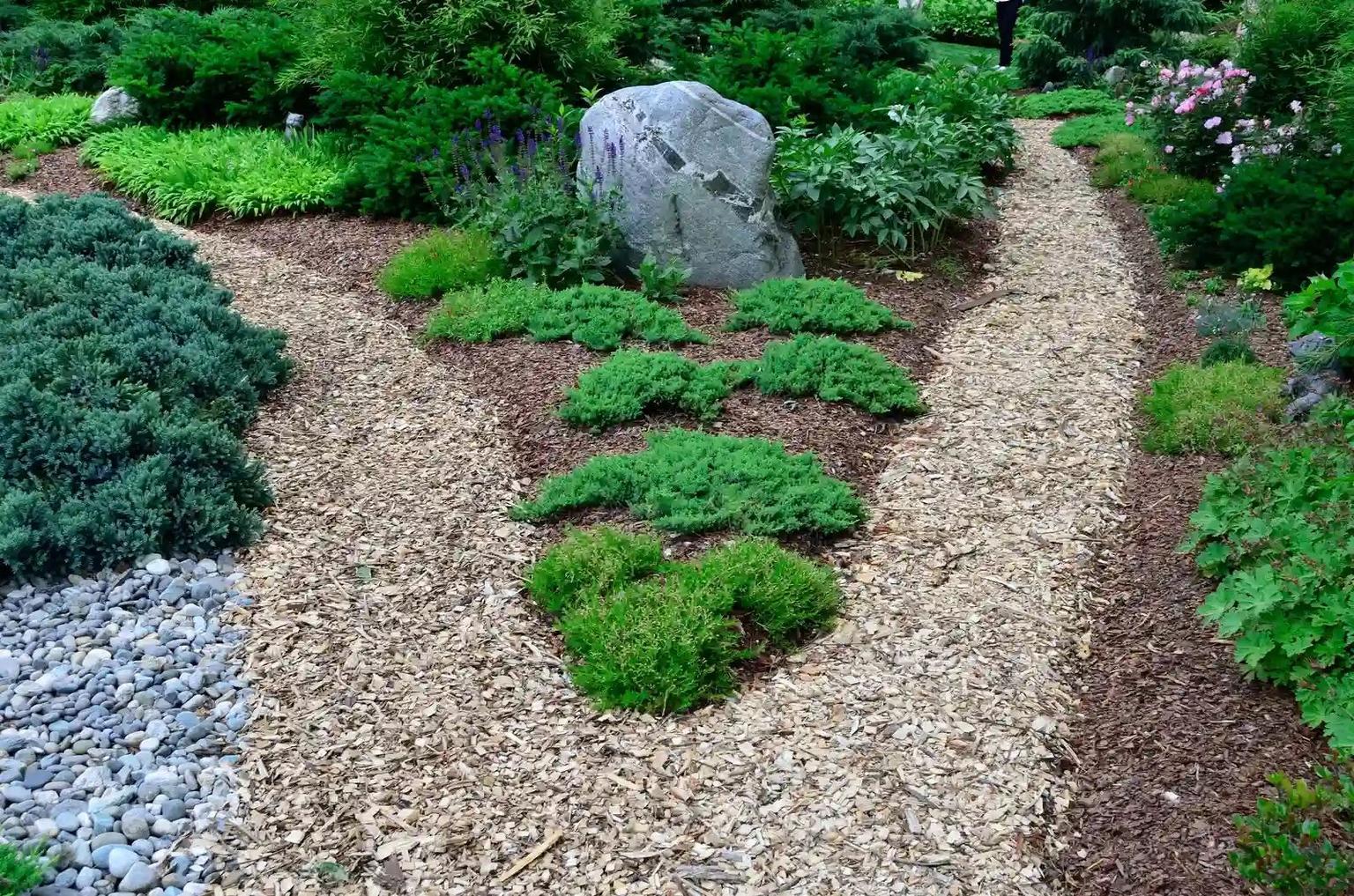
For most Louisville planted beds, mulch is the better pick. Rock fits better in drainage areas, walkways, utility strips, and sparse beds where long life matters more than soil health.
Louisville yards often deal with clay soil, hot summer weather, and wet spots that drain slowly. That changes how each surface works. Mulch helps soil hold water, keeps roots cooler, and breaks down over time, but it often needs more material every 1 to 3 years. Rock lasts longer and works well where water needs to move, but it can get hot in summer and is harder to change later.
Here’s the short version:
- Use mulch in planted beds, tree rings, and many beds near the house
- Use rock near downspouts, along walkways, in utility zones, and in low-plant areas
- Pick by yard zone, not one surface for the whole property
- Think about future changes before picking the lower-upkeep option
Quick Comparison
| Area or factor | Mulch | Rock |
|---|---|---|
| Planted beds | Best fit | Can trap heat |
| Tree rings | Best fit | Often too hot near roots |
| Slopes | Good in planted slopes | Better where washout is a concern |
| Drainage zones | Not ideal | Best fit |
| Walkways / utility strips | Can move around | Best fit |
| Soil improvement | Yes | No |
| Replacement cycle | Every 1–3 years | Lasts much longer |
| Future bed changes | Easier | Harder |
If your yard has more than one problem area, the better answer is often mulch in some beds and rock in others.
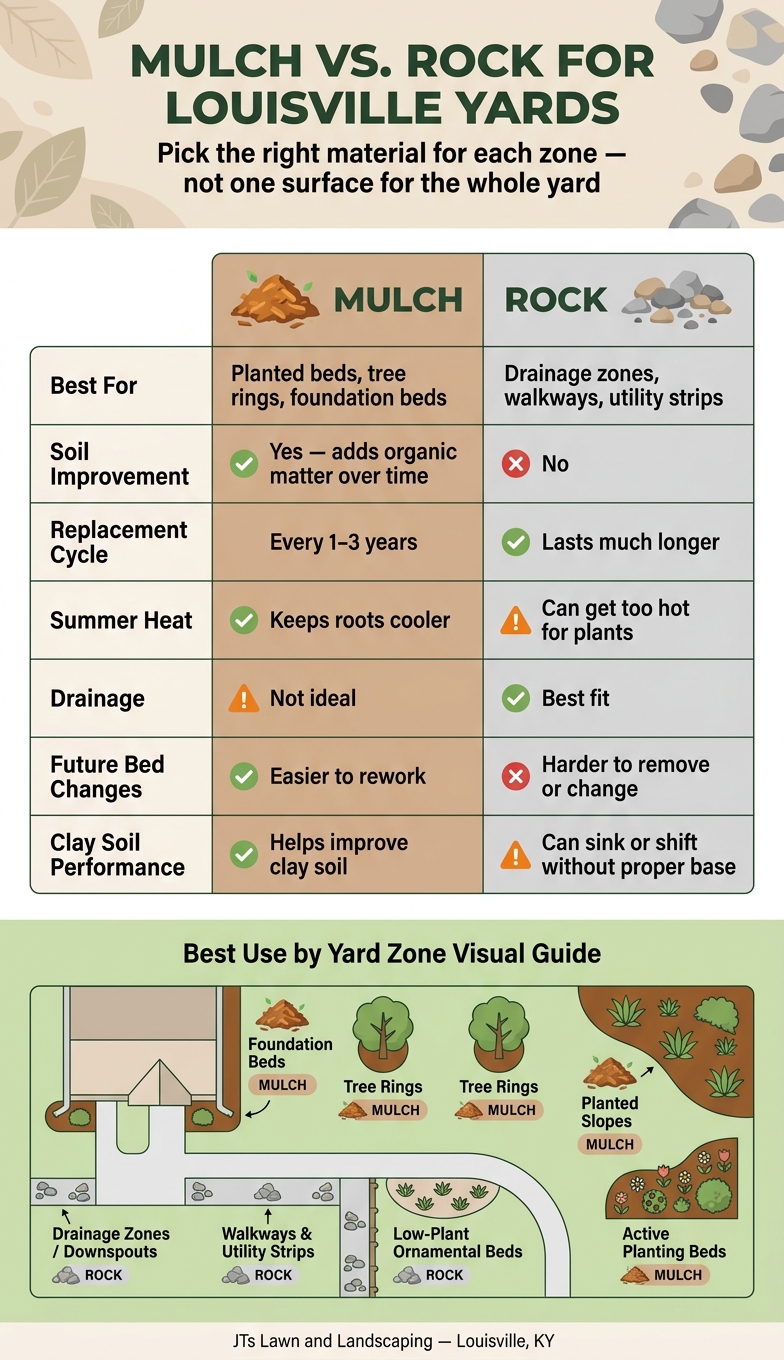
Mulch vs. Rock for Louisville Yards: Which Is Right for Each Zone?
Mulch Guide: Costs, Coverage & Benefits | Wood Mulch vs Rock Mulch Explained
sbb-itb-1c58166
Mulch in Louisville: Where It Works and What It Requires
For planted beds in Louisville, mulch is often the first pick. It helps the soil hold moisture and adds organic matter as it breaks down. It tends to work best in foundation beds, tree rings, and planted slopes.
Where mulch works best: foundation beds, tree rings, and planted slopes
Foundation beds do well with mulch because it helps the soil stay damp longer. That matters in Louisville’s clay soil, where summer heat can dry the surface in a hurry. Around trees, mulch helps shield the root zone, but it should never touch the trunk. On planted slopes, mulch can help keep soil from washing or sliding while plant roots spread and settle in.
That said, mulch comes with upkeep.
Mulch limits: replacement cycles, weed growth, and installation mistakes
Mulch isn’t a hands-off option. Organic mulch breaks down over time, so it usually needs to be refreshed every 1 to 3 years to keep good coverage. If that step gets skipped, beds thin out and weeds move in more easily.
As mulch breaks down, weeds can take hold in the layer above the soil. Pulling them before they go to seed makes the bed easier to keep under control. Before adding new mulch, remove weeds and debris, then level the bed.
Keep mulch shallow, even, and pulled back from trunks and foundations.
Rock in Louisville: Where It Makes More Sense and What to Watch For
Mulch helps planted beds. Rock, on the other hand, makes more sense in spots where durability and drainage matter more than improving the soil.
Where rock works best: walkways, drainage zones, and low-maintenance beds
Gravel is a good fit around downspouts, walkways, utility strips, and other areas built to move water away. It also works well in low-maintenance beds where a more permanent surface matters most.
One big plus: rock lasts longer because it doesn’t break down.
Rock limits: hotter surfaces, harder changes later, and fabric problems
There’s a tradeoff. Louisville summers can make stone too hot for planted beds. And with Louisville’s clay soil, rock can sink or shift over time if the base isn’t built the right way.
It’s also harder to remove or change later. Once rock is in place, reworking the area usually takes more time and effort than mulch.
That’s why location matters most.
Mulch vs. Rock by Yard Area in Louisville
The better pick depends on where you're using it.
Foundation beds and tree rings
Mulch is the better choice here. It helps the soil stay in better shape, holds moisture during Louisville's hot summers, and protects root zones. Rock can trap heat, which isn't what you want near foundations and around trees.
Slopes, drainage areas, walkways, and utility zones
Rock makes more sense in these areas. On slopes, it stands up to erosion and stays put longer than mulch. Around downspouts and drainage zones, gravel helps move water away without breaking down over time. Along walkways and utility strips, rock gives you a durable, low-upkeep surface that can handle foot traffic and regular access.
Low-maintenance ornamental beds
If plants are actively growing, mulch usually works best. But in sparse beds or areas with few or no plantings, rock is often the better fit. It stays in place, doesn't need to be refreshed, and keeps the bed looking neat without much upkeep.
Once you've matched the material to each part of the yard, the next step is to compare upkeep and long-term cost.
Cost, Upkeep, and Choosing the Right Material for Your Property
Once you know where mulch or rock works best, the next thing to weigh is cost and upkeep. But that choice isn't just about what takes less work today. It's also about how easy that bed will be to change later.
If you may rework a planting bed down the road, prep often matters more than picking the surface that needs the least care. That's the part many homeowners miss. A low-upkeep option can still turn into a headache if you need to move plants, fix the soil, or change the layout later.
So the best pick usually comes down to the long-term plan for each bed, not one material for the entire yard.
Soil improvement vs. lower replacement frequency: what matters more
In Louisville yards with clay soil, this tradeoff is pretty simple.
Mulch breaks down over time and adds organic matter to the soil, which helps improve it. The catch is that it needs to be refreshed every 1 to 3 years.
Rock avoids that refresh cycle, but it can make later changes more difficult. If you want to replant, reshape the bed, or work the soil, rock often takes more time and effort to deal with.
So the better option depends on one thing: how likely that bed is to change.
Final takeaway: use mulch and rock by zone, not across the whole yard
Mulch and rock can both work well in Louisville yards when you use each one in the right zone. JTs Lawn and Landscaping handles the walk-through, bed prep, and mulch and rock installation for both.
FAQs
Can I use both mulch and rock in the same yard?
Yes. Many Louisville homeowners use both to get the best from each material.
Use mulch in garden beds to help soil health and hold moisture. Then use rock in high-traffic spots, along walkways, or in foundation beds where long wear and low upkeep matter most.
How do I know if a bed should stay mulch instead of rock?
The information provided doesn’t spell out exact rules for when a landscape bed should stay with mulch instead of switching to rock.
For this article, that call should come down to two things: the bed’s current conditions and how you plan to use it.
What should I put under rock in a Louisville yard?
The search results provided here don’t include guidance on what to put under rock in a landscape setting.
Because of that, this article does not offer a direct answer to that question.
Related Blog Posts

How do I get started?

Request a quote — most companies do a free property assessment, walk you through recommended services, and can usually start within a week or two.
Do you take away the grass clippings?
Usually clippings are mulched back into the lawn, they return nutrients and are good for turf health. Bagging and removal is typically available on request or when growth is heavy.
Why does my lawn have brown patches?
Common causes include grubs or other pests, fungal disease, pet urine, drought stress, or mowing too short. Diagnosing the actual cause matters, because the treatments are completely different.
Are your products safe for kids and pets?
Most professional treatments are safe once dry, usually within a few hours of application. Your provider should tell you after each treatment how long to keep kids and pets off the lawn.
When should I fertilize my lawn?
It depends on your grass type and region, but most lawns benefit from feeding in early spring, late spring, and fall. A soil test or professional assessment tells you exactly what your lawn needs.

Book an Appointment
Reach out, we'll come look at your yard, and we'll tell you straight what it needs and what it costs. No pitch, no pressure.
We're a family business in Louisville, and most of our work comes from neighbors referring neighbors. That means you get the same crew every time and a price that won't change on you.
Grab a time that works. Let's take a look.
Request your free quote
We have received your estimate request and will be reaching out to you shortly.