.webp)
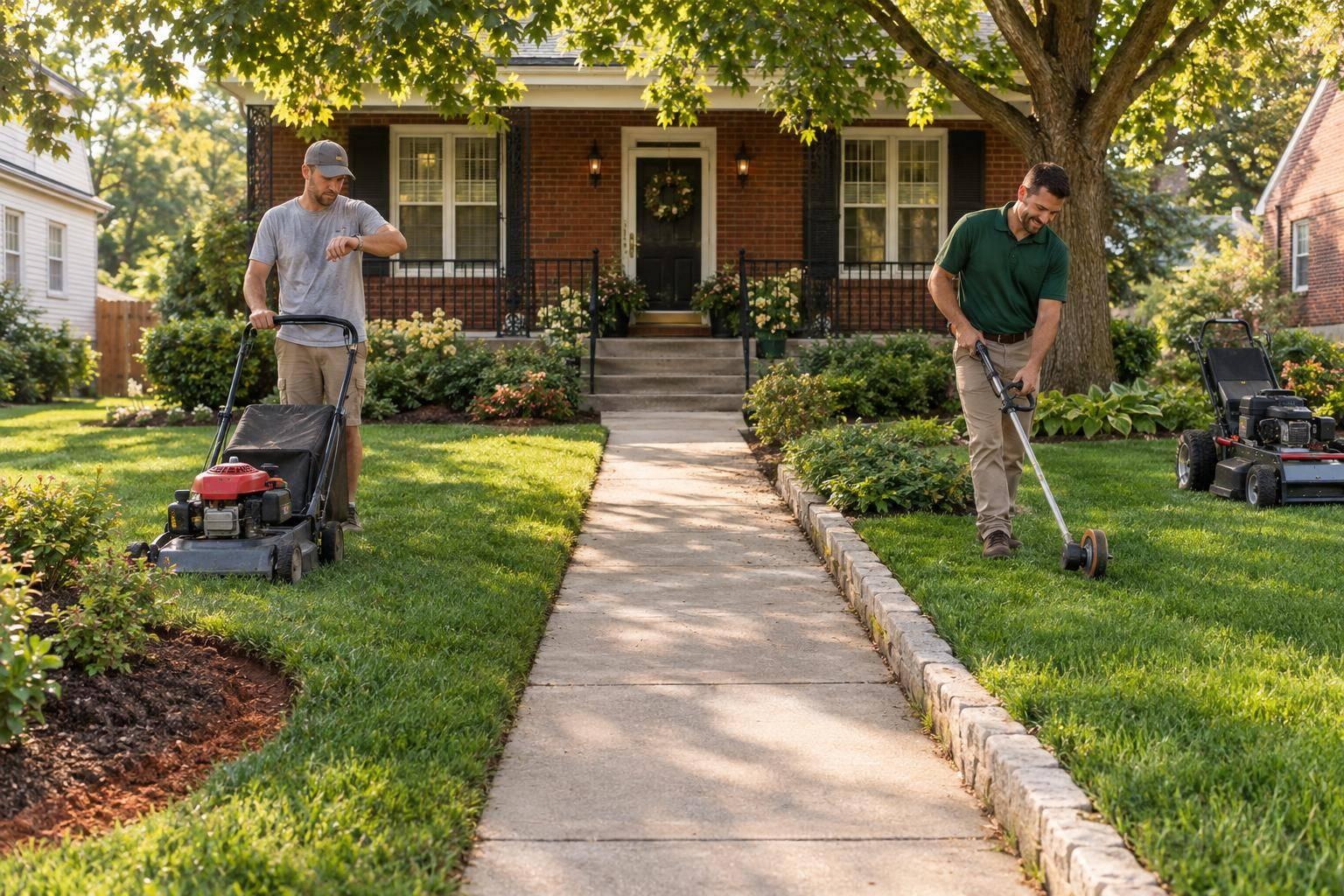
Choose DIY for a healthy lawn you have time to maintain; hire help for persistent problems, heavy equipment, or a busy schedule. Budget roughly 2–6+ hours a week for DIY mowing, edging, and cleanup, depending on your property.
Compare equipment, products, repairs, and your time against a written service quote - not just the mowing price. Louisville’s heat, clay soil, and wet conditions also affect your choice: standing water needs a drainage assessment, while fall seeding needs steady watering.
You can handle routine upkeep and hire help for selected jobs. <u>Confirm who handles each task before work starts.</u>
Quick Comparison
| Factor | DIY | Targeted help | Regular service |
|---|---|---|---|
| Time and scheduling | You schedule and do the work | You maintain the lawn between hired jobs | Crews schedule visits; you check results |
| Cost and equipment | You pay for tools, products, and repairs | You pay for selected tasks and your own tools | Recurring fees; crews supply equipment |
| Lawn condition and appearance | Healthy turf and minor issues | Problem areas or seasonal work | Regular upkeep and a consistent finish |
| Diagnosis and products | You identify problems, store products, and apply them | Specialists handle agreed treatments | Provider handles contracted treatments |
| Louisville conditions | You track heat, moisture, and seeding timing | Hire help for drainage, aeration, or seeding | Confirm seasonal work and watering duties |
| Responsibility | You correct mistakes | Divide duties in writing | Confirm scope and correction terms |
Use your lawn’s condition, weekly availability, and total cost to choose the right level of care.
DIY vs. Professional Lawn Care: Time, Cost, and Responsibility
| Factor | DIY lawn care | Professional lawn care |
|---|---|---|
| Weekly time | Plan for roughly 2–6+ hours of mowing, edging, and cleanup, depending on the property. | Less hands-on work, though you still check results. |
| Equipment | You buy, store, and maintain your tools. | The provider supplies and maintains equipment for contracted work. |
| Problem diagnosis | You identify weeds and assess moisture, soil, and turf problems. | Professional expertise guides treatments and maintenance. |
| Product storage and application | You buy, store, and apply products correctly. | The provider handles product applications. |
| Scheduling consistency | Work depends on your availability and suitable weather. | The provider schedules regular visits and adjusts for weather. |
| Responsibility for corrections | You fix mistakes and handle corrective work. | The provider is accountable for agreed work, with responsibilities spelled out in writing. |
Professional care saves time and keeps visits on a regular schedule. Get the scope in writing so you know what the service covers.
When DIY Lawn Care Makes Sense
DIY is a good fit for a healthy lawn if you have time each week, working equipment, storage space, and a solid understanding of weather and soil moisture. Start with repeatable jobs like mowing, edging, and leaf cleanup. Handle minor weeds yourself only if you can identify them correctly.
But does DIY still cost less once you count equipment, products, and repairs?
Compare the Total Cost of Lawn Care
Compare the same tasks, not just the price tags. For DIY, count equipment purchases or rentals, fuel, repairs, storage, fertilizer, weed-control products, and your time.
Keep one-time purchases separate from recurring costs. For professional service, check whether the price includes leaf cleanup and seasonal work.
If outsourcing still comes out ahead, decide which tasks are worth handing over.
When Hiring a Pro Makes Sense
Large or steep properties, recurring weeds, thin turf, and a packed schedule can make professional help worth the cost. That's especially true when weather leaves little time to work or turf damage is spreading.
Use a walkthrough to define the work, then get a property-specific written quote that confirms the scope, responsibilities, and scheduling before you commit.
In Louisville, weather swings and clay soil often determine which jobs you can handle yourself and which call for professional equipment.
sbb-itb-1c58166
How Louisville's Climate and Soil Shape Lawn Care
Louisville’s heat, humidity, and clay soil make timing and water control the main limits on DIY lawn care. These conditions help determine which tasks you can handle yourself and which need more consistent attention.
Caring for Cool-Season Grass in Summer
Check soil moisture before watering and stick to regular mowing. If the lawn is already holding moisture, skip the extra water. Too much watering can worsen saturation and increase disease risk.
Assessing Clay Soil, Compaction, and Drainage
A yard that stays soggy after rain may have a drainage problem - not just a mowing or watering issue. Persistent standing water needs a proper diagnosis. A professional can identify and fix drainage problems, which matter more than routine mowing when the lawn stays wet.
Timing Fall Seeding in Louisville
Fall seeding can be a DIY job, but only if you can keep up with watering after planting. If that schedule isn’t realistic for you, professional service can help keep watering consistent.
Which Lawn Tasks Should You Do Yourself?
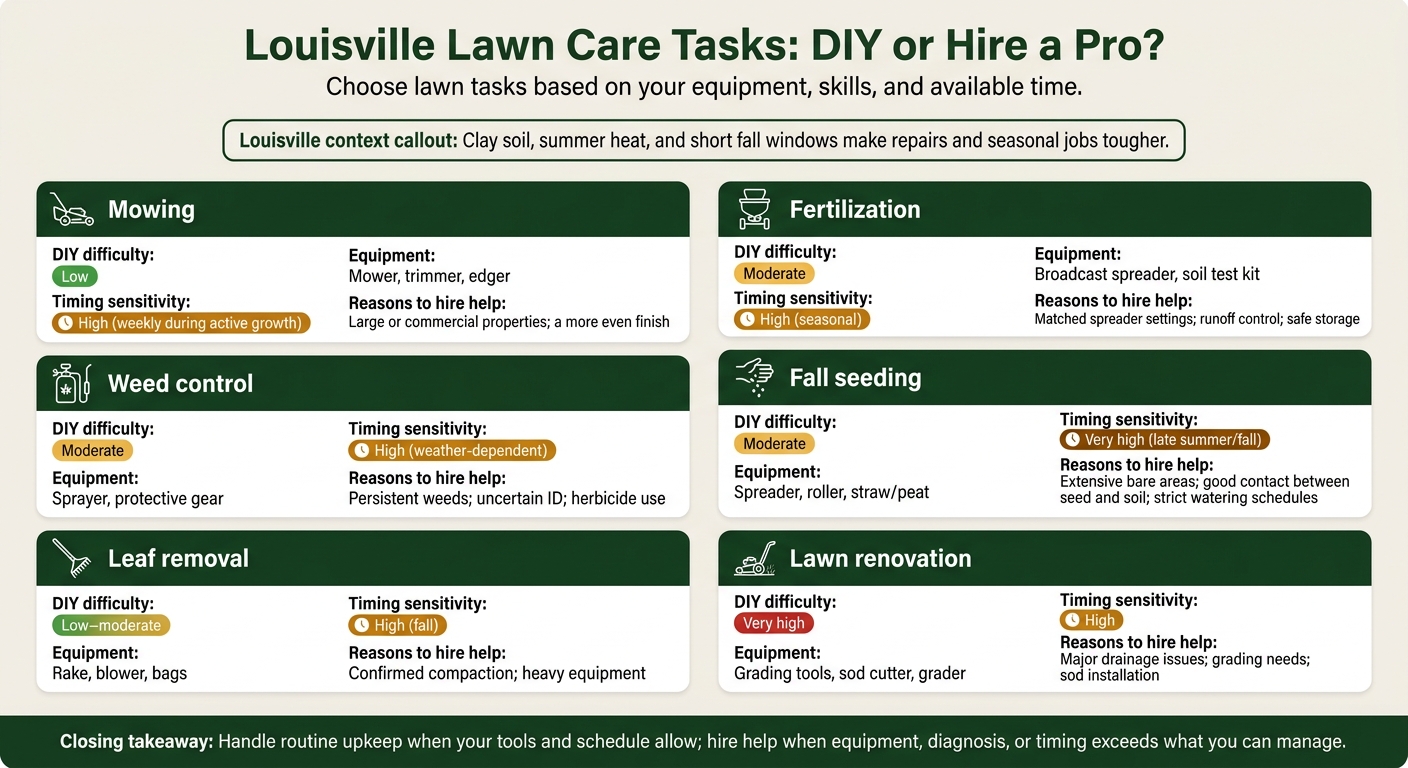
Louisville Lawn Care Tasks: DIY or Hire a Pro?
Choose lawn tasks based on your equipment, skills, and available time. In Louisville, routine upkeep is usually the easiest work to handle yourself. Clay soil, summer heat, and short fall windows make repairs and seasonal jobs tougher. The key is knowing which jobs fit your schedule - and which call for help.
| Task | DIY difficulty | Equipment | Timing sensitivity | Reasons to hire help |
|---|---|---|---|---|
| Mowing | Low | Mower, trimmer, edger | High (weekly during active growth) | Large or commercial properties; a more even finish |
| Fertilization | Moderate | Broadcast spreader, soil test kit | High (seasonal) | Matched spreader settings; runoff control; safe storage |
| Weed control | Moderate | Sprayer, protective gear | High (weather-dependent) | Persistent weeds; uncertain ID; herbicide use |
| Leaf removal | Low–moderate | Rake, blower, bags | Moderate (fall) | Heavy leaf cover; large lots |
| Core aeration | High | Heavy core aerator | High (fall) | Confirmed compaction; heavy equipment |
| Fall seeding | Moderate | Spreader, roller, straw/peat | Very high (late summer/fall) | Extensive bare areas; good contact between seed and soil; strict watering schedules |
| Lawn renovation | Very high | Grading tools, sod cutter, grader | High | Major drainage issues; grading needs; sod installation |
Mowing, Edging, and Leaf Cleanup
Mowing and edging are good DIY jobs if you can keep up throughout the growing season. Remove heavy leaf cover promptly so it doesn’t smother the grass. If the work outpaces your schedule, hire help.
Applying Fertilizer and Controlling Weeds
You can handle these jobs yourself if you can identify the problem and apply products correctly. Fertilizer supplies nutrients; herbicides control weeds.
Use soil-test results to set fertilizer rates, then match your spreader settings to the recommended rate. Application timing depends on grass type, soil-test results, and weather.
Follow product labels for protective gear and weather restrictions. Keep fertilizer and herbicides out of drains, and store them securely in their original containers. Hire help if weeds persist, you’re unsure what they are, or you can’t apply products safely.
Aerating, Seeding, and Restoring Turf
Louisville’s soil conditions and seasonal timing matter most for these jobs. Use core aeration when compaction is confirmed. For fall seeding, you’ll need to prepare the seedbed and stick to a watering schedule.
Hire help if the equipment or timing is more than you can handle. Large bare areas or drainage failures need restoration - not reseeding alone. If you need aeration, check that it’s included in the fall quote.
Conclusion: Choose the Right Level of Lawn Care
| Decision factor | Primarily DIY | Targeted professional tasks | Regular professional care |
|---|---|---|---|
| Time | Time available each week | Routine upkeep plus hired help | Less hands-on work |
| Lawn health | Healthy turf; minor issues | Specific repairs or treatments | Regular monitoring and upkeep |
| Budget | Lower upfront cost; mistakes can add costs | Pay for specific needs | Higher, recurring cost |
| Appearance | Meets personal standards | Improves problem areas | Consistent finish |
Match your level of care to your schedule, equipment, and lawn condition.
Choose DIY for a Healthy Lawn You Can Maintain
DIY works well when you have time for weekly upkeep, your tools work, and your lawn’s problems are minor and correctly identified.
Hire Help for Technical or Seasonal Tasks
Keep routine upkeep in your hands and hire help for technical jobs or work that needs precise timing. Louisville’s heat, clay soil, and short fall window can make that timing tricky.
Put responsibilities in writing: who waters, when mowing resumes after seeding, and who schedules treatments.
Choose Regular Service for Consistent Care
Regular service provides steady scheduling and reliable results when a busy schedule, a large property, or commercial appearance standards make DIY hard to maintain. Before signing up for a full-service or year-round plan, confirm exactly what it covers and who handles each task.
Look beyond the lowest upfront price and choose care you can keep up with. Request an in-person walk-through and written quote from JTs Lawn and Landscaping to match the scope, schedule, and budget to your property.
FAQs
How can I tell if my lawn needs aeration or drainage repairs?
The search results don’t explain how to check whether your lawn needs aeration or drainage repairs.
When should I seed my lawn in Louisville?
The provided search results don’t state the best time to seed a lawn in Louisville, Kentucky.
How do I compare annual DIY and professional lawn care costs?
In Louisville, KY, add up your annual DIY lawn care costs: seed, fertilizer, weed control, soil amendments, fuel, mower expenses, tools, replacement equipment, and your time. Then compare that total with a professional’s annual package price, factoring in routine services, reliability, and work backed by certification and insurance.
If local soil, climate, or pests make lawn care a struggle, consistent professional care can help reduce repeat fixes that drive up DIY costs.
Related Blog Posts

How do I get started?

Request a quote — most companies do a free property assessment, walk you through recommended services, and can usually start within a week or two.
Do you take away the grass clippings?
Usually clippings are mulched back into the lawn, they return nutrients and are good for turf health. Bagging and removal is typically available on request or when growth is heavy.
Why does my lawn have brown patches?
Common causes include grubs or other pests, fungal disease, pet urine, drought stress, or mowing too short. Diagnosing the actual cause matters, because the treatments are completely different.
Are your products safe for kids and pets?
Most professional treatments are safe once dry, usually within a few hours of application. Your provider should tell you after each treatment how long to keep kids and pets off the lawn.
When should I fertilize my lawn?
It depends on your grass type and region, but most lawns benefit from feeding in early spring, late spring, and fall. A soil test or professional assessment tells you exactly what your lawn needs.

Book an Appointment
Reach out, we'll come look at your yard, and we'll tell you straight what it needs and what it costs. No pitch, no pressure.
We're a family business in Louisville, and most of our work comes from neighbors referring neighbors. That means you get the same crew every time and a price that won't change on you.
Grab a time that works. Let's take a look.
Request your free quote
We have received your estimate request and will be reaching out to you shortly.