.webp)
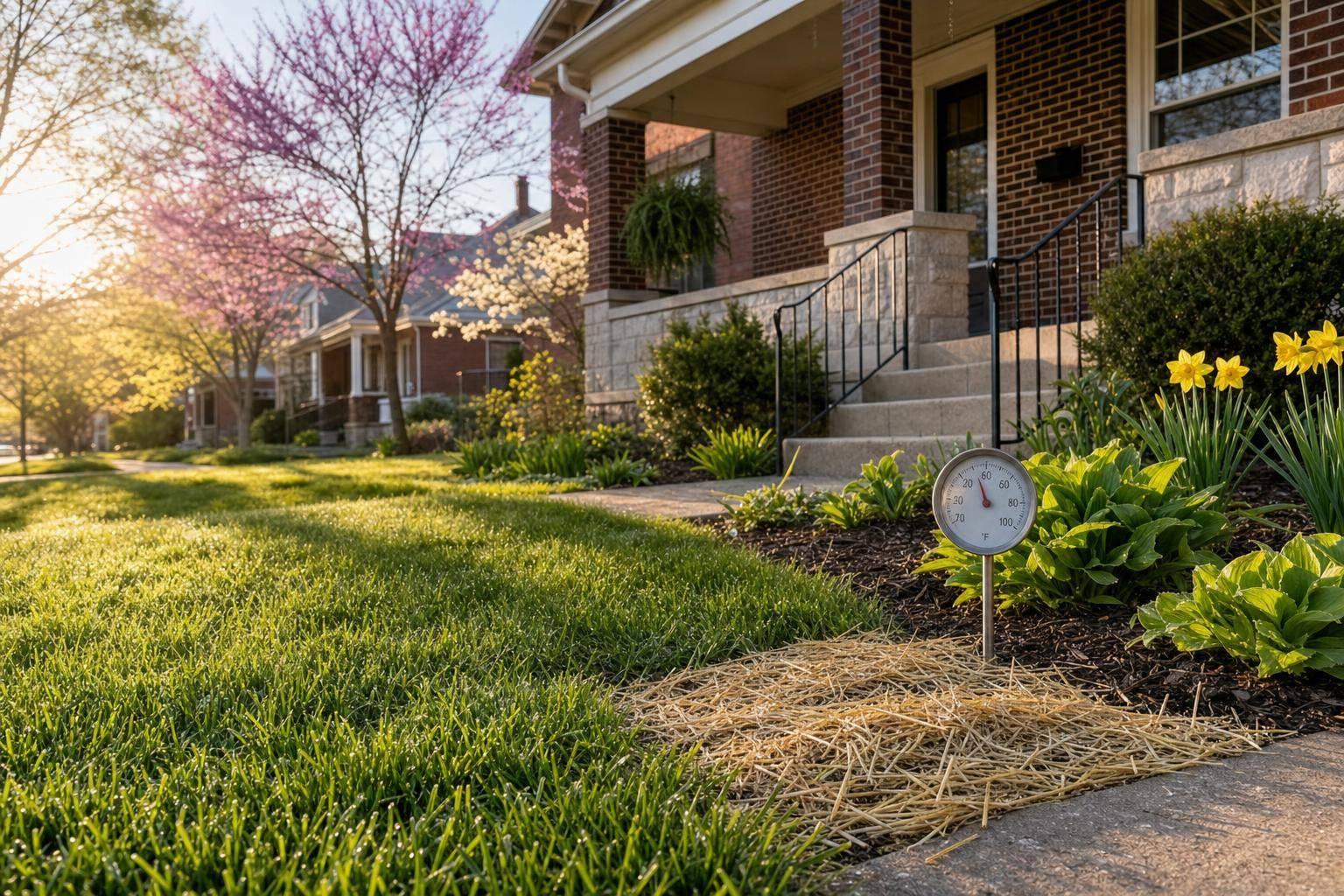
For Louisville lawns, spring work comes down to timing: clean up early, stop crabgrass around 50°F to 55°F soil temps, feed cool-season grass lightly, mow high, water based on rain, and patch thin spots before summer heat.
If you own a lawn in Louisville, your biggest issues in spring are usually clay soil, winter damage, wet spots, and early weeds. The article lays out a simple order that helps avoid common mistakes, like putting down pre-emergent and then trying to seed the same area, or fertilizing Bermuda too soon.
Here’s the short version:
- Inspect the lawn first for bare spots, pooling water, and hard soil
- Remove debris before active growth starts
- Service the mower before the first cut
- Apply crabgrass pre-emergent in mid- to late March when soil temps hit 50°F to 55°F
- Water in pre-emergent with about 1/2 inch of water
- Do not overseed where pre-emergent was applied
- Feed tall fescue and Kentucky bluegrass lightly
- Wait to feed Bermuda and zoysia until full green-up
- Spot-treat weeds like dandelions and clover instead of spraying the whole yard
- Mow at 3 to 3.5 inches for the first cut and follow the one-third rule
- Water deeply and less often since clay soil holds moisture longer
- Keep new seed moist until it starts growing
- Patch thin areas early and finish edges and mulch before summer
A few numbers matter most here: 50°F to 55°F soil temperature for crabgrass control, 1/2 inch of water to activate many pre-emergents, and 3 to 3.5 inches for the first mow. Those small timing details can make a big difference in how the lawn handles spring and summer.
The main article walks through those jobs in order so you can handle the work at the right time and skip the steps that cause problems later.
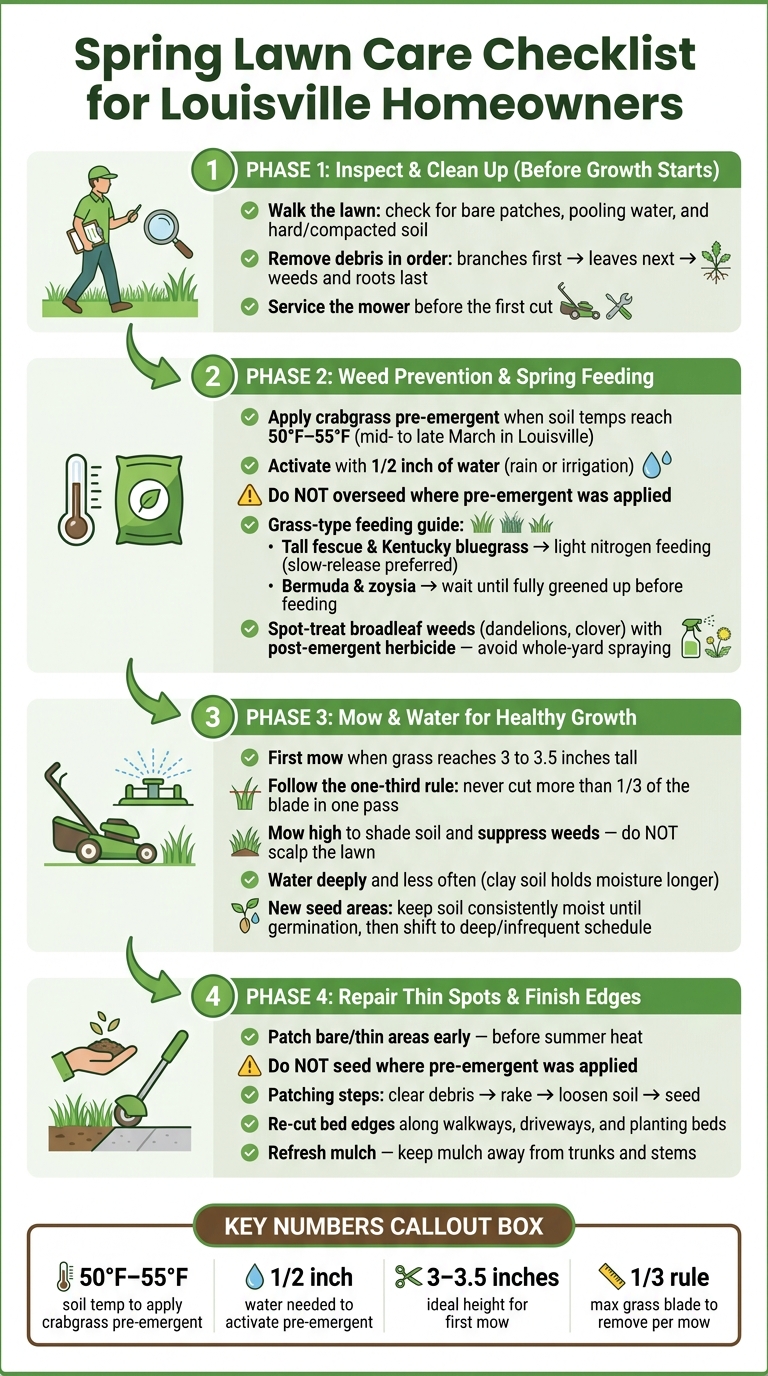
Spring Lawn Care Checklist for Louisville Homeowners
E26- The Ultimate Do's and Don'ts of Spring Lawn Care in Kentucky
sbb-itb-1c58166
1. Inspect and clean up the lawn before growth starts
Start with a simple walk across the lawn. You're looking for winter damage, soggy patches, and spots where the soil feels hard underfoot.
Check for winter damage, wet spots, and compaction
Look for bare patches where grass died over winter, low spots where water is still pooling, and soil that feels hard and packed when you step on it. In Louisville, heavy clay soil tends to hold moisture after cold months. That can slow early growth and show you where the lawn needs attention first.
Remove branches, leaves, and debris in the right order
Clean up in a smart sequence so the job goes smoother:
- Pick up branches and large debris first
- Remove leaves next
- Pull weeds and exposed roots last
Clear out branches, leaves, weeds, and yard waste before new growth starts. That way, nothing is sitting on top of the turf as temperatures rise.
Get the mower ready before the first cut
Service the mower now so it's ready for the first cut.
Once the lawn is clear and the mower is set, move on to crabgrass prevention and light spring feeding.
2. Time weed prevention and spring feeding for Louisville conditions
Timing matters here. Miss the window, and crabgrass gets a head start or you end up blocking spring overseeding. In Louisville, this is one of the biggest make-or-break steps in the whole checklist. Get it right now, and the rest of spring lawn care gets a lot easier.
Apply crabgrass pre-emergent at the right time
Pre-emergent herbicide stops crabgrass before it sprouts. Apply it when soil temperatures at 1 to 2 inches deep hit 50°F to 55°F. In Louisville, that usually means mid- to late March.
After you apply it, the product needs about 1/2 inch of water to activate. That can come from rain or irrigation.
One big caution: don’t use pre-emergent where you plan to overseed this spring. That barrier doesn’t just stop crabgrass. It also keeps new grass seed from germinating.
Feed lightly based on grass type and avoid overfeeding
Spring feeding isn’t one-size-fits-all. It depends on what’s growing in your yard.
- Tall fescue and Kentucky bluegrass: Apply a light nitrogen feeding, preferably with a slow-release product.
- Bermuda and zoysia: Wait until the lawn is fully greened up before feeding.
If you fertilize warm-season grass too early, you’re basically spending money at the wrong time. The grass isn’t in full growth yet, so the fertilizer can go to waste and may stress the lawn.
Spot-treat broadleaf weeds and test your soil
For weeds like dandelions and clover, skip the whole-yard treatment if the problem is only in a few places. Spot-treat broadleaf weeds with a post-emergent herbicide instead.
If the same issues keep showing up, pause before buying more fertilizer. A soil test can show what the lawn actually needs and help you avoid guessing.
Once weeds and feeding are handled, match mowing and watering to spring growth.
3. Mow and water correctly for healthy spring growth
Once the lawn starts growing again, your next job is simple: set mowing height well, then water based on what the yard actually needs.
Make the first mow at the right height and follow the one-third rule
Make the first mow when the grass reaches 3 to 3.5 inches. From there, stick with the one-third rule: never cut off more than one-third of the grass blade in a single pass.
That matters more than it may seem. Cutting too much at once puts stress on tall fescue and Kentucky bluegrass right when they’re pushing through early spring growth. A clean, lighter cut is much easier on the lawn.
Mow high to reduce weed pressure
A taller lawn does more of the work for you. It shades the soil surface, which helps hold back spring weeds and supports deeper root growth.
Keep tall fescue and Kentucky bluegrass at the taller end of the suggested height range through spring. And whatever you do, don’t scalp the lawn early in the season. Cutting it too short can thin the turf and give weeds extra room to move in.
Adjust watering based on rainfall, clay soil, and new seed
After mowing is dialed in, adjust watering to fit Louisville’s spring rainfall and clay soil. In plain terms: water only when rain isn’t doing the job.
Clay soil holds moisture longer than sandy soil, so most lawns need water less often. But when dry spells start, it’s better to water more deeply and less often than to do light, frequent watering. Shallow watering can lead to weak root growth.
Newly seeded spots are the exception. Those areas need soil that stays consistently moist until germination is established. After that, move them onto the same deeper, less frequent watering schedule as the rest of the lawn.
4. Repair thin spots and finish edges and mulch before summer
Once mowing and watering are on track, turn to repairs. The goal here is simple: fill weak spots before summer heat makes lawn work harder.
Patch bare or thin areas without conflicting with pre-emergent
Patch bare or thin spots in early spring, before summer heat sets in. But there’s one big catch: if you already applied a crabgrass pre-emergent earlier in the season, do not seed where pre-emergent was applied. That product can stop grass seed from taking hold too.
For small patches, keep it simple:
- Clear away debris
- Rake the area
- Loosen the soil
- Seed the spot
That small bit of prep gives seed a much better shot than tossing it onto packed ground.
Re-cut bed edges and refresh mulch correctly
After patching, clean up the lines around the rest of the yard. Re-cut edges along walkways, driveways, and planting beds so everything looks neat and finished.
Then refresh any thin mulch. Just keep it off trunks and stems. Piling mulch against them is a common mistake, and it can lead to trouble fast.
When to call JTs Lawn and Landscaping for larger repairs
Some jobs go way beyond spot seeding. If you’re dealing with large bare areas, grading, sod installation, or a full-property spring cleanup, it makes sense to bring in help.
JTs Lawn and Landscaping handles larger repair work with on-site walk-throughs and written quotes before work begins.
Conclusion: The spring lawn tasks that matter most in Louisville
These steps work best as a simple spring plan for Louisville lawns. The order matters: cleanup, pre-emergent, light feeding, proper mowing, smart watering, and early patch repair. In Louisville, clay soil and spring timing matter more than doing too much.
Handle the basics now, and you can avoid a lot of common summer lawn problems. If you need help with bigger spring projects or repairs, JTs Lawn and Landscaping can help.
FAQs
How do I know if my lawn has cool-season or warm-season grass?
Watch how your lawn changes through the year. Cool-season grasses grow best in spring and fall, and that’s usually when they look the greenest. Warm-season grasses do most of their growing in summer heat and often turn brown when cold weather sets in.
Louisville sits in the transition zone, so your lawn may include both types. That’s why it helps to watch for seasonal color shifts and notice when growth picks up the most.
What should I do if spring rain keeps my lawn soggy?
If spring rain leaves your lawn soggy, stay off it for a bit. Don’t mow it, and don’t walk on it more than you have to. In Louisville’s heavy clay soil, that kind of traffic can compact the ground and hurt turf roots.
Hold off on maintenance until the soil is dry enough to handle foot traffic. If you notice water pooling in the same spots again and again, check the drainage once the soil is workable. Too much moisture can slow spring growth and encourage fungal growth.
When should I skip pre-emergent and seed instead?
Skip pre-emergent if you have bare spots or thin, damaged areas that need new grass.
Here’s why: pre-emergent stops seeds from germinating. That includes weed seeds and grass seed. So if your main goal is to fill in those weak patches, pre-emergent will get in the way.
In those parts of the lawn, hold off on pre-emergent and focus on spot-seeding during the right spring planting window.
Related Blog Posts

How do I get started?

Request a quote — most companies do a free property assessment, walk you through recommended services, and can usually start within a week or two.
Do you take away the grass clippings?
Usually clippings are mulched back into the lawn, they return nutrients and are good for turf health. Bagging and removal is typically available on request or when growth is heavy.
Why does my lawn have brown patches?
Common causes include grubs or other pests, fungal disease, pet urine, drought stress, or mowing too short. Diagnosing the actual cause matters, because the treatments are completely different.
Are your products safe for kids and pets?
Most professional treatments are safe once dry, usually within a few hours of application. Your provider should tell you after each treatment how long to keep kids and pets off the lawn.
When should I fertilize my lawn?
It depends on your grass type and region, but most lawns benefit from feeding in early spring, late spring, and fall. A soil test or professional assessment tells you exactly what your lawn needs.

Book an Appointment
Reach out, we'll come look at your yard, and we'll tell you straight what it needs and what it costs. No pitch, no pressure.
We're a family business in Louisville, and most of our work comes from neighbors referring neighbors. That means you get the same crew every time and a price that won't change on you.
Grab a time that works. Let's take a look.
Request your free quote
We have received your estimate request and will be reaching out to you shortly.