.webp)
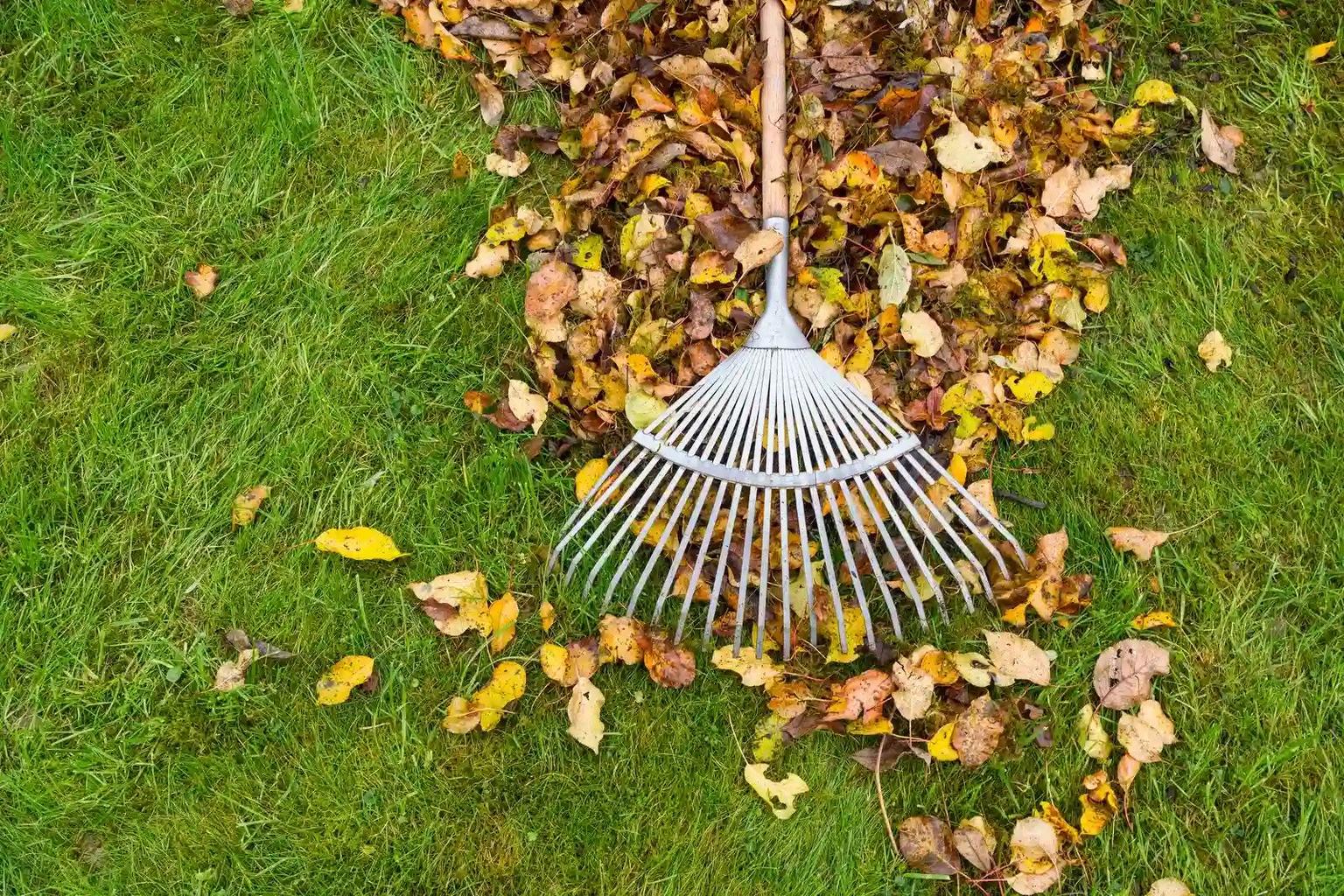
If you want a thicker Louisville lawn next spring, fall is the time to act.
For most Louisville yards, the main jobs are simple: keep leaves off the grass, mow until growth stops, aerate compacted soil, overseed cool-season turf in September, fertilize at the right rate, and water during dry spells. This matters even more in Louisville because many lawns have clay-heavy soil and common grasses like tall fescue and Kentucky bluegrass grow best during fall.
Here’s the short version:
- Aerate: Late August to late September
- Overseed cool-season grass: September
- Fertilize: Early fall, with no more than 1.0 lb. nitrogen per 1,000 sq. ft. per slow-release application
- Water: About 1 inch per week, including rain
- Remove leaves: Weekly during leaf drop
- Final mow: Late October to early November, slightly lower than usual
- Skip weed treatment on new seed: Wait until new grass is established
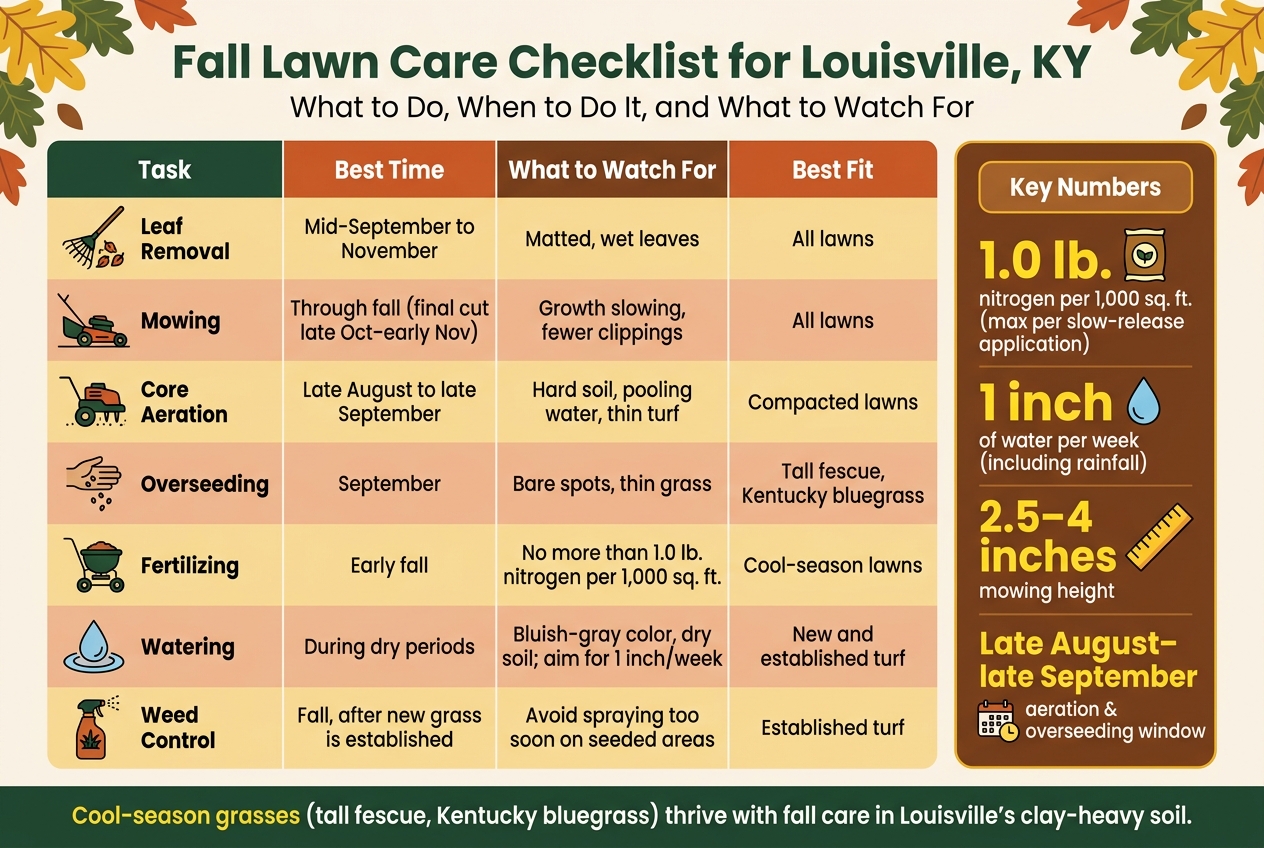
Fall Lawn Care Checklist for Louisville, KY – Timing & Task Guide
Everything YOU Need To Know About Fall Lawn Care
sbb-itb-1c58166
Quick Comparison
| Task | Best Time in Louisville | What to Watch For | Best Fit |
|---|---|---|---|
| Leaf removal | Mid-September to November | Matted, wet leaves | All lawns |
| Mowing | Through fall | Growth slowing, fewer clippings | All lawns |
| Core aeration | Late August to late September | Hard soil, pooling water, thin turf | Compacted lawns |
| Overseeding | September | Bare spots, thin grass | Tall fescue, Kentucky bluegrass |
| Fertilizing | Early fall | Overapplying nitrogen | Cool-season lawns |
| Watering | During dry periods | Bluish-gray color, dry soil | New and established turf |
| Weed control | Fall, after new grass is established | Spraying too soon on seeded areas | Established turf |
This checklist gives you the right fall order, the right timing, and the main numbers to follow before winter sets in.
1. Start with leaf removal and mowing adjustments
After the timing chart, begin with leaves and mowing. Those two jobs shape the rest of your fall lawn work.
Remove or mulch leaves every week during leaf drop
Wet piles of leaves can smother turf and increase disease risk. During peak leaf drop, plan for weekly cleanup. In Louisville, that usually runs from mid-September through November.
If leaf cover is light to moderate, a mulching mower can chop leaves into small pieces that break down and return nutrients to the soil. It’s a simple way to keep up without turning every pass into a bagging job.
When leaf fall gets heavy, rake or bag the leaves so they don’t sit on the grass and mat it down.
Keep mowing through fall and lower the final cut slightly
For Louisville lawns, keep mowing as long as the grass is still growing. One easy sign: when clippings start to thin out, growth is slowing.
Keep mowing height between 2.5 and 4 inches to support root growth and photosynthesis. Before dormancy, lower the final cut a little, but don’t scalp the lawn. If leaves are piling up at the same time, bag or mulch them so the debris doesn’t press into the turf.
Once the lawn is clear and cut to the right height, move on to aeration and overseeding.
2. Aerate compacted soil and overseed thin cool-season lawns
After mowing and leaf cleanup, it’s time to aerate and seed before the weather turns colder.
If you’re seeing bare spots, thin turf, or water sitting on the lawn after rain, your yard likely needs fall aeration and overseeding.
Core aerate from late August through late September
Common signs of compaction include poor drainage, water pooling, hard ground underfoot, and sparse or stunted grass growth. Core aeration removes small plugs of soil, which helps loosen compacted clay soil. Start with the areas that feel the hardest or drain the worst.
There’s another plus here: aeration can help roots grow deeper, which can help the lawn handle dry spells better.
Overseed tall fescue or Kentucky bluegrass in early fall
In Louisville, late August through late September is the best time to overseed. Cooler weather and more moisture help seed germinate and give new grass enough time to build strong roots before winter arrives.
Aerate first, then spread seed while the soil surface is still open. Seeding right after aeration improves seed-to-soil contact, and that gives the new grass a better start. Match the grass type already in your lawn. In most Louisville lawns, that means tall fescue or Kentucky bluegrass.
New seed needs steady moisture before winter. Keep seeded areas evenly moist with about 1 inch of water per week, including rainfall.
3. Fertilize, water, and control weeds before winter
After aeration and overseeding, give your lawn what it needs to settle in before winter: food, water, and basic weed control.
Apply fall fertilizer at the right time
Fall is the best time to fertilize tall fescue and Kentucky bluegrass because cool-season lawns start putting energy into root growth. An early-fall feeding helps the grass bounce back from summer stress and get ready for winter. Add a second round only while the lawn is still actively growing.
If you can, use a slow-release fertilizer. It feeds the lawn bit by bit over several weeks and can help cut nutrient runoff. Don’t overdo the nitrogen. With slow-release products, keep each application at no more than 1.0 lb. of nitrogen per 1,000 sq. ft..
Not sure what to buy? A soil test takes out the guesswork before you spend money on fertilizer. After that, keep the soil evenly moist if rain starts to taper off.
Water during dry stretches, especially after seeding
Fall in Louisville can still turn dry. For established turf, aim for about 1 inch of water per week during dry periods. Water deeply, then wait longer between watering sessions.
A simple rain gauge helps you see how much water your lawn is getting instead of just eyeballing it.
Pay attention to the grass color too. A bluish-gray cast is a solid sign the lawn needs water soon. On the flip side, soggy soil or a spongy feel underfoot usually means you’re watering too much, which can lead to disease and more weeds.
Water early in the morning. That gives the grass time to dry before night, which lowers the chance of fungal problems.
Treat broadleaf weeds without harming new grass
Hold off on weed treatments in newly seeded areas. Once the new grass is established, spot-treat broadleaf weeds with a selective product labeled for your turf.
4. End-of-season checklist and next steps
Use this final pre-winter check before the first hard frost.
Final fall lawn checklist before winter
After mowing, aeration, seeding, fertilizer, and weed control, wrap up with this last pre-winter check.
- Leaves cleared weekly
- Mowing kept at 2.5 to 4 inches
- Core aeration completed
- Tall fescue or Kentucky bluegrass overseeded on time
- Fall fertilizer applied at the right rate
- Watering maintained during dry stretches
- Broadleaf weeds controlled in established turf
Once the grass goes dormant, cut back foot traffic across the lawn. Too much repeated pressure can damage dormant turf.
When to call a professional
Standing water sitting in the yard after a normal rain signals a grading or drainage failure. Drainage and French drain installation redirects that water before freezing temperatures turn it into ice damage. Severe compaction blocks air, water, and nutrients from reaching the roots, and no fertilizer schedule fixes that. Large bare patches need new seed down while soil temperatures still support germination, which is why sod, grading, and seeding work has a hard deadline each fall. A missed aeration and overseeding window carries the weak spots straight into next spring. JTs Lawn and Landscaping handles these fall repairs across St. Matthews, Middletown, La Grange, Crestwood, Hurstbourne, and Prospect before the ground locks up for winter.
FAQs
How do I know if my Louisville lawn is too compacted?
Your lawn may be too compacted if busy areas - or even big patches - stay wet longer than the grass around them, drain poorly, and start to thin out or bounce back slowly after normal wear.
Here’s a simple way to check: push a screwdriver or a core tool into the soil. If it barely goes in, or you can’t pull out a sample core without a struggle, compaction is probably the issue - especially in Louisville’s clay-heavy soils.
What if I miss the September overseeding window?
If you miss the September overseeding window in Louisville, you still have a shot in early October. But timing matters a lot.
The big factor is the first frost. Cool-season grasses need enough time to sprout, settle in, and grow roots before they go dormant for winter.
If temperatures fall too fast, germination can slow down and early growth may stall. That’s why it helps to keep the soil consistently moist and stay off the area as much as you can. Heavy foot traffic can disturb young seedlings before they’ve had a chance to take hold.
If that October window slips by, shift your attention to soil prep and wait until spring to seed.
How long should I wait to treat weeds after seeding?
The search results don’t point to a set waiting period. Your herbicide label is the place to check, since many weed treatments can damage new seedlings or stop germination if you apply them too early.
While you wait, put your effort into soil prep and aeration. Healthy turf has a better shot at filling in well, and that can help crowd out weeds on its own.
Related Blog Posts

How do I get started?

Request a quote — most companies do a free property assessment, walk you through recommended services, and can usually start within a week or two.
Do you take away the grass clippings?
Usually clippings are mulched back into the lawn, they return nutrients and are good for turf health. Bagging and removal is typically available on request or when growth is heavy.
Why does my lawn have brown patches?
Common causes include grubs or other pests, fungal disease, pet urine, drought stress, or mowing too short. Diagnosing the actual cause matters, because the treatments are completely different.
Are your products safe for kids and pets?
Most professional treatments are safe once dry, usually within a few hours of application. Your provider should tell you after each treatment how long to keep kids and pets off the lawn.
When should I fertilize my lawn?
It depends on your grass type and region, but most lawns benefit from feeding in early spring, late spring, and fall. A soil test or professional assessment tells you exactly what your lawn needs.

Book an Appointment
Reach out, we'll come look at your yard, and we'll tell you straight what it needs and what it costs. No pitch, no pressure.
We're a family business in Louisville, and most of our work comes from neighbors referring neighbors. That means you get the same crew every time and a price that won't change on you.
Grab a time that works. Let's take a look.
Request your free quote
We have received your estimate request and will be reaching out to you shortly.