.webp)
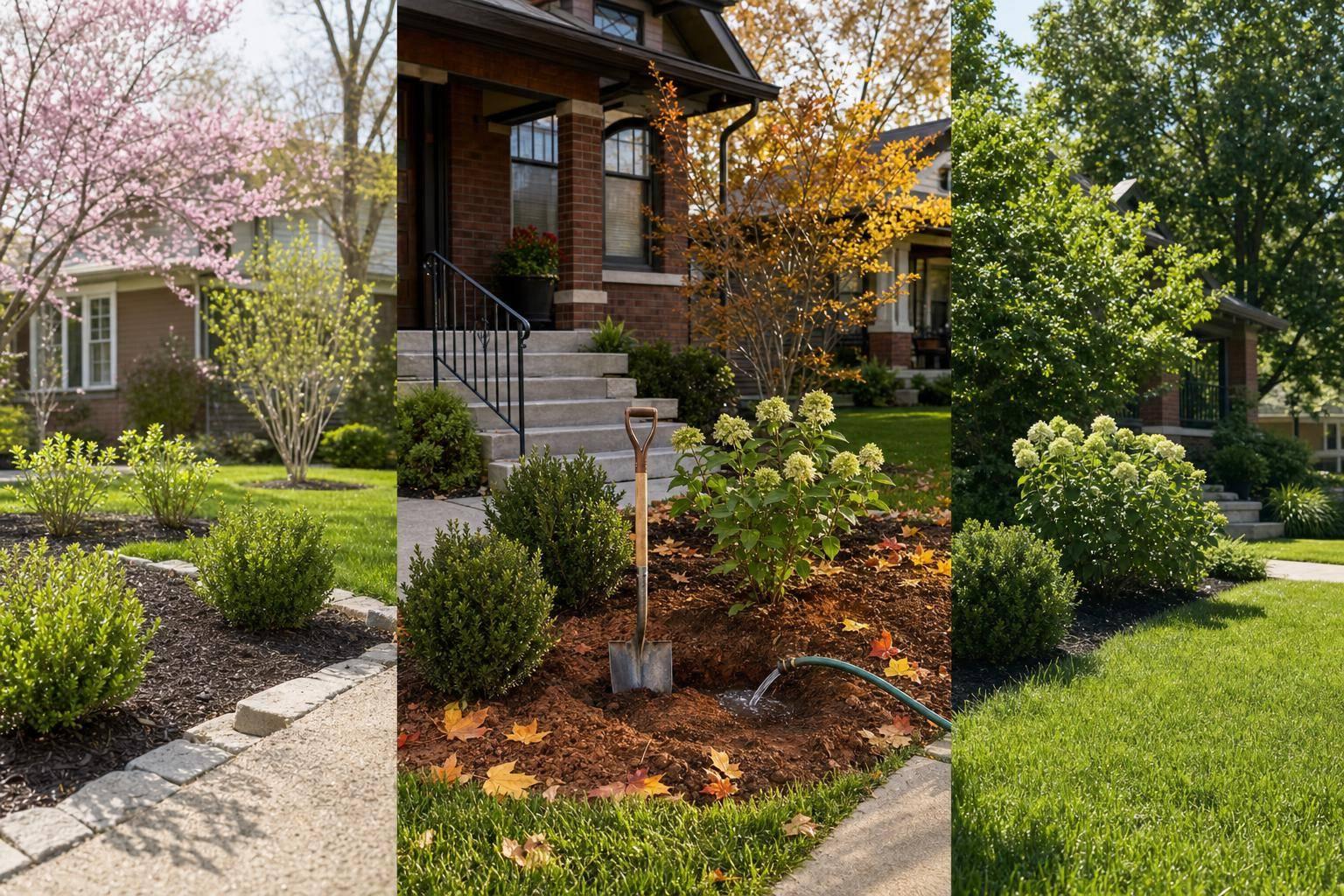
In Louisville, the best time to plant shrubs, perennials, and ornamental grasses is fall, mainly from mid-September to early or mid-November. Choosing what goes where at that point is a landscape design and installation decision, since the plant, the spot, and the season all have to line up together.
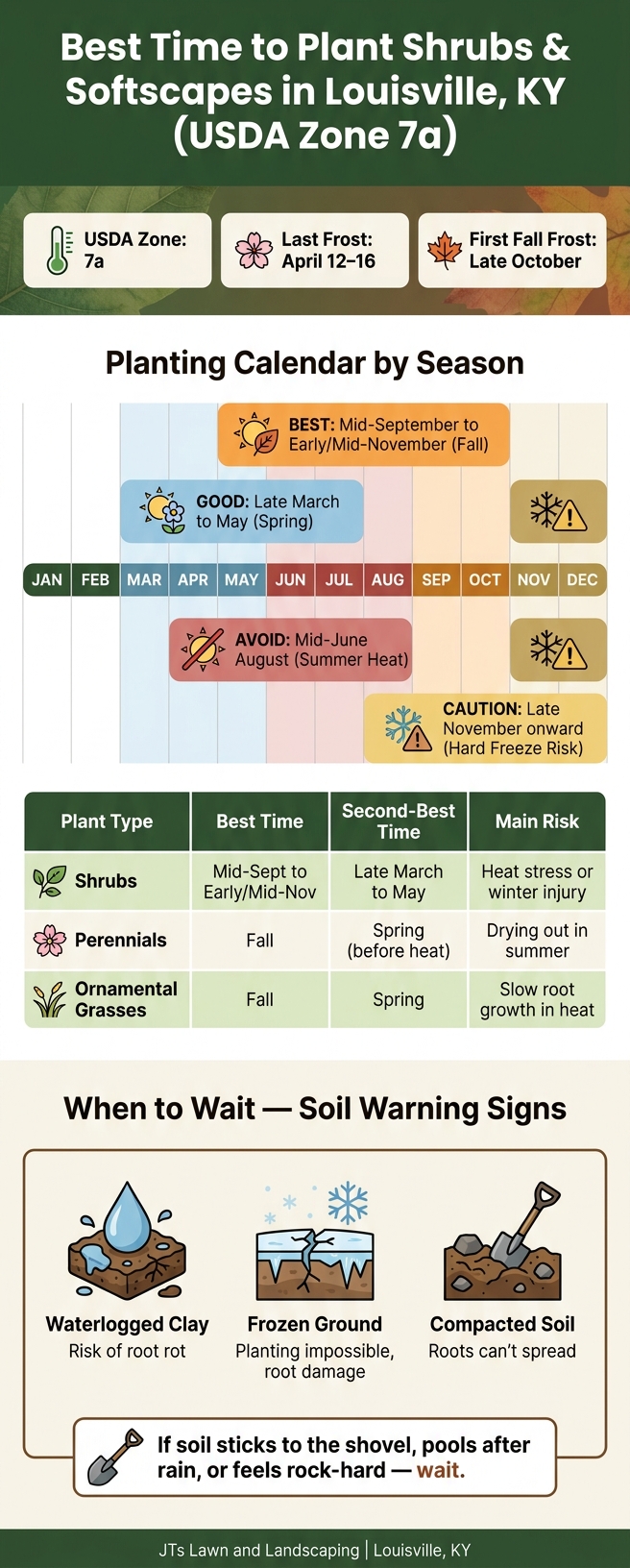
If that window is missed, late March through May is the next choice. Louisville is in USDA Zone 7a, with the last frost often falling around April 12–16 and the first fall frost usually arriving in late October. That gives plants a fair growing season, but hot, humid summers and heavy clay soil make timing tight.
- Best overall planting season: Fall
- Backup season: Spring
- Avoid planting: Mid-June through August
- Wait if soil is: Wet, frozen, or packed hard
- Best for shrubs: Fall first, spring second
- Best for perennials: Fall first, spring if planted before heat
- Best for ornamental grasses: Fall first, spring second
Local conditions explain that schedule:
- Louisville's clay soil often drains slowly
- New roots need cooler air and warm soil to get started
- Summer heat pushes water loss fast
- Late fall freezes can hit before roots settle in
Plant during mild weather, and only when the soil is workable. Planting and softscape work built around that timing gives new shrubs, perennials, and grasses a better start. A mulch layer added right after planting holds soil moisture steady while roots settle in, which is exactly what mulch and rock placement does for a new bed.
| Plant type | Best time | Second-best time | Main risk if timed poorly |
|---|---|---|---|
| Shrubs | Mid-September to early/mid-November | Late March to May | Heat stress or winter injury |
| Perennials | Fall | Spring before heat | Drying out in summer |
| Ornamental grasses | Fall | Spring | Slow root growth in heat |
The rest of the article explains how Louisville weather, frost dates, and clay soil affect that planting window - and when it makes more sense to wait.
Best Time to Plant Shrubs & Softscapes in Louisville, KY
Spring or Fall? When’s the best time to plant trees and shrubs?
sbb-itb-1c58166
Louisville conditions that shape planting windows
Louisville sits in USDA Zone 7a. The last frost usually shows up between April 12 and April 16, and the first fall frost tends to land in late October. That gives you a decent growing season, but it doesn’t always feel steady.
This is a transition-zone climate, so the weather can flip fast. A warm stretch can make new plants start pushing growth, then a cold snap hits and sets them back. That kind of swing is hard on fresh plantings, especially before roots settle in. So yes, weather matters, but soil condition matters just as much.
How clay soil shifts the planting schedule
A lot of Louisville yards have heavy clay soil, and that changes the timing. Clay compacts easily and holds water for a long time. The result? Poor drainage and less oxygen around the roots, which slows growth and can stress new plants.
The key is simple: plant when the soil is workable, not soaked and not frozen. If clay stays wet, roots struggle to move through it. That’s why the best planting window isn’t the same for every softscape plant.
How summer heat and frost affect new plantings
Louisville summers are hot and humid, and new plants feel that pressure fast. Heat drives up water demand before the roots are ready to keep up. For new shrubs and other softscapes, that often means more transplant shock.
Late frost creates the opposite problem. If plants go in too late, they may not get enough time to establish before cold weather hits. Then they head into winter in a weak state.
Put those two pressures together, and the planting window gets pretty tight for shrubs, perennials, and ornamental grasses.
Best planting windows for shrubs and softscapes in Louisville
In Louisville, the best time to plant shrubs and most softscapes is early to mid-fall, with early to mid-spring as the backup option.
Fall works best because roots can settle in while the air is cool and the soil is still warm. That extra root growth matters a lot in Louisville’s clay soil. Clay can be tough on new plants, so giving roots a calmer stretch before summer heat rolls back in can make a big difference.
Here’s how that timing plays out for the landscape plants people plant most often.
Shrubs
For both deciduous and evergreen shrubs, the local timing is the same: fall first, spring second.
The main planting window runs from mid-September through early to mid-November. If you miss that stretch, the backup window is late March through May.
Perennials
Plant perennials in fall for the strongest establishment. Spring also works, as long as you get them in the ground before the heat arrives.
Ornamental grasses
Plant ornamental grasses in fall first. If that window passes, spring is the next-best choice.
When to hold off on planting
Knowing the right time to plant is only half the story. The other half is reading the weather and the soil. A date on the calendar can point you in the right direction, but the ground gets the final say.
High-risk months and weather patterns to watch
Skip planting from mid-June through August. High heat, fast evaporation, and shallow roots can put new plants under severe transplant stress.
It’s also smart to avoid late fall. Hard freezes can hit before roots have time to settle in.
Put planting on hold during:
- Drought
- Prolonged saturation
- Sudden cold snaps
Soil conditions that stop planting work
Even if the season looks right, bad soil can still turn planting into a mistake.
Don’t plant when clay is waterlogged, frozen, or compacted. Waterlogged clay gets even more packed down when you disturb it, and that can lead to root rot. Frozen ground makes planting physically impossible and can damage roots. Compacted soil, which often shows up in high-traffic areas, stops roots from spreading right from the start.
If soil sticks to the shovel, pools after rain, or feels rock-hard, wait.
When conditions are workable, plan the planting day carefully.
How to plan planting work for better results
Plant during a mild stretch so roots have time to settle in before summer heat or winter cold hits. That timing also gives you a better shot at picking the right install method and setting up a watering plan that fits the season.
Fall is the target window for planting. September through early to mid-November is the best stretch because the soil stays warm enough to support root growth, while cooler air puts less stress on the plant. That gives roots time to settle before winter.
Spring planting is workable, but it takes more watering. New plants put in during spring need a closer watering schedule as summer heat gets closer. Spring can work well, but it asks for more hands-on care to keep plants from drying out or slowing down.
A simple Louisville planting calendar
Use this quick calendar to decide whether to plant now or wait.
| Month | Focus |
|---|---|
| Fall | Best window for shrubs and softscapes |
| Spring | Planting is workable, but water closely |
Using JTs Lawn and Landscaping to time planting correctly
Once the timing is right, site prep plays a big role in how well new roots take hold. In Louisville clay, dig wide, shallow holes, go light on compost in the backfill, and water deeply but not too often.
JTs Lawn and Landscaping can help get the site ready with grading, drainage work, mulch installation, and planting services, so your landscape is set when the best planting window opens.
Conclusion: Plant in the right window or wait
In Louisville, plant in fall when you can, spring when you must, and avoid summer heat entirely. Clay soil holds heat and loses water fast once temperatures climb, which is exactly the combination that stresses new roots before they've had a chance to establish. Fall gives shrubs, perennials, and ornamental grasses the cooler air and still-warm soil they need to root before winter, while a spring planting only works if it goes in early enough to establish before summer arrives. Getting that mix right for a specific yard is where landscaping work matters most, since not every plant handles Louisville's swing between heavy clay and hot summers the same way. JTs Lawn and Landscaping treats fall as the default planting window for exactly that reason, and builds a spring plan only when a fall install wasn't possible.
FAQs
How late is too late to plant before winter?
In Louisville, the best time to plant shrubs and other softscape materials wraps up when the ground begins to freeze, which usually happens in late November or early December. After that point, roots don't have much time to settle in before the soil turns too hard.
A good rule of thumb is to finish planting at least six weeks before the first hard frost. Miss that window, and you're usually better off waiting until early spring.
Can I plant after a heavy rain in clay soil?
Avoid planting in clay soil right after heavy rain. When clay is wet, it compacts fast. That can damage the soil structure and leave you with dense, airless ground where roots struggle to settle in. In some cases, the plant may not make it at all.
A simple test helps here: grab a handful of soil and squeeze it. If it crumbles, you're good to go. If it turns into a sticky, plastic-like ball, it's still too wet.
Planting in soggy soil can also increase transplant stress, which may hurt the plant's health over time.
How often should new shrubs be watered after planting?
The available information does not include a watering schedule for newly planted shrubs.
For planting-time guidance in Louisville, use the article’s seasonal recommendations and local conditions.
Related Blog Posts

How do I get started?

Request a quote — most companies do a free property assessment, walk you through recommended services, and can usually start within a week or two.
Do you take away the grass clippings?
Usually clippings are mulched back into the lawn, they return nutrients and are good for turf health. Bagging and removal is typically available on request or when growth is heavy.
Why does my lawn have brown patches?
Common causes include grubs or other pests, fungal disease, pet urine, drought stress, or mowing too short. Diagnosing the actual cause matters, because the treatments are completely different.
Are your products safe for kids and pets?
Most professional treatments are safe once dry, usually within a few hours of application. Your provider should tell you after each treatment how long to keep kids and pets off the lawn.
When should I fertilize my lawn?
It depends on your grass type and region, but most lawns benefit from feeding in early spring, late spring, and fall. A soil test or professional assessment tells you exactly what your lawn needs.

Book an Appointment
Reach out, we'll come look at your yard, and we'll tell you straight what it needs and what it costs. No pitch, no pressure.
We're a family business in Louisville, and most of our work comes from neighbors referring neighbors. That means you get the same crew every time and a price that won't change on you.
Grab a time that works. Let's take a look.
Request your free quote
We have received your estimate request and will be reaching out to you shortly.