.webp)
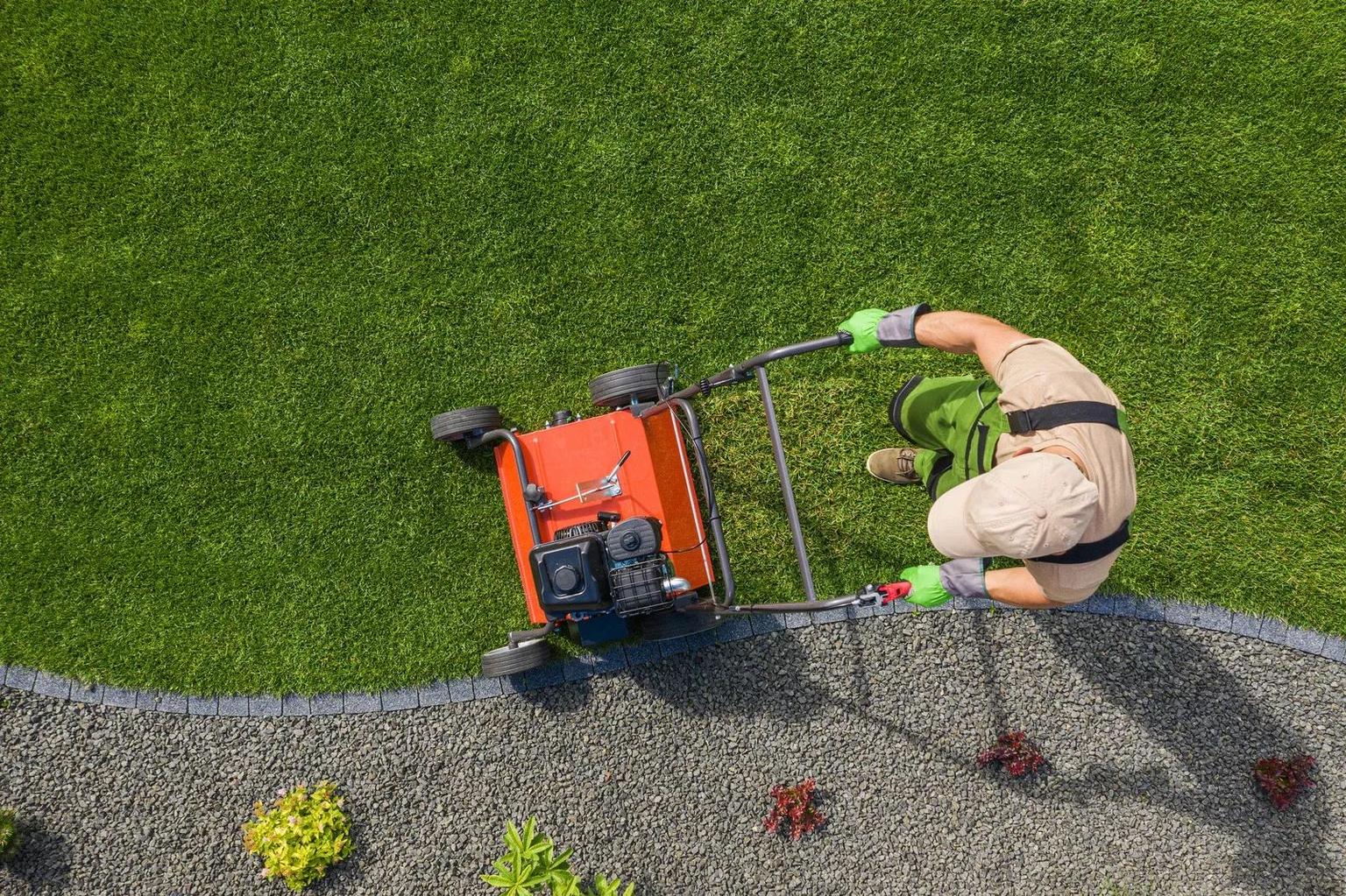
The easiest way to cut yard work in Louisville is to shrink weak lawn areas, use plants that fit local heat and clay soil, add ground covers in hard spots, and use rock or stone only where it solves a clear problem.
Shade, wet spots, steep slopes, and hot sun push a standard lawn toward more mowing, more watering, and more cleanup than most homeowners want. Louisville's Zone 6b/7a climate adds summer highs above 90°F and winter lows between -5°F and 5°F, narrowing what holds up in the toughest corners of a yard.
Here's the short answer:
- Reduce turf first in places where grass struggles — landscape design and installation identifies which sections cost the most upkeep for the least payoff
- Use hardy shrubs, perennials, and grasses that can handle local weather through planting and softscape work
- Plant ground covers under trees, on slopes, and in thin lawn areas, and reseed the turf that stays behind through grading and seeding
- Add mulch, gravel, pavers, or dry creek beds in spots that are hard to mow or stay too wet, using mulch and rock placement
- Fix the worst problem areas first for the biggest drop in weekly upkeep
This article covers the main yard fixes that lower mowing, watering, weeding, and seasonal cleanup without making the landscape look bare or unfinished. JTs Lawn and Landscaping's landscaping work covers each of these fixes, from turf reduction through final mulch and rock placement.
SIMPLE and LOW-MAINTENANCE Landscaping Ideas
sbb-itb-1c58166
Quick Comparison
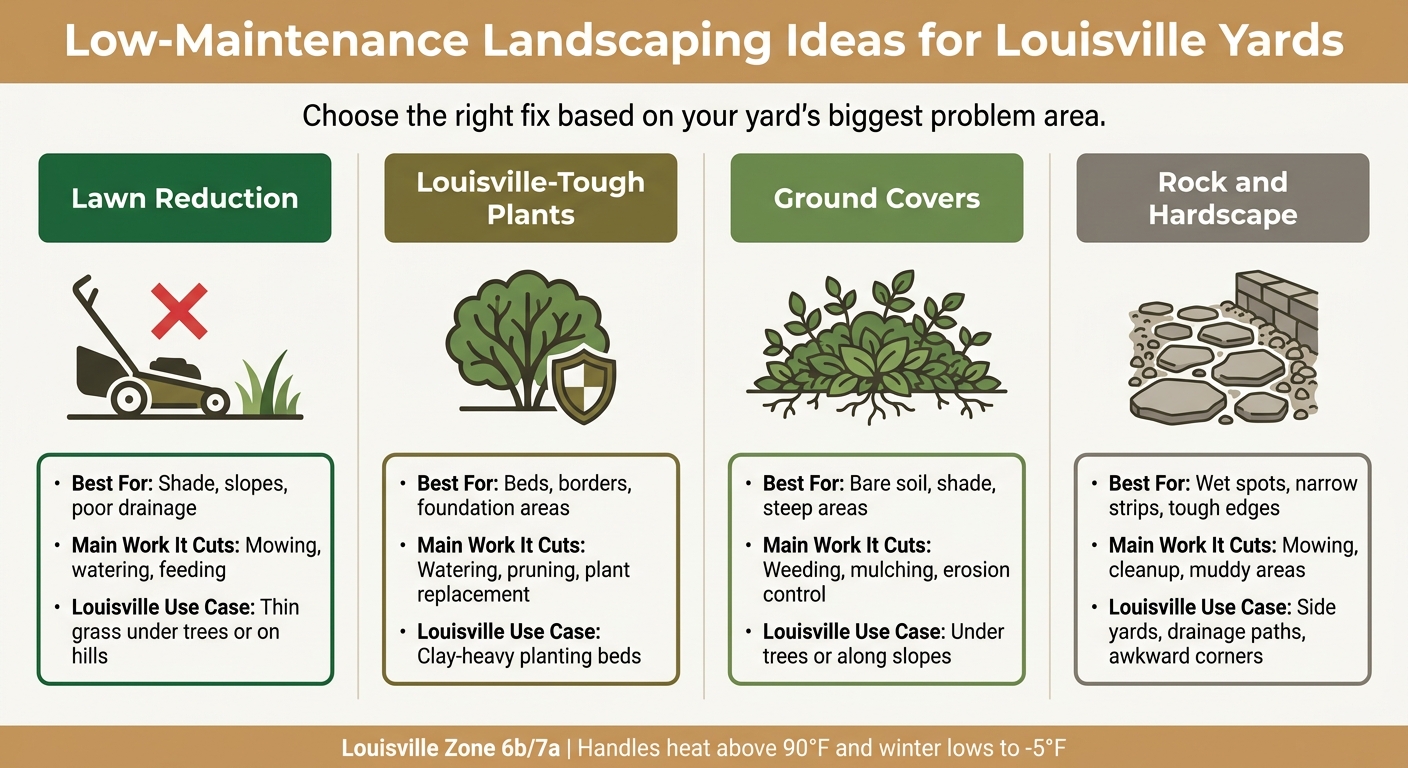
Low-Maintenance Landscaping Ideas for Louisville Yards: Quick Comparison
| Idea | Best For | Main Work It Cuts | Good Louisville Use Case |
|---|---|---|---|
| Lawn reduction | Shade, slopes, poor drainage | Mowing, watering, feeding | Thin grass under trees or on hills |
| Louisville-tough plants | Beds, borders, foundation areas | Watering, pruning, plant replacement | Clay-heavy planting beds |
| Ground covers | Bare soil, shade, steep areas | Weeding, mulching, erosion control | Under trees or along slopes |
| Rock and hardscape | Wet spots, narrow strips, tough edges | Mowing, cleanup, muddy areas | Side yards, drainage paths, awkward corners |
If your goal is a yard that stays neat with less weekly work, these are the main choices that matter most.
What Makes A Landscape Low-Maintenance In Louisville
In Louisville, a low-maintenance landscape starts with one simple idea: work with local conditions, not against them. That means planning around the area's heat, humidity, clay soil, and shade. If your yard fights those conditions, you'll spend more time mowing, watering, pruning, and replacing plants than you want to.
The first place to cut work is usually the lawn. Less turf means less weekly upkeep. Fewer square feet of grass usually leads to less mowing, fertilizing, watering, and chemical care. That's often the biggest shift a homeowner can make.
Plant choice matters just as much. Native or well-adapted Kentucky plants tend to need less watering, less feeding, and fewer pest treatments. They fit the local climate better, so you're not forcing the landscape to do something it doesn't want to do.
After that, it comes down to matching each part of the yard to the site. Shade, wet low spots, and hot slopes each need a different fix. Put the wrong plant in the wrong place, and the extra work shows up fast through more pruning, more watering, and more replacement costs.
When an area needs even less attention, mulch, rock, and hardscape can do a lot of the heavy lifting. They help suppress weeds and lower upkeep, which matters even more in clay-heavy soil. These choices tend to work best when they're tied to the actual problem in the yard, not used as a one-size-fits-all fix.
1. Lawn Reduction
Shrinking your lawn is one of the simplest ways to cut down on weekly yard work. In a Louisville yard, the best payoff usually comes from turf that already struggles with shade, slope, or poor drainage. Those spots tend to take more effort than they’re worth.
- Replace problem turf with mulch beds
Thin turf under trees is tough to keep looking good in Louisville. A simpler fix is to swap that struggling grass for 3–4 inches of hardwood mulch and shade plants like Christmas fern or hosta. Once those plants are established, they need no mowing and very little feeding. If you still want living cover in some spots, ground covers can take the place of more turf.
- Use sheet mulching to shrink lawn edges gradually
Clay soil can make big turf-removal projects messy and disruptive. If you'd rather make changes bit by bit, sheet mulching is a smart route. Lay cardboard or newspaper over the grass, then cover it with mulch or compost. That lets you shrink lawn area without digging. You can widen beds by 1–2 feet per season for a slow, steady transition.
- Convert hot, steep slopes to planted beds
Slopes are a pain to mow safely, and they dry out fast during Louisville summers. Turning those areas into planted beds or ground covers gets rid of a hard-to-manage patch of lawn. Ground covers are a good fit when you want plant cover instead of mulch. On steeper spots, ground covers or hardscape usually work best.
2. Louisville-Tough Plants
Once you cut back turf, plant choice becomes the next big lever for reducing yard work. Pick the right plants, and you cut labor over the long haul.
Louisville sits in USDA Hardiness Zone 6b/7a, so plants need to handle winter lows around -5°F to 5°F, humid summers that often climb past 90°F, and clay soil that brings its own headaches. That soil can stay wet in spring, compact fast, and then bake hard in summer. So plant selection isn't just about looks. It's about choosing plants that can deal with shady areas, soggy low spots, and hot, exposed beds without constant attention.
The best options are native or well-adapted plants that match Louisville's rainfall and weather. In most cases, that means:
- Compact shrubs
- Clump-forming perennials
- Ornamental grasses that stay put
These types usually need less extra watering once they're established. And growth habit matters more than many people think. Clump-forming plants help keep bed lines neat, stay contained, and cut back on edging and cleanup. If you want even less work, ground covers can close up open space and help keep beds looking full without a lot of fuss.
3. Ground Covers
Ground covers cut down on yard work in Louisville’s thin, shady, or hard-to-mow areas. They cover bare soil, block weeds, and help hold slopes in place. If turf has already been removed - or never did well there in the first place - ground covers are usually the next move.
Look for plants that can deal with compacted clay, humid summers, and winter freezes. In Louisville, they tend to do best in the same trouble spots that make grass a headache: shade, slopes, and bare patches.
The right pick comes down to sunlight:
- Shade-tolerant spreaders: Best under trees and along shaded bed edges where turf starts to thin out.
- Low-growing covers for sunny spots: A good fit for open ground and slopes where you want erosion control and fewer weeds.
- Slow-filling covers for deep shade: Best for the darkest corners, where grass gives up and full coverage takes time.
All three can cut the need for new mulch each year, help the soil hold moisture during hot summers, and reduce erosion on grades.
4. Rock and Hardscape
Rock and hardscape shine in the parts of a Louisville yard that are a pain to keep up with - slopes, skinny side strips, soggy low spots, and edges that are tough to mow. Gravel, stone edging, stepping stones, pavers, and dry creek beds can help cut back on mowing, watering, and cleanup.
Before you put any of that in place, do the prep work first. Remove weeds, roots, and old plant material. Then grade and compact the base so the surface stays even and drains the way it should.
Different materials solve different yard problems, which makes the next comparison worth a look.
Quick Comparisons For Choosing The Right Idea
These options fix different yard headaches. The best pick depends on where the problem shows up most.
Use lawn-reduction ideas in the areas that eat up the most mowing time. For beds and foundation zones, go with plants that can handle Louisville conditions. Ground covers work well in shady spaces or on slopes where grass often struggles. Rock or hardscape makes sense for narrow areas, wet spots, or places that are just plain annoying to mow.
A Simple Plan To Convert A High-Maintenance Yard In Stages
Once you know which parts of the yard will take the least upkeep, tackle them in the order that cuts the most work first. In Louisville, that usually means starting with the spots that are hardest to keep up because of the local weather and soil. Those areas tend to give you the biggest payoff early.
Start by clearing out weeds, roots, debris, and old plants. Then grade the soil so it’s ready for new planting. If there are old hardscape features in the way, remove them during this first cleanup too. That gives the new layout a clean footprint from the start.
After that, add mulch beds or native plants. Bring in hardscape only when it fixes a clear problem, like mowing trouble, drainage issues, or poor access. That way, each phase solves a maintenance headache instead of turning the whole yard into one giant project.
Conclusion
The best Louisville yards come down to a few simple choices that match the site and cut down on weekly work in the city's heat, humidity, and clay soil. A thorough cleanup comes first, clearing old growth and debris so new beds sit on a stable base instead of compacted soil left over from last season. Grading and seeding work often starts right there, leveling the ground before anything new goes in.
From that base, the biggest gains come from combining the right pieces: less lawn, hardy plants, and ground covers working together instead of one wide stretch of turf. Landscape design and installation maps out where each piece goes before any digging starts. Planting and softscape work fills those beds with shrubs, perennials, and ground covers suited to Louisville's clay and heat. Mulch and rock placement finishes the transition zones, holding moisture and keeping weeds down between plantings.
JTs Lawn and Landscaping ties these pieces together around what a property actually needs, not a fixed template. That kind of landscaping work is what turns a cleanup into a finished yard that asks for less mowing, watering, weeding, and cleanup going forward.
FAQs
What should I replace grass with first?
Start with the parts of the yard that give you the most trouble, like steep slopes, shady patches, or awkward corners that are a pain to mow.
Swap those spots for hardy native plants, ground covers, mulch beds, or rock accents. That can mean less mowing, less watering, and fewer headaches. It can also help with drainage while keeping the yard looking neat and easy to use.
Which low-maintenance plants work best in Louisville?
The search results don’t list specific low-maintenance plants for Louisville yards or for Kentucky’s climate.
So the main issue is simple: there isn’t enough Louisville- or Kentucky-specific information here to make plant picks with confidence.
For accurate suggestions, you’d need more local data, such as:
- USDA hardiness zone details for Louisville
- Kentucky-native or Kentucky-friendly plant lists
- Soil and drainage conditions common in local yards
- Sun, shade, and rainfall patterns in the area
Without that local context, any plant recommendations would be more guesswork than solid advice.
When should I use rock instead of plants?
Use rock in spots where grass and shrubs tend to struggle, like areas with poor drainage, deep shade, or exposed sections that are tough to water and keep up.
Stone gives your Louisville yard a permanent, low-maintenance feature that cuts down on weeding and watering while helping the space stay neat and functional all year.
Related Blog Posts

How do I get started?

Request a quote — most companies do a free property assessment, walk you through recommended services, and can usually start within a week or two.
Do you take away the grass clippings?
Usually clippings are mulched back into the lawn, they return nutrients and are good for turf health. Bagging and removal is typically available on request or when growth is heavy.
Why does my lawn have brown patches?
Common causes include grubs or other pests, fungal disease, pet urine, drought stress, or mowing too short. Diagnosing the actual cause matters, because the treatments are completely different.
Are your products safe for kids and pets?
Most professional treatments are safe once dry, usually within a few hours of application. Your provider should tell you after each treatment how long to keep kids and pets off the lawn.
When should I fertilize my lawn?
It depends on your grass type and region, but most lawns benefit from feeding in early spring, late spring, and fall. A soil test or professional assessment tells you exactly what your lawn needs.

Book an Appointment
Reach out, we'll come look at your yard, and we'll tell you straight what it needs and what it costs. No pitch, no pressure.
We're a family business in Louisville, and most of our work comes from neighbors referring neighbors. That means you get the same crew every time and a price that won't change on you.
Grab a time that works. Let's take a look.
Request your free quote
We have received your estimate request and will be reaching out to you shortly.