.webp)
In Louisville, leaf cleanup should start when leaves begin to mat on grass, beds, and pavement, not just when the calendar says fall.
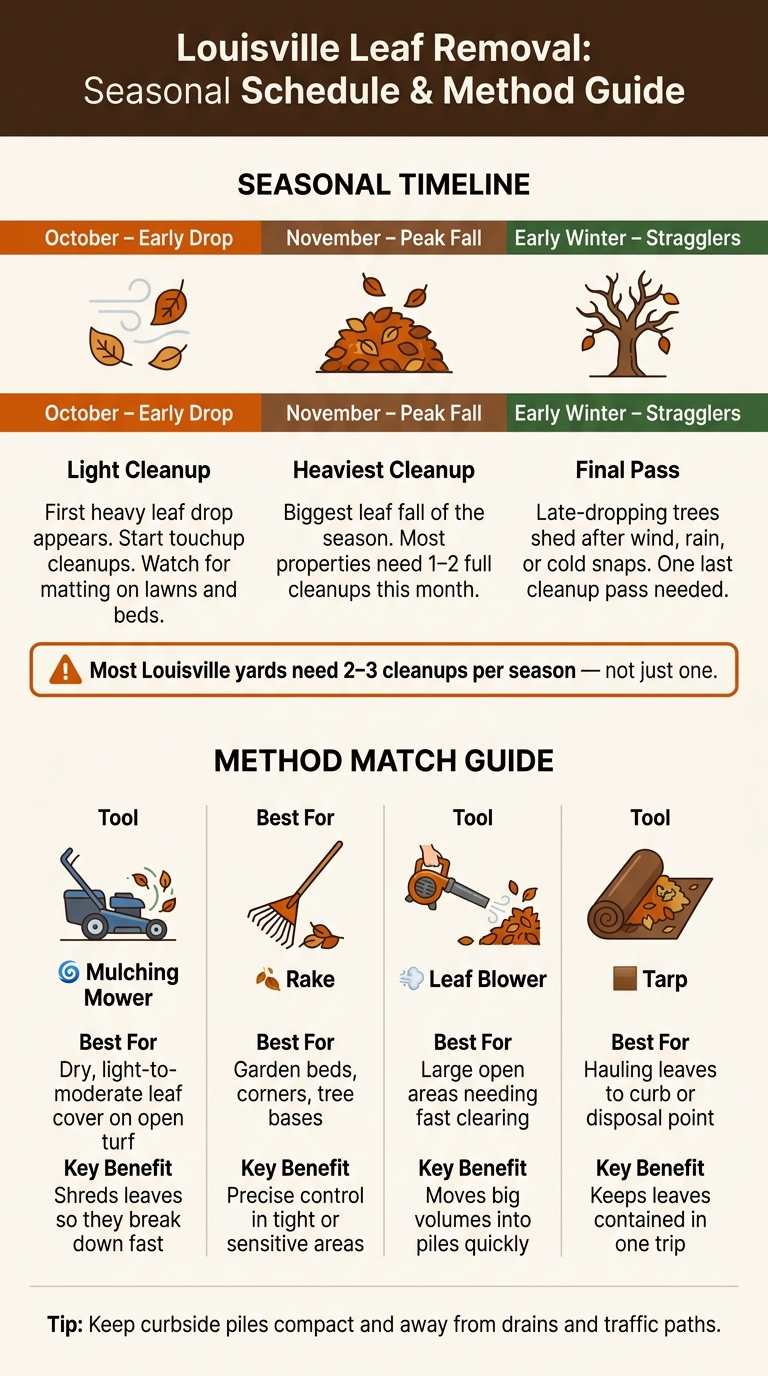
If leaves sit too long, they trap moisture, block sunlight, and make walkways slick. In most Louisville yards, that means light cleanup in October, heavier work in November, and one last pass in early winter if trees keep dropping. A yard may need 2 to 3 cleanups during the season, not just one.
- Start in October when the first heavy drop shows up
- Expect the biggest leaf fall in November
- Watch for wet, packed leaves on lawns, beds, driveways, and walkways
- Use the right tool for each spot: mulch on open turf, rake in beds, blow large areas into piles, and use a tarp to haul leaves
- Keep piles away from drains and traffic paths
The main goal is simple: remove thick leaf cover before it smothers turf, holds too much moisture, or creates slippery surfaces.
| Area | What to watch for | Best next step |
|---|---|---|
| Lawn | Wet, matted leaves blocking grass | Mulch light cover or remove heavy buildup |
| Planting beds | Leaves packed around shrubs and stems | Rake out damp piles |
| Walkways and driveways | Slick leaf patches | Blow or rake clear right away |
| Curbs and drains | Leaf piles blocking water flow | Move piles away and keep them neat |
That gives readers the short answer up front: in Louisville, leaf removal is mostly about timing, repeat cleanup, and matching the tool to the surface.
Louisville Leaf Removal Schedule: When & How to Clean Up Each Fall
When leaves start causing problems in Louisville
Once leaves pile up in thicker patches, the focus moves from when leaves fall to when you need to clean them up. In Louisville, leaf cleanup usually begins in October and turns into a regular chore by November. And because some leaves keep dropping into early winter, the work doesn’t always wrap up with one pass.
Louisville fall timing: October drop, November peak, and late-season stragglers
In Louisville, many trees start dropping leaves in October, then hit their heaviest fall in November. Some keep shedding into early winter, especially after wind, rain, or a cold snap. That stop-and-start pattern is why most properties need more than one cleanup visit during fall, not just one big sweep at the end.
The real trigger: thick leaf cover on grass, beds, and paved areas
A light layer of scattered leaves usually isn’t a big deal. Trouble starts when leaves clump together and form a mat. At that point, they can block sunlight from reaching cool-season grass and hold moisture against the turf and soil.
You’ll usually know cleanup can’t wait when you see leaves:
- Matted over lawn areas
- Packed into landscape beds
- Gathering on driveways and walkways
Those spots are the clearest sign that it’s time to remove leaves.
sbb-itb-1c58166
Signs it is time to remove leaves from your property
Don’t go by the calendar. Go by what’s happening in your yard. Once these signs show up, pick the fastest cleanup method for each area.
Leaves are smothering cool-season grass
The most obvious sign is a thick mat of wet, packed leaves sitting on your lawn. When leaves clump up and stay damp, they cut down airflow to the grass underneath. Cool-season grass needs that airflow to stay in good shape.
Shady spots and low areas usually show trouble first. These parts of the yard hold more moisture and take longer to dry, so leaf buildup there can turn from minor to harmful faster than most people expect. If you spot turf that looks pressed down or thin under a heavy layer of leaves, clear it right away.
That same soggy buildup that puts stress on turf also causes trouble around edges and paved areas.
Beds, curbs, walkways, and driveways are collecting wet piles
Leaves stacked against shrubs and along the edges of garden beds hold moisture against plant stems and soil. That can lead to rot and mold.
On hard surfaces, wet leaves can make driveways and walkways slippery fast. Near curbs and drainage paths, piled leaves can also block water flow.
If you’re seeing these signs, switch to the right removal method next. Match the cleanup tool to the surface before the layer gets thicker.
Leaf removal methods that work for Louisville lawns
When leaves start sticking together on grass or building up on pavement, the best move is simple: use the fastest tool for the surface in front of you.
Choose the right tool: mulching mower, rake, blower, or tarp
Mulching mowers are a good fit for dry, light-to-moderate leaf cover on open turf. They chop leaves into small pieces so they break down fast without smothering the grass. Skip this method when leaves are heavy, wet, or matted, since that can clog the mower.
Rakes make more sense in garden beds, tight corners, and around tree bases. In spots like these, a blower or mower can hit plants or disturb roots.
Leaf blowers help you move big amounts of leaves into piles fast. They’re handy when speed matters and you need to clear a larger area without much back-and-forth.
Tarps make hauling a lot easier. Rake or blow leaves onto a tarp, then drag the whole load to the curb or your hauling point in one trip. Less mess, less scatter, less hassle.
Keep curbside piles neat and ready for pickup or hauling
Keep piles compact and out of drains and traffic paths. Place them close to the curb or hauling point so pickup or loading goes more smoothly.
Comparison table: which leaf removal method fits each job
| Method | Best Use Case | Key Benefit |
|---|---|---|
| Mulching mower | Dry, light-to-moderate leaf cover on open turf | Shreds leaves so they break down without smothering grass |
| Rake | Beds, corners, and tree bases | Precise control in sensitive areas |
| Leaf blower | Fast pile-up on large areas | Moves leaves into piles quickly |
| Tarp | Moving leaves to the curb or disposal point | Keeps leaves contained during transport |
How often to clean up and why it matters for winter and spring
Once you've matched the tool to the job, the next step is timing the cleanups. Leaves don't all come down at once. They tend to fall in waves, which means one cleanup usually won't cut it.
Plan for early touchups, peak-season cleanups, and a final pass
A simple schedule works well: an early October touchup, a November cleanup, and a final pass after the last leaves fall. That approach isn't just about saving time. It also keeps the work from piling up all at once.
Why timely cleanup protects turf, beds, and hard surfaces
Good timing protects the lawn through winter, too. Clearing leaves on a steady schedule gives turf a better shot at going into winter healthy, with a stronger bounce back in spring.
The same logic applies to planting beds and paved areas. Wet leaves need to come out of beds before they settle in and hold moisture against plants. On walkways and driveways, steady leaf removal cuts down on slick spots and keeps hard surfaces safer to walk on.
JTs Lawn and Landscaping runs this same early-October, November, final-pass rhythm across its cleanup accounts, since matching the schedule to how Louisville leaves fall matters more than the number of visits.
FAQs
Can I leave some leaves on my lawn?
Yes, but only if the leaves are finely shredded.
A mulching mower chops leaves into small pieces so they break down and feed your turf like a natural fertilizer.
The key is to keep the leaf layer thin. If leaves pile up into a thick mat, they can smother the grass by blocking sunlight, holding too much moisture, and encouraging mold. When buildup gets heavy, clear it off completely.
What should I do with wet leaf piles?
Don’t let wet leaf piles sit on your turf for long. When leaves stay packed down and damp, they trap moisture, which can lead to mold and smother your grass.
A simple fix: use a leaf blower to spread the leaves out so they dry faster. Then mulch them with a mower, or rake them onto a tarp and bag them for local curbside collection.
Clearing out heavy, wet leaves helps protect your turf and garden beds.
Do Louisville yards usually need more than one cleanup?
Yes. In Louisville, fall yard cleanup often takes more than one visit because trees don't drop all their leaves at the same time.
That matters more than most people think. When leaves sit too long, they can smother cool-season grass, hold moisture, and create the kind of damp layer that leads to mold and other lawn health problems. They also pile up in beds and across walkways, which makes the whole yard look messy and harder to manage.
Scheduling multiple cleanups helps keep:
- Turf clear so grass can breathe and get light
- Beds from getting buried under wet leaf buildup
- Walkways safer and cleaner throughout the season
It’s a simple way to stay ahead of the mess instead of letting it stack up all at once.
Related Blog Posts

How do I get started?

Request a quote — most companies do a free property assessment, walk you through recommended services, and can usually start within a week or two.
Do you take away the grass clippings?
Usually clippings are mulched back into the lawn, they return nutrients and are good for turf health. Bagging and removal is typically available on request or when growth is heavy.
Why does my lawn have brown patches?
Common causes include grubs or other pests, fungal disease, pet urine, drought stress, or mowing too short. Diagnosing the actual cause matters, because the treatments are completely different.
Are your products safe for kids and pets?
Most professional treatments are safe once dry, usually within a few hours of application. Your provider should tell you after each treatment how long to keep kids and pets off the lawn.
When should I fertilize my lawn?
It depends on your grass type and region, but most lawns benefit from feeding in early spring, late spring, and fall. A soil test or professional assessment tells you exactly what your lawn needs.

Book an Appointment
Reach out, we'll come look at your yard, and we'll tell you straight what it needs and what it costs. No pitch, no pressure.
We're a family business in Louisville, and most of our work comes from neighbors referring neighbors. That means you get the same crew every time and a price that won't change on you.
Grab a time that works. Let's take a look.
Request your free quote
We have received your estimate request and will be reaching out to you shortly.