.webp)
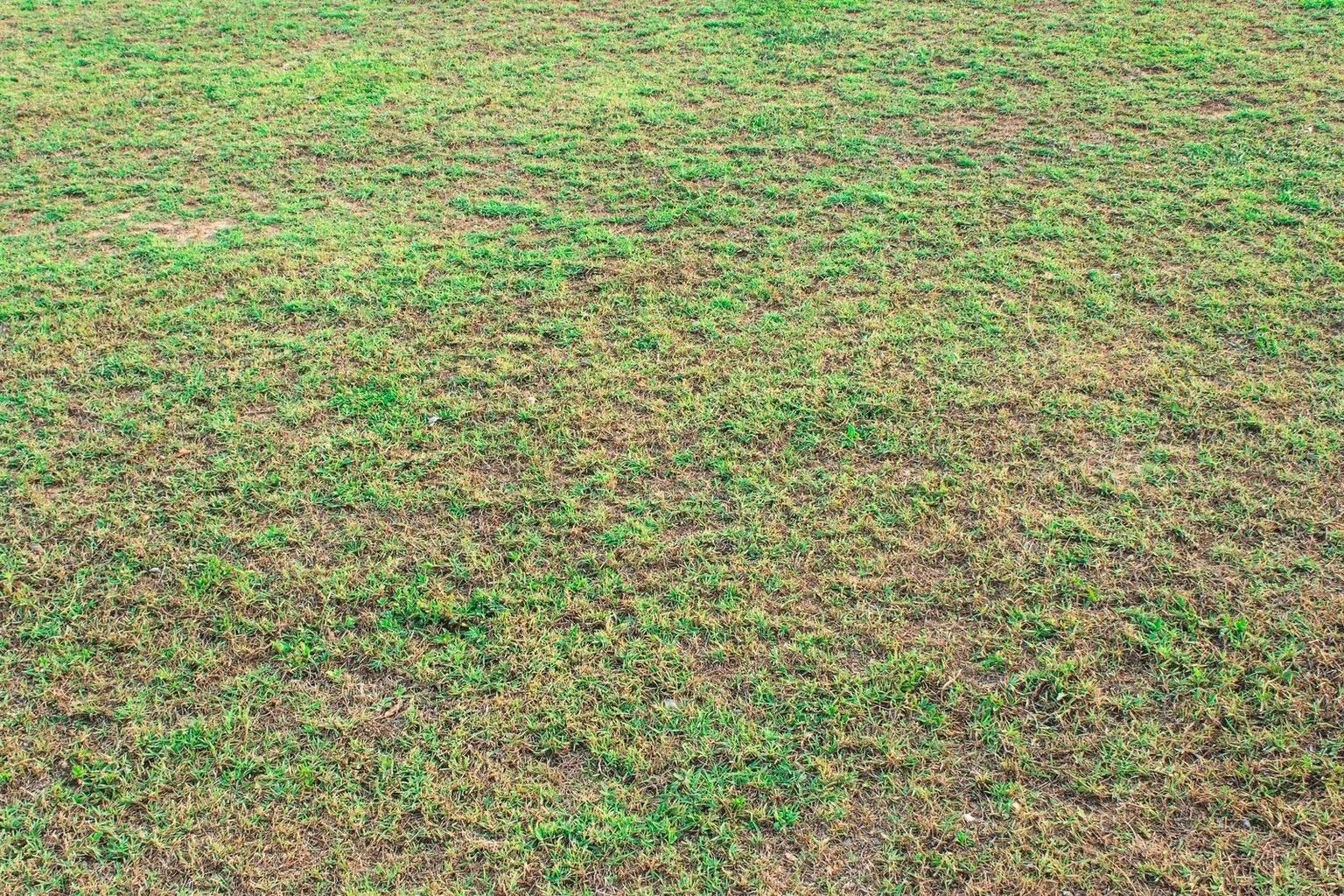
If your Louisville lawn is thinning, turning yellow, or dying in patches, the cause is usually heat stress, compacted clay soil, drainage trouble, shade, fungus, grubs, or watering mistakes.
Your lawn often gives the answer away by the pattern of damage. Hard soil and thin grass often point to compaction. Soggy spots and repeat bare areas usually mean drainage problems. Round straw-colored patches often show up with fungal disease during hot, humid weather. And if turf pulls up like loose carpet, grubs may be feeding on the roots.
Before changing anything, check a few basics:
- Look for puddles after rain or watering
- Press into the soil to see if it feels hard or too wet
- Check shaded areas that stay thin year after year
- Watch color changes like blue-gray drought stress or yellow wet spots
- Lift weak turf gently to see whether roots are still attached
In Louisville, summer weather puts cool-season grass under pressure, especially in clay-heavy yards. That is why many lawns do not fail all at once. Instead, they thin out bit by bit through July and August, when heat, humidity, shallow roots, and disease pressure all stack up.
| Lawn symptom | Most likely cause | Best next step |
|---|---|---|
| Thin grass across much of the yard | Compaction, shallow roots, heat, or feeding issues | Check soil firmness, mowing height, and summer fertilizer use |
| Bare spots that keep coming back | Drainage or compacted clay | Look for puddling, low spots, and hard ground |
| Circular yellow or straw patches | Fungal disease | Cut back summer nitrogen and water early in the morning |
| Limp, yellow turf in wet ground | Overwatering or drainage trouble | Water less often and inspect runoff or pooling |
| Blue-gray, dry, crispy turf | Not enough water | Water deeply in the morning |
| Turf lifts up with few roots | Grubs | Confirm larvae before treating |
The rest of the article walks through each sign so you can match the symptom to the cause and avoid wasting time on the wrong fix.
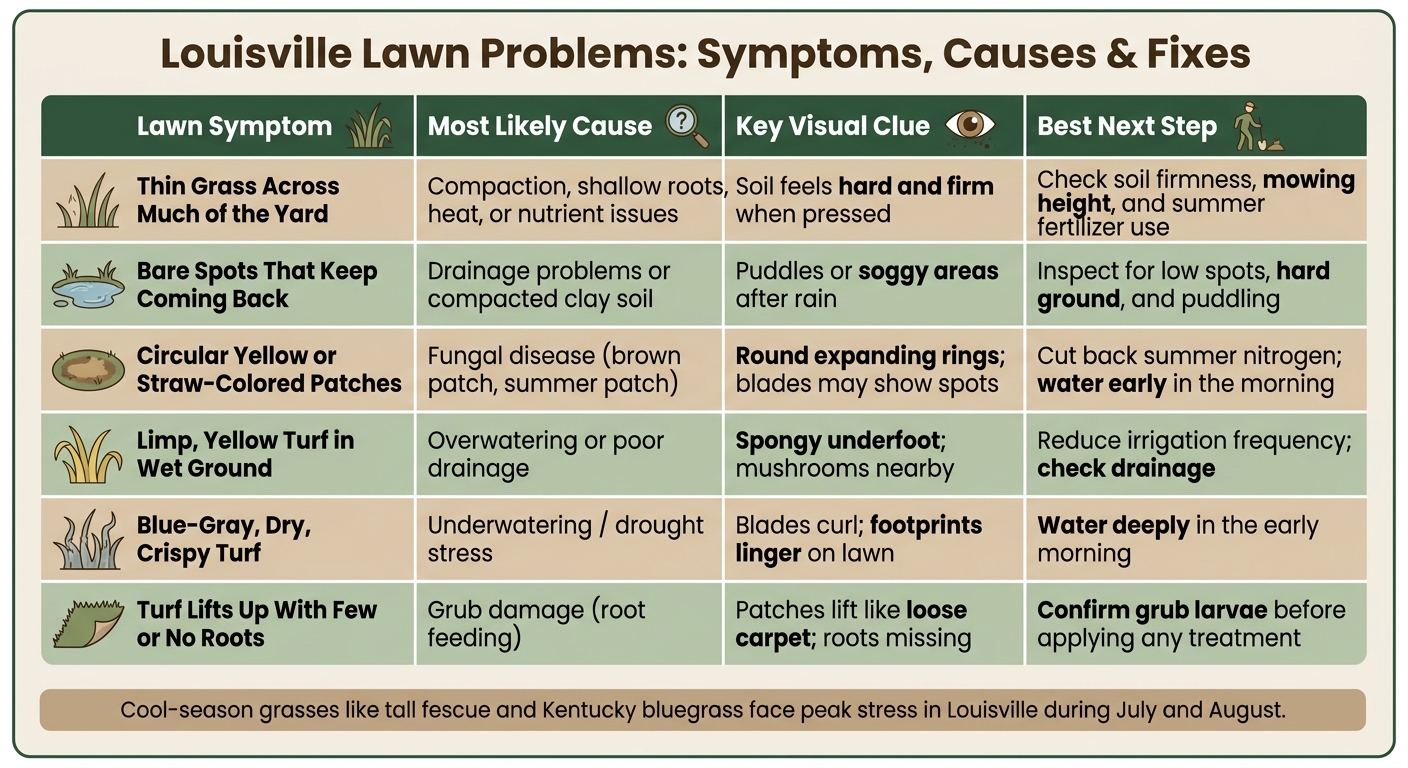
Louisville Lawn Problems: Symptoms, Causes & Fixes
Start With What You See: Matching Symptoms to Causes
Before you change watering, fertilizer, or seed, look at the damage pattern first. The way the lawn is failing usually tells you where to start.
Widespread Thinning, Patchy Die-Off, and Summer Decline
When thinning shows up across most of the yard, the problem is often lawn-wide. In Louisville, that usually means compaction, excess nitrogen, or stress from clay soil.
Dead patches that show up unevenly are a different story. Those often point to local trouble spots, like poor drainage, standing water after rain, or fungal disease. Take-all patch can leave large round bare spots.
Lawns that lose color in July and August often have shallow roots. If roots stay near the surface, the grass struggles to reach moisture after the topsoil dries out.
When the pattern suggests the site itself is the issue, the next step is to look at soil and drainage.
Simple Checks to Do Before Changing Anything
After the next rain or irrigation cycle, walk the yard and look for puddles or soggy spots. Water that sits after rain usually points to grading or drainage problems.
Then check whether the soil feels overly firm in the weak areas. Compacted soil can limit root growth and may mean it's time for core aeration.
Also pay attention to whether the problem areas stay shaded or wet. Those clues can help you sort out whether you're dealing with a shade issue, a moisture issue, or a drainage problem before you change anything.
If the soil stays firm or water keeps pooling after rain, move to soil and drainage problems. If the signs point to compaction or poor drainage, deal with the soil first.
sbb-itb-1c58166
Soil, Compaction, and Drainage Problems Common in Louisville Yards
Louisville lawns often thin out for two soil-related reasons: compaction or poor drainage. The giveaway is usually pretty simple: how the ground feels and what water does after it rains.
If weak turf keeps struggling in the same spots, the soil is often the issue.
How Clay Soil and Compaction Weaken Grass
Dense clay soil limits airflow and slows water movement. That also makes it harder for roots to grow deep, so grass can thin out even when you stay on top of lawn care.
Compaction makes the problem worse. Over time, foot traffic and heavy equipment press soil particles together. Instead of soaking in, water starts to run off, and the grass slowly loses strength. A compacted area often feels hard when it's dry. After rain, water tends to slide across the surface instead of sinking in.
For compaction, core aeration is usually the best first step. It removes small plugs of soil and opens space for air, water, and roots to move through the ground more easily. Adding compost or other organic matter can also help improve the soil over time and support deeper root growth.
Hard soil and soggy soil can leave similar-looking thin patches in a lawn, but the cause isn't the same.
Wet Spots, Puddling, and Chronic Bare Areas
Drainage problems tend to show up differently from compaction. Instead of hard ground, you'll see soil that stays wet for hours or even days after rain. Low areas and spots near downspouts are common trouble zones.
Yellowing grass in wet areas is a warning sign. When soil stays saturated, roots don't get enough oxygen, and that stress can give turf fungus an opening. Moss or algae in shady, low spots can point to the same issue. So can bare patches that keep coming back in the exact same area.
Next Steps for Compacted or Poorly Drained Soil
- Compaction: Core aeration, compost top-dressing, and less traffic on wet ground. If the problem keeps coming back, adding compost over time can help rebuild soil structure.
- Drainage: Adjust watering, clear debris from existing drains, and keep people off saturated areas. Bigger fixes may include regrading, French drains, or redirecting downspouts.
When bare spots keep returning in the same low area, especially near the home's foundation or a downspout, the yard may need regrading so water moves away instead of pooling. A professional evaluation can help sort out whether grading work or a drainage system makes more sense.
If the soil feels firm and drainage seems normal, the next things to check are heat, shade, and mowing height.
Heat Stress, Shade, and Mowing Habits That Cause Summer Thinning
If soil and drainage aren’t the issue, the next places to look are summer heat, shade, and mowing habits. In other words, once the ground checks out, the problem is often happening above the turf.
Why Tall Fescue and Bluegrass Struggle in Louisville Summers
Tall fescue and Kentucky bluegrass are cool-season grasses. They do their best work in cooler parts of the year. But when Louisville’s hot, humid summer weather settles in, growth slows, the lawn loses some of its bounce-back ability, and recovery from foot traffic or dry periods gets harder.
Summer fertilizing can also go sideways. High nitrogen during hot, humid weather can set the stage for fungal issues like brown patch and summer patch. Heavy summer nitrogen can increase fungal pressure.
A better path is to go lighter on nitrogen and pay more attention to soil organic matter. That can help roots grow deeper into clay soil and improve drought resistance over time.
Shade and Mowing Problems That Keep Turf From Filling In
Shade is its own issue, and it often looks a lot like heat stress. Grass that stays thin under trees, bare soil that never fills back in, or moss creeping into low-traffic spots usually points to one thing: not enough light.
Mowing habits can make that worse. Taking off too much grass at once or mowing with dull blades puts turf under stress, slows recovery, and leaves brown, frayed tips behind. It’s better to mow high and avoid removing more than one-third of the blade at one time.
When the same shaded area thins out year after year, the issue is light, not seed.
Changes That Improve Turf Survival and Density
The fixes here are pretty simple:
- Raise the mowing height for cool-season grass
- Keep mower blades sharp
- Skip heavy nitrogen applications during peak summer heat
- Water early in the morning so the grass dries fast, which helps limit the conditions that let fungal disease spread
Heat stress calls for less summer nitrogen and better soil health. Shade stress often needs something other than turf. Mowing stress usually comes down to a higher cut and sharper blades.
And sometimes the hard truth is this: some spots just aren’t meant for grass. Deep shade under mature trees rarely supports dense turf. A professional lawn evaluation can help you see whether recovery makes sense or whether a non-turf option is the better fit.
Grubs, Fungal Disease, and Mistimed Watering or Fertilizing
If soil, shade, and mowing aren't the problem, the next place to look is below the surface. Root damage, lawn disease, or bad timing with water and fertilizer can all leave grass thin, brown, and stressed.
Grub Damage and Fungal Disease Symptoms to Watch For
Grub damage has one dead-simple clue: the turf lifts like a loose rug. If you can peel up a patch with little effort, the roots are gone. Grubs feed on the root system underground, so the grass has nothing left to anchor it. These spots usually look uneven and scattered.
Fungal disease shows up in a different way. Brown patch and summer patch often appear as circular or straw-colored patches that slowly spread during hot, humid weather. Take-all patch can leave large bare circles and often needs soil treatment and resodding.
How Overwatering, Underwatering, and Mistimed Fertilization Make Problems Worse
Watering and fertilizer habits can make a bad lawn look even worse. Overwatered turf often looks limp and yellow, feels spongy when you walk on it, and may have mushrooms close by. Underwatered turf usually turns a blue-gray color, the blades start to curl, and footprints hang around long after you've crossed the lawn.
Morning watering helps turf dry out faster, which lowers disease pressure. Heavy summer nitrogen can make disease worse.
"Too much nitrogen often causes more severe disease." - Alan Henn, Ph.D., Extension Professor and Plant Pathologist
For Kentucky lawns, fall is the main feeding season. That's usually the best time to help the grass recover without dealing with the same level of disease pressure.
When to Adjust Care Habits and When to Call for a Lawn Evaluation
Before you try any treatment, do a quick hands-on check. Push a screwdriver into the soil. If it barely goes in, the ground is too dry. If it slides in with almost no resistance, the soil is too wet. Then try lifting a weak patch of turf. If it comes up with no roots attached, you're likely looking at grubs, not a watering problem.
Here’s a simple way to match the signs with the most likely cause:
| Condition | Patch Appearance | Key Visual Clue | Best Next Step |
|---|---|---|---|
| Grub Damage | Irregular brown patches | Lifts easily; roots missing | Treat for grubs only after confirming larvae |
| Fungal Disease | Circular or straw-colored; expanding | Blades may have spots or lesions | Reduce nitrogen; water in the morning; treat for the specific disease |
| Overwatering | Limp, yellowing grass | Spongy underfoot; mushrooms nearby | Reduce irrigation frequency; check drainage |
| Underwatering | Blue-gray tint; crispy patches | Blades curl; footprints linger | Deep, infrequent watering in early morning |
If the damage spreads fast, comes back every summer, or seems tied to more than one issue, it's time to schedule a lawn evaluation. That way, the fix matches the actual problem instead of turning into guesswork.
Conclusion: Match the Symptom to the Cause Before You Treat the Lawn
Louisville lawns usually thin out for a few reasons at once: clay soil, summer heat, mowing stress, drainage trouble, disease, or grubs. Treating the actual cause matters more than guessing at one.
Matching the pattern to what's happening starts with the signs themselves. Circular patches that keep spreading usually point to fungal disease. Soil that feels hard as a brick signals compaction. Bare spots that come back in the same place every year point to something more than seed, which is why JTs Lawn and Landscaping typically starts with grading and reseeding rather than repeating a treatment that already failed once. Soggy ground has its own signature: water sitting in the same low spot season after season means the yard isn't draining, and drainage or French drain installation fixes that at the source instead of masking it with more topsoil.
If bare spots keep coming back or water keeps pooling in the same area, that pattern is worth a professional evaluation rather than another guess.
FAQs
When should I aerate a Louisville lawn?
In Louisville, spring is the best time for core aeration. It gives your lawn a chance to bounce back after winter and loosen soil packed down by foot traffic or heavy snow before the growing season starts.
That timing matters even more because many Louisville lawns have clay-based soil. Clay compacts fast, and when that happens, roots have a harder time growing and getting what they need. That’s why annual aeration is such an important part of keeping a lawn healthy and more resistant to drought.
If you’re not sure whether your yard needs it, it’s smart to ask a professional to check for compaction.
Can dead grass come back, or do I need to reseed?
It depends on why the turf was damaged in the first place.
Some lawns can bounce back with soil treatment and better maintenance. But more serious issues, like persistent fungal disease, may mean you'll need to reseed or replace the sod.
If poor drainage or chronic water pooling caused the grass to die, the soil may need professional regrading before reseeding. Otherwise, new turf may not take hold.
A professional evaluation can also confirm whether the roots are still viable.
How do I know if my lawn needs a professional evaluation?
Consider bringing in a pro if problems stick around even after steady care and a few DIY attempts.
It makes sense to get expert help for poor drainage, standing water, improper grading, recurring dead patches, suspected fungal disease, or a lawn that still struggles after regular maintenance. A lawn care professional can also diagnose underlying issues like compaction or nutrient imbalances.
Related Blog Posts

How do I get started?

Request a quote — most companies do a free property assessment, walk you through recommended services, and can usually start within a week or two.
Do you take away the grass clippings?
Usually clippings are mulched back into the lawn, they return nutrients and are good for turf health. Bagging and removal is typically available on request or when growth is heavy.
Why does my lawn have brown patches?
Common causes include grubs or other pests, fungal disease, pet urine, drought stress, or mowing too short. Diagnosing the actual cause matters, because the treatments are completely different.
Are your products safe for kids and pets?
Most professional treatments are safe once dry, usually within a few hours of application. Your provider should tell you after each treatment how long to keep kids and pets off the lawn.
When should I fertilize my lawn?
It depends on your grass type and region, but most lawns benefit from feeding in early spring, late spring, and fall. A soil test or professional assessment tells you exactly what your lawn needs.

Book an Appointment
Reach out, we'll come look at your yard, and we'll tell you straight what it needs and what it costs. No pitch, no pressure.
We're a family business in Louisville, and most of our work comes from neighbors referring neighbors. That means you get the same crew every time and a price that won't change on you.
Grab a time that works. Let's take a look.
Request your free quote
We have received your estimate request and will be reaching out to you shortly.