.webp)
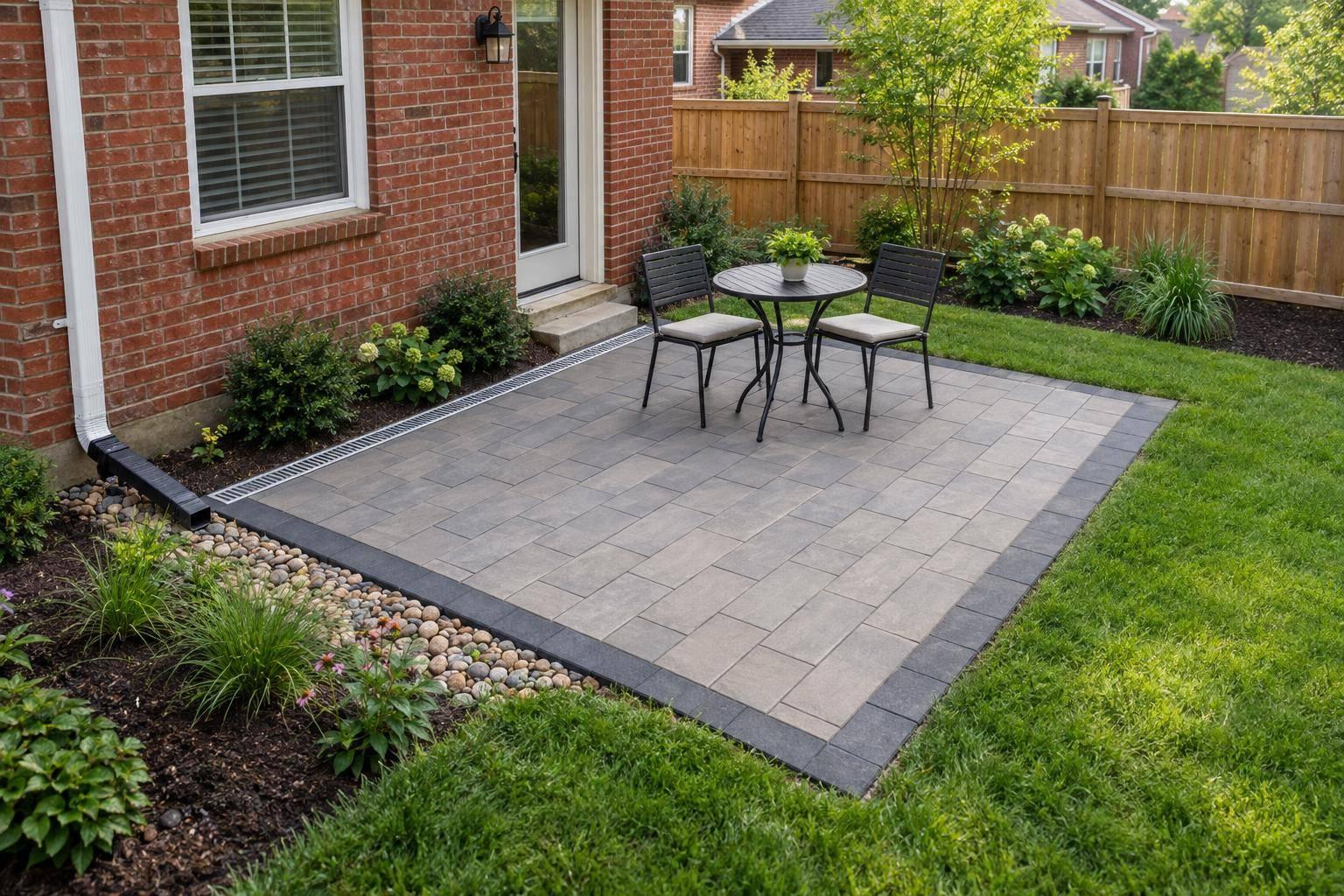
Choose the smallest patio that fits your furniture - and plan drainage before you dig. Measure space for chairs, walking paths, and door swings, then check your yard after rain. Louisville’s clay-heavy soil and freeze-thaw cycles make a stable base and clear runoff route just as important as the layout.
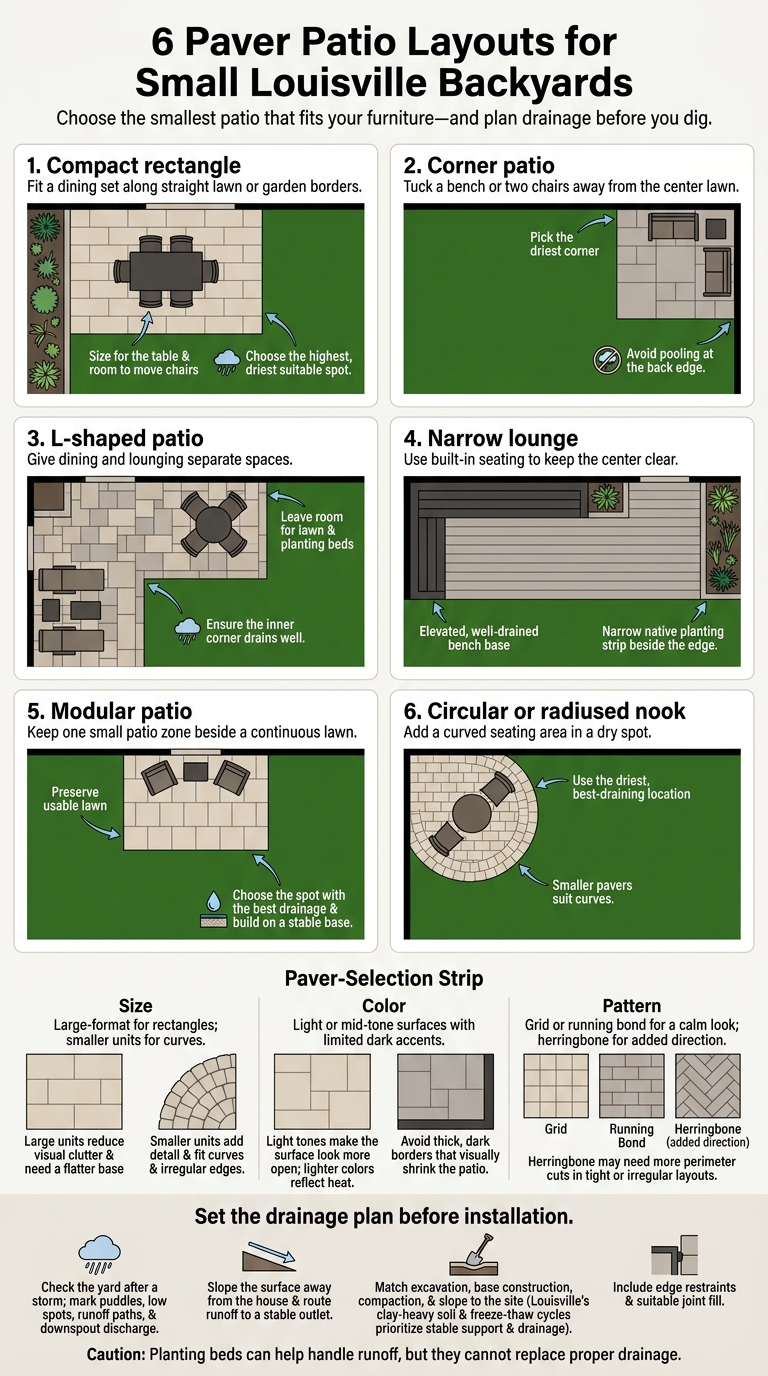
Your 6 layout options are:
- Compact rectangle: Fit a dining set along straight lawn or garden borders.
- Corner patio: Tuck a bench or two chairs away from the center lawn.
- L-shaped patio: Give dining and lounging separate spaces.
- Narrow lounge: Use built-in seating to keep the center clear.
- Modular patio: Keep one small patio zone beside a continuous lawn.
- Circular or radiused nook: Add a curved seating area in a dry spot.
Keep the finish simple: larger pavers suit rectangles, smaller units suit curves, and light or mid-tone colors with limited dark accents help the space feel open. Choose a grid or running bond for a quiet look, or herringbone for more direction.
<u>Set the drainage plan before installation.</u> Match excavation and base depth to your site, slope the surface away from the house, and include edge restraints and suitable joint fill. Planting beds can help handle runoff, but they cannot replace proper drainage.
6 Paver Patio Layouts for Small Louisville Backyards
Build a BACKYARD PAVER PATIO by Yourself
sbb-itb-1c58166
Plan Your Patio Around Space and Louisville Site Conditions
Sketch your patio area in feet and inches. Mark door swings, steps, downspouts, gates, and garden beds so you can see what the layout needs to work around.
Louisville rain can leave yards saturated, so check your yard after a storm before choosing the patio footprint. Mark puddles, low spots, and runoff paths. Pay attention to where downspouts discharge, too.
Let drainage guide the footprint, base depth, and water-management features. Use your drainage assessment to choose the joint fill and plan any rain-garden connection. A rain garden or native bed is part of the drainage plan - not a replacement for it. These findings will help narrow the layout choices below.
1. Compact Rectangular Dining Patio
A rectangular patio gives a dining set a clean fit while keeping straight borders along the lawn or garden beds. Size it for the table and enough room to move chairs, and stop the edge before it cuts into either area.
Choose the highest, driest suitable spot in the yard. Prepare the base properly and direct runoff away from the patio edge to help limit movement during Louisville’s freeze-thaw cycles. A narrow planting strip or rain garden along the perimeter can soften the border and help manage runoff.
If a full dining pad feels too large, the next option moves seating into a smaller corner footprint.
2. Corner Seating Patio
If a dining pad feels too large, a corner nook with a small bench or two chairs keeps the patio compact and leaves the center lawn open. Pick the driest corner and set the base slightly above ground level to keep water from pooling at the patio’s back edge in Louisville’s wet conditions. The next layout offers more options for seating and space to move around.
3. L-Shaped Patio for Two Uses
Give dining and lounging their own zones along a house or fence line. Place a compact dining set on one arm of the L and lounge seating on the other. This layout leaves the yard open and keeps space for planting beds.
Make sure the inner corner drains well so runoff doesn’t pool there in Louisville’s wet conditions. The layout’s clean edges also make it easier to choose paver patterns later.
4. Narrow Paver Lounge With Built-In Seating
A built-in bench makes a narrow patio work harder without taking up extra width. Rather than creating separate dining and lounge zones, place seating along one edge. This keeps the center open and leaves room for lawn or planting beds.
Install the bench on an elevated, well-drained base. A narrow strip of native plants softens the hard edge without using much patio space. For a lighter feel, the next option divides the layout into smaller zones while keeping the lawn.
5. Modular Paver Patio With Lawn Preserved
A modular layout lets homeowners keep more lawn while reducing the patio footprint without giving up function.
Use one small, simple patio zone along an edge or in a corner. This keeps the center lawn continuous and usable.
Choose the spot with the best drainage and build on a stable base to help limit movement caused by Louisville’s clay soil and freeze-thaw cycles.
For a softer shape, the next option uses a small circular or radiused seating nook.
6. Small Circular or Radiused Seating Nook
A circular or radiused nook softens a tight backyard and creates a natural seating area without boxy edges. Place it in the driest, best-draining part of the yard to prevent water from pooling. The paver size and pattern will then shape how open or compact the nook feels.
Compare Paver Sizes, Colors, and Patterns
Once the layout is set, match paver size to the footprint. Large-format pavers work well for rectangular patios. Smaller units fit curved nooks, tight transitions, and irregular edges. Then choose the color and pattern.
| Choice | Best Use | Visual Effect | Installation Consideration |
|---|---|---|---|
| Paver size | Large-format for rectangles; smaller units for curves | Large units reduce visual clutter; small units add detail | Large units need a flatter base; small units fit curves and irregular edges better |
| Color contrast | Light or mid-tone surfaces with limited dark accents | Light tones make the surface look more open | Lighter colors reflect heat |
| Pattern | Grid or running bond for a calm look; herringbone for added direction | Calm or directional, depending on the pattern | Herringbone may need more perimeter cuts in tight or irregular layouts |
Keep colors and borders simple. Thick, dark borders can make the patio look smaller. Simple choices help a small patio feel open and make installation easier on a tight site.
For Louisville’s wet, freeze-thaw climate, choose durable, textured pavers. Large-format units are less forgiving of uneven support, so pay close attention to the base.
Louisville Installation and Drainage Checklist
Once you’ve chosen a layout, settle the drainage plan before excavation. Check low spots against the patio’s final footprint, slope the surface away from the house, and route runoff to a stable outlet.
Remove unsuitable material beneath the patio. Have the installer match the base construction, compaction, excavation depth, and slope to your site - not a one-size-fits-all rule.
Use these site conditions to guide preparation:
| Site Condition | Design or Preparation Requirement |
|---|---|
| Clay soil | Use a deeper, well-compacted base. |
| Low spots | Set elevations so water drains away safely. |
| Slopes | Control runoff with a consistent pitch. |
| Downspouts | Redirect roof water away before installation. |
| Edges | Keep lawn and bed grades from trapping water. |
With drainage and base preparation in place, install the patio to fit the chosen layout. Include edge restraints and joint fill in the installation plan. Excavation, compaction, and drainage need to work together to prevent water from collecting beneath the patio.
Coordinate patio installation with any drainage improvements. Keep drainage features, mulch, soil, and lawn grades from blocking the patio’s runoff route.
Conclusion: Choose the Smallest Patio That Meets Your Needs
Choose the smallest patio that fits how you’ll use it - for dining, relaxing, or gathering. Keep access clear and leave room for lawn or garden beds. Before installation, check the final layout against your drainage plan. It should move water away and keep pavers stable in Louisville’s wet soil and freeze-thaw conditions.
FAQs
How much space do I need around patio furniture?
The provided search results don’t state how much clearance patio furniture needs. To determine the right spacing for your layout, consult a professional landscape designer or refer to standard architectural guidelines for outdoor living spaces.
Do permeable pavers work in Louisville’s clay soil?
Permeable pavers can work in Louisville, but clay-heavy soil and high rainfall call for careful planning. Clay soil can become saturated and cause drainage problems, so JTs Lawn and Landscaping recommends making water management a priority.
Proper installation - including a well-designed sub-base - helps manage runoff, prevent pooling, and keep your small backyard patio usable.
How can I prevent pavers from shifting in winter?
To keep pavers from shifting during Louisville winters, start with proper drainage and a stable base. Louisville’s clay-heavy soil and freeze-thaw cycles can make waterlogged ground expand and contract beneath your patio.
Level and compact the base, and make sure water can drain away. These steps help limit movement as moisture levels change and keep your patio layout intact year-round.
Related Blog Posts

How do I get started?

Request a quote — most companies do a free property assessment, walk you through recommended services, and can usually start within a week or two.
Do you take away the grass clippings?
Usually clippings are mulched back into the lawn, they return nutrients and are good for turf health. Bagging and removal is typically available on request or when growth is heavy.
Why does my lawn have brown patches?
Common causes include grubs or other pests, fungal disease, pet urine, drought stress, or mowing too short. Diagnosing the actual cause matters, because the treatments are completely different.
Are your products safe for kids and pets?
Most professional treatments are safe once dry, usually within a few hours of application. Your provider should tell you after each treatment how long to keep kids and pets off the lawn.
When should I fertilize my lawn?
It depends on your grass type and region, but most lawns benefit from feeding in early spring, late spring, and fall. A soil test or professional assessment tells you exactly what your lawn needs.

Book an Appointment
Reach out, we'll come look at your yard, and we'll tell you straight what it needs and what it costs. No pitch, no pressure.
We're a family business in Louisville, and most of our work comes from neighbors referring neighbors. That means you get the same crew every time and a price that won't change on you.
Grab a time that works. Let's take a look.
Request your free quote
We have received your estimate request and will be reaching out to you shortly.