.webp)
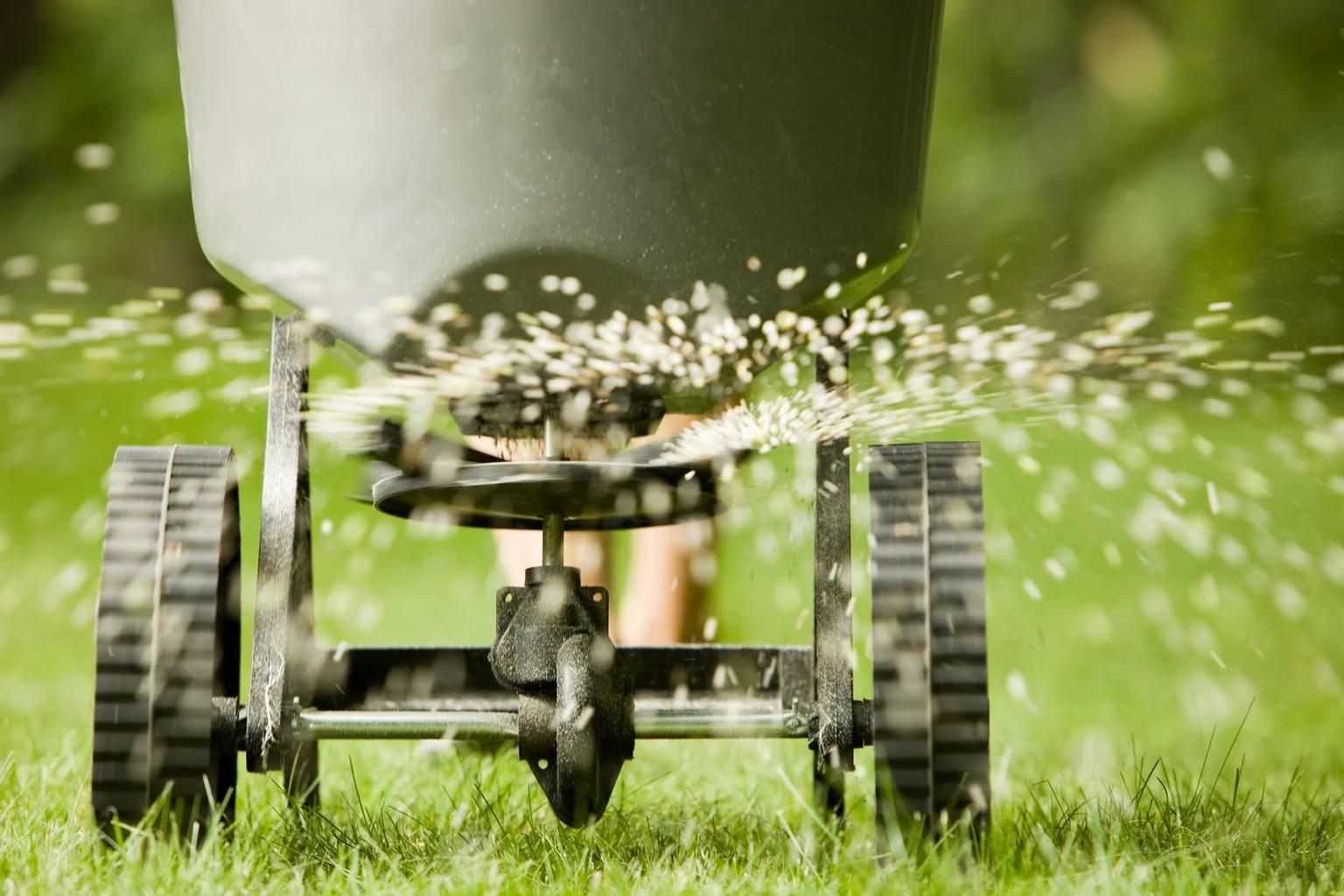
Yes. Lawn fertilizer can be safe for kids and pets, but only if you follow the label and keep them off the grass until the product says it's okay.
Check the label, apply the product at the correct rate, complete any watering or drying step, and wait for the listed re-entry time. That matters even more with products that combine fertilizer with weed control in one application, since those often carry stricter re-entry rules than fertilizer alone.
- There is no one-size-fits-all wait time
- Granular, liquid, organic, and weed-and-feed products can all carry different rules
- Kids, pets, toys, bowls, and gear should stay off the lawn during treatment
- Most problems happen when someone goes back on the grass too soon
- If exposure happens, use the first-aid steps on the label and call poison control or a vet right away
Fertilizer and Pets
sbb-itb-1c58166
Quick Comparison
| Product type | What you usually need to do | When kids and pets can return |
|---|---|---|
| Granular fertilizer | Spread it evenly; some products need water after use | After the label’s watering and wait steps are done |
| Liquid fertilizer | Spray it evenly and avoid drift | After the grass is fully dry, if the label says so |
| Weed-and-feed | Follow added herbicide rules with care | Only after the label’s re-entry rule is met |
| Organic fertilizer | Use as directed; still clean up stray product | Only when the label says it’s safe |
A few extra steps also lower risk: measure the lawn so you don’t use too much, sweep stray granules off hard surfaces, store fertilizer in the original container, and keep the label nearby in case of trouble. If a child or pet has skin, eye, or stomach symptoms after contact, move them away from the area and get help at once.
That’s the core answer readers need before getting into the rest of the article.
How Fertilizer Type Affects Safety Rules
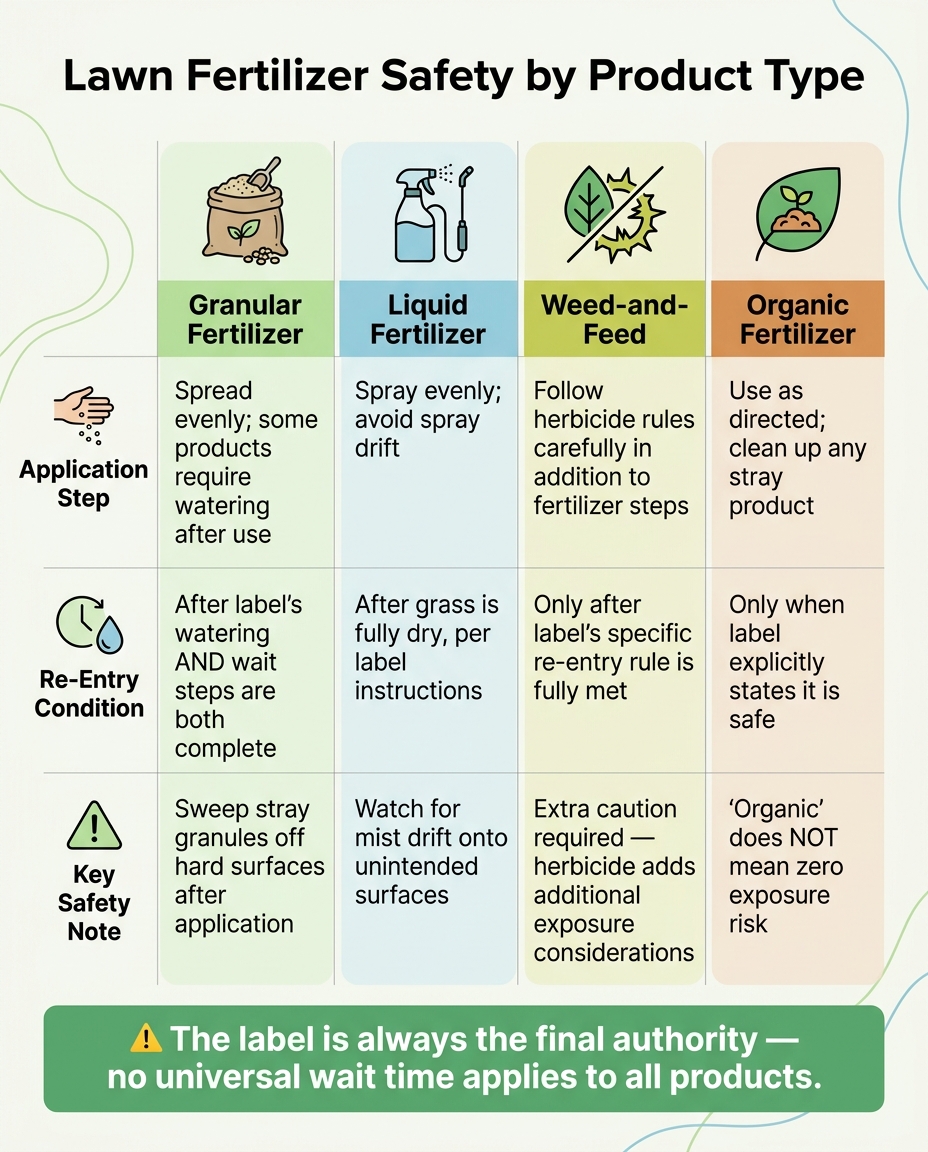
Lawn Fertilizer Safety by Product Type: Re-Entry Rules for Kids & Pets
The label is still the final authority, but the kind of fertilizer you use often shapes the safety steps that come with it.
Safety rules can change a lot from one product to another. Granular, liquid, and weed-and-feed fertilizers often come with different re-entry directions. And despite the name, organic products don't automatically mean zero exposure risk.
That’s why product type matters so much. It gives you a good sense of what to watch for before, during, and after application.
Next, the main fertilizer types break down into different safety rules.
When Children and Pets Can Go Back on the Grass
Re-entry comes down to one thing: the product label.
Not the weather. Not a general rule of thumb. And not what worked with a different lawn product last time.
The only timing rule that matters is the one on the label, especially whether the product needs to dry fully or be watered in first.
Read the Label Before Application and Keep Everyone Off During Treatment
Before you open the bag or fill the tank, check two parts of the label: "Directions for Use" and "Precautionary Statements." That’s where you’ll find the application rate, any protective gear you need, and the re-entry rule.
While you’re treating the lawn, keep children, pets, toys, and food and water bowls off the area. That includes the full treatment window: spreading, spraying, watering in, and drying.
Water In or Let Dry Based on Product Directions
Follow the label’s re-entry condition exactly: either water in the product or wait until the grass is fully dry.
It’s pretty simple, but it matters. If the label says the product must be completely dry, wait until it is. If the label says to water it in, finish that step before anyone goes back on the grass.
Re-Entry Checklist for Louisville Lawns
Before kids or pets head back onto treated grass, make sure all of these are true:
- Label checked for rate and re-entry rule before application
- Required watering completed for granular products, or grass is fully dry for liquid products
- Children, pets, and outdoor items kept off the area during treatment and until the label condition is met
Once that re-entry condition is met, the next step is storage and cleanup to cut down contact even more.
How to Lower Risk Before, During, and After Application
Even if you follow the label, the way you handle, apply, and store fertilizer still shapes exposure risk. Small choices matter here.
Application Steps That Cut Exposure Risk
Start by measuring your lawn area with care so you know how much product to use. More fertilizer does not mean a healthier lawn. It just adds product you don't need and can increase exposure risk.
Before you spread or spray anything, check your equipment. A leaking spreader or a clogged sprayer can put product down unevenly, including on driveways, sidewalks, or other spots you never meant to treat. It also helps to move outdoor items out of the treatment area before you begin.
Try not to apply fertilizer right before heavy rain. Runoff can wash product into storm drains, which is the last place you want it to go.
Storage and Cleanup That Protect Children and Pets
After the job is done, sweep stray granules off driveways, sidewalks, and patios and put them back onto the lawn. That simple cleanup step can keep kids and pets from coming into contact with product where they play or walk.
For storage, keep fertilizer in its original container, sealed tightly, in a locked and dry spot that's out of reach of children and pets. Never pour it into an unlabeled bag or container. If there's ever a problem, the label helps with emergency identification.
Clean your spreader or sprayer after each use by following the manufacturer's directions. And watch where the rinse water goes. It shouldn't drain into a storm drain.
Questions to Ask a Lawn Service Before Treatment
If you're hiring a lawn care service, get the label details before treatment starts.
A few questions can save a lot of trouble later:
- Ask for the exact product name so you can check the label if needed.
- Ask whether the treatment includes weed or insect control, since those products may follow different label rules than standard fertilizer.
- Ask whether the product needs water after application or needs to stay dry.
- Ask for the re-entry time in writing.
It's also smart to ask for a walkthrough of the yard before application begins. That gives the technician a chance to spot any sensitive areas before treatment starts.
What to Do After Suspected Exposure and Key Takeaways
Possible Exposure Signs in People and Pets
If someone goes back onto the lawn too soon or comes into contact with residue, keep an eye out for warning signs.
Look for skin or eye irritation after contact with fertilizer dust or spray mist. Also watch for coughing after breathing it in, plus drooling, vomiting, diarrhea, weakness, or unusual behavior after swallowing it.
Immediate Steps and Who to Contact
If any of these signs show up, act right away.
Move the person or pet away from the treated area at once. Then check the product label for the first-aid section and follow those directions exactly.
Keep the product container or label with you when you call for help. The EPA Registration Number can help poison experts identify the product fast. Louisville-area homeowners can contact the Kentucky Poison Control Center for human exposure. For pets, call your veterinarian or a pet poison hotline right away.
Conclusion: Follow the Label and Contact Help Promptly
If you suspect exposure, the label is the first and most reliable source of guidance. Follow its instructions, keep the container or label with you when you call for help, and contact poison control or a vet right away rather than waiting to see if symptoms show up. Most exposure problems trace back to one thing: someone, or a pet, going back on the lawn before the listed re-entry time passed, which is exactly why reading the label before treatment day matters more than reacting to it after.
Correct timing is built into the process from the start, not something added on afterward. JTs Lawn and Landscaping schedules fertilizer applications around that same re-entry standard, which is the habit this article is asking homeowners to build for themselves.
FAQs
Does rain affect re-entry time?
The information provided does not say whether rain changes re-entry time after lawn fertilizer is applied.
For the safest guidance, follow the product label for re-entry instructions, along with any watering or drying directions.
Is fertilizer still risky after watering?
This depends on the fertilizer type and the label directions. Watering can help make a treated lawn safer, but it does not automatically remove all risk.
Follow the product label, including any watering-in and drying instructions, before letting kids or pets back on the grass.
Should I bag grass clippings after treatment?
The available information does not say whether you should bag grass clippings after a lawn fertilizer treatment.
For the best guidance, check the product label or ask your lawn care professional about what to do after treatment.
Related Blog Posts

How do I get started?

Request a quote — most companies do a free property assessment, walk you through recommended services, and can usually start within a week or two.
Do you take away the grass clippings?
Usually clippings are mulched back into the lawn, they return nutrients and are good for turf health. Bagging and removal is typically available on request or when growth is heavy.
Why does my lawn have brown patches?
Common causes include grubs or other pests, fungal disease, pet urine, drought stress, or mowing too short. Diagnosing the actual cause matters, because the treatments are completely different.
Are your products safe for kids and pets?
Most professional treatments are safe once dry, usually within a few hours of application. Your provider should tell you after each treatment how long to keep kids and pets off the lawn.
When should I fertilize my lawn?
It depends on your grass type and region, but most lawns benefit from feeding in early spring, late spring, and fall. A soil test or professional assessment tells you exactly what your lawn needs.

Book an Appointment
Reach out, we'll come look at your yard, and we'll tell you straight what it needs and what it costs. No pitch, no pressure.
We're a family business in Louisville, and most of our work comes from neighbors referring neighbors. That means you get the same crew every time and a price that won't change on you.
Grab a time that works. Let's take a look.
Request your free quote
We have received your estimate request and will be reaching out to you shortly.