.webp)
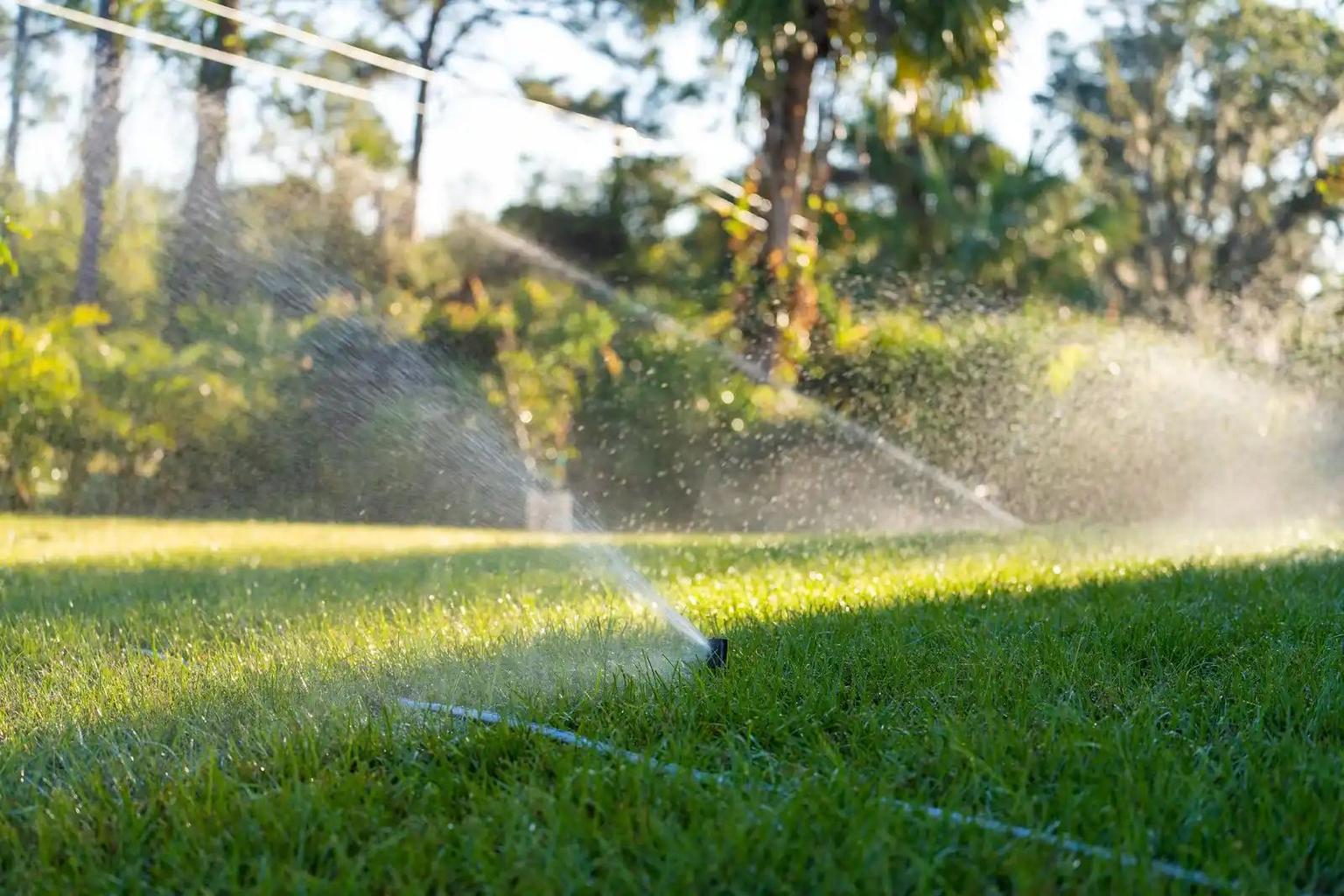
Most Louisville lawns need 1 to 1.5 inches of water per week - and in hot summer weather, some cool-season lawns may need up to 2 inches total, including rain.
If your lawn is established, your best plan is simple: water deeply, not every day. In most cases, that means 1 deep watering in spring or fall only when rain falls short, 2 to 3 deep waterings per week in summer, and no regular watering in winter once grass goes dormant. Because Louisville soil often has a lot of clay, slow soak times matter so water reaches roots instead of running off.
Here's the short version:
- Weekly target: 1.0–1.5 inches of total water
- Hot summer target for cool-season grass: sometimes closer to 2 inches
- Spring/Fall: water only if rainfall is low
- Summer: 2–3 times per week
- Winter: shut off regular irrigation
- New seed: keep the top 0.5–1 inch of soil moist with light, short watering several times a day, especially right after seeding or sod work
- New sod: water 2–3 times a day at first, then switch to longer, less frequent sessions
- Best way to set run time: use a catch-can test with straight-sided cans
- Underwatering signs: gray-blue color, curled blades, footprints that stay
- Overwatering signs: yellowing, mushrooms, soggy spots, shallow roots
Mowing height affects how much of that water actually stays in the soil — taller grass shades the ground and slows evaporation, which is one reason regular mowing height matters alongside the watering schedule. Watering only works as part of overall lawn care, since mowing height, fertilizing timing, and soil condition all affect how much water actually reaches the roots.
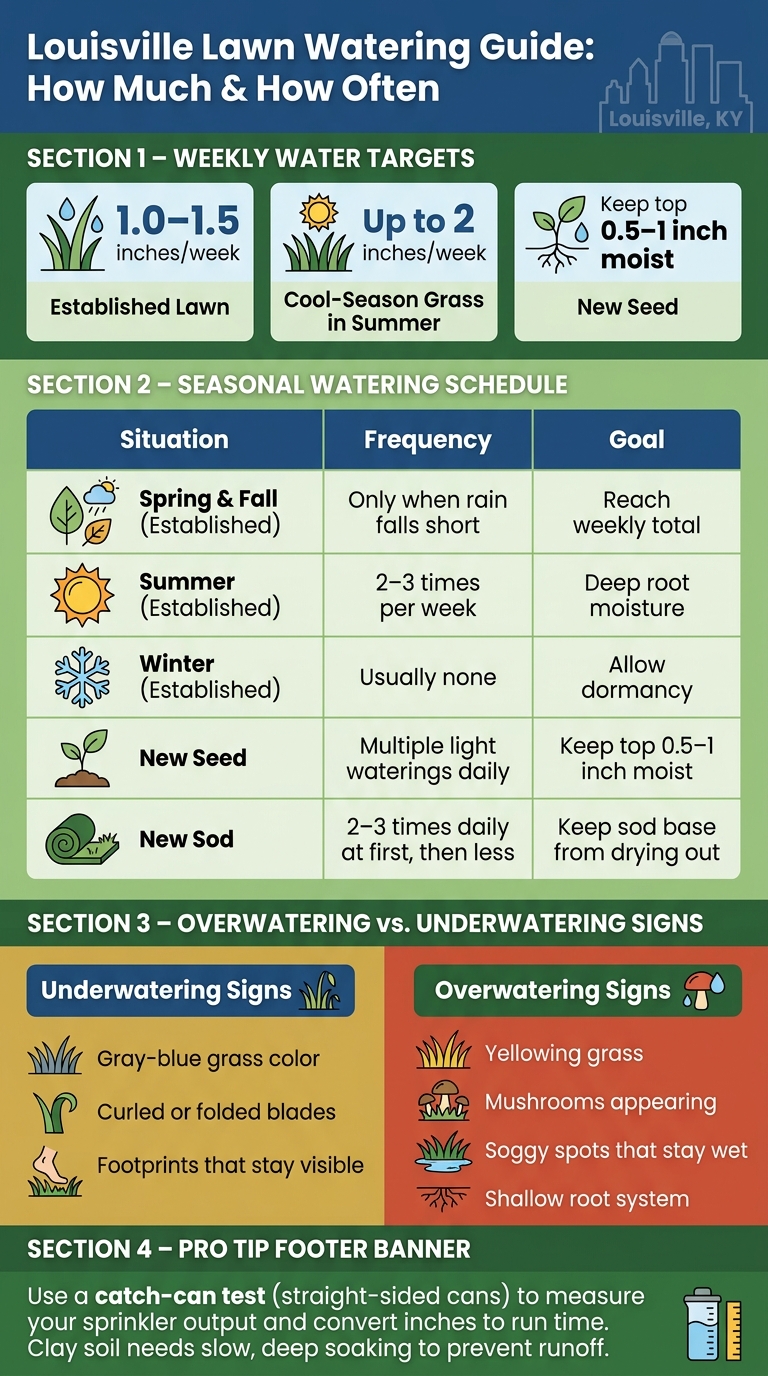
Louisville Lawn Watering Schedule by Season & Situation
How to Water Your Lawn: When, How Often & How Long
sbb-itb-1c58166
Quick Comparison
| Lawn situation | How often to water | Main goal |
|---|---|---|
| Established lawn in spring/fall | Only when rain is short | Reach weekly total without overwatering |
| Established lawn in summer | 2–3 times per week | Deep root moisture |
| Established lawn in winter | Usually none | Allow dormancy |
| New seed | Multiple light waterings daily | Keep top 0.5–1 inch moist |
| New sod | 2–3 times daily at first | Keep sod base from drying out |
Your lawn does not need guesswork. It needs the right weekly water total, slower soaking in clay soil, and a schedule that changes with the season.
How Much Water Louisville Grass Needs Each Week
Most established Louisville lawns need 1.0 to 1.5 inches of total water per week, including rainfall and any extra watering. Start by checking how much rain you got that week, then add only what your lawn is still missing. That simple step can save water and help you avoid overdoing it.
Most Louisville lawns are cool-season turf, which means summer watering often needs to stay near the high end of that range. Use the weekly total to set your sprinkler schedule, then adjust it when rain shows up.
Cool-Season vs. Warm-Season Grass Water Needs
Cool-season grasses like tall fescue and Kentucky bluegrass usually need more water during Louisville’s hot summer months. When the heat sets in, they may need closer to 2 inches of total water per week. That said, soil type plays a big part in how you should apply that water.
How Clay Soil Affects Watering Frequency
In Louisville, clay soil often matters more than grass type when you’re setting sprinkler timing. It does best with fewer, deeper watering sessions because it absorbs water slowly. If you water too fast, runoff can start before the soil has a chance to soak it in.
The better move is to apply water slowly so the clay soil can absorb it well.
Seasonal Watering Schedule for Established Louisville Lawns
For established turf in Louisville, let the season guide how often you water. Spring and fall usually need less. Summer needs more. Winter usually needs none once the lawn goes dormant.
Spring and Fall: Water Only When Rainfall Falls Short
In spring and fall, water only when rain doesn't meet the weekly total. Most weeks, one deep watering is enough. Some weeks need none at all.
If rainfall comes up short, make up the gap with one deep watering. Think of it this way: let the weather do the heavy lifting, then step in only when your lawn needs backup.
Summer: Water 2 to 3 Times Per Week for 1 to 1.5 Inches Total
Summer is different. Heat dries turf out fast, so plan for 2 to 3 deep watering sessions per week.
Your goal is 1.0 to 1.5 inches of total water per week. Split that amount across those 2 to 3 sessions, then use your sprinkler output to convert that total into run time. That way, you're not guessing. You're matching your schedule to what your system actually puts down.
Winter: Shut Off Regular Irrigation
Once lawns go dormant, established turf usually doesn't need supplemental water. At that point, shut off regular irrigation.
How Long to Run Sprinklers and Confirm the Lawn Got Enough Water
To turn weekly inches into minutes, run a catch-can test.
Use a Rain Gauge or Straight-Sided Cans to Measure Sprinkler Output
Set several straight-sided cans, like tuna cans, across one irrigation zone and run the sprinklers. This test shows how much water that zone puts down over a set period.
Then average the water depth in the cans. That average becomes the zone’s starting run time baseline.
Why does this matter? Because one zone may put down water much faster than another, even on the same yard. If you skip this step, you’re mostly guessing.
Slow, even watering matters in Louisville clay. If the system puts out water too fast, runoff can start in a hurry.
Watering New Seed, New Sod, and Lawns Showing Stress
New Seed and New Sod Need a Different Watering Schedule
Seeded and sodded areas don't follow the same watering plan as established turf.
With new seed, the job is simple: keep the top 0.5 to 1 inch of soil moist until germination happens. That usually means short, light watering multiple times a day. Not heavy soaking. Just enough to keep the surface from drying out. Once that top layer goes dry, germination can slow down.
New sod also needs frequent watering at the start, especially during the first week. The goal is to keep the sod base from drying out while it starts to knit into the soil below. After that first week, shift the pattern. Water less often, but make each session longer so moisture moves farther down.
| Turf Type | Frequency | Watering Pattern | Moisture Target |
|---|---|---|---|
| New Seed | Multiple times daily | Short, light mists | Top 0.5–1.0 inch |
| New Sod | 2–3 times per day | Moderate sessions | Sod base and topsoil |
Signs of Overwatering vs. Underwatering in Louisville Clay Soil
If your lawn already looks stressed, don't change the watering schedule blindly. Check the moisture first.
Underwatered grass usually gives pretty clear signals. The color can shift to a gray-blue tone. Blades may fold or curl inward. And if footprints stay visible long after you walk across the lawn, that's another clue the grass doesn't have enough moisture.
Overwatered grass looks different. You may see yellowing blades, mushrooms showing up, or soggy spots that seem to stay wet day after day. Over time, too much water can also lead to shallow roots. The grass has no reason to grow deeper when water is always sitting near the surface.
| Visible Sign | Likely Cause | Corrective Action |
|---|---|---|
| Gray-blue color or curled blades | Underwatering | Check soak depth; increase watering duration to ensure moisture reaches 4–6 inches deep |
| Lingering footprints | Underwatering | Check soak depth; increase watering duration |
| Yellowing grass or mushrooms | Overwatering | Stop irrigation; let the clay dry out before resuming |
| Soggy spots that stay wet | Overwatering or poor drainage | Reduce frequency; evaluate grading or drainage |
| Shallow root system | Chronic overwatering | Switch to deep, infrequent watering to encourage deeper root growth |
What This Comes Down To
Louisville's clay soil and long growing season don't leave much room for guesswork on watering. The weekly target holds steady in spring and fall at 1 to 1.5 inches, mostly covered by rain, while summer heat pushes established turf toward 2 to 3 deep waterings a week instead of daily light ones. Winter dormancy means shutting irrigation off entirely, not just scaling it back.
A catch-can test turns that weekly total into an actual sprinkler run time, so these numbers translate into minutes instead of guesses. New seed and new sod run on a different clock than established grass, and JTs Lawn and Landscaping treats seeding and sod installation as its own watering schedule for that reason.
Watering rarely works in isolation. Mowing too short shows up above as one cause of brown patches, and mowing height plays a direct role in how much of that water stays in the root zone instead of evaporating off bare soil. Fertilizer timing works the same way: get it wrong, and fertilization and weed control ends up fighting the watering schedule instead of supporting it.
Get the water right, and most other lawn problems get easier to diagnose. Lawn care in Louisville comes down to matching water, mowing height, feeding, and soil condition to the season, rather than running the same routine year-round.
FAQs
What time of day should I water my lawn in Louisville?
The best time to water your lawn in Louisville is early morning, ideally between 4:00 a.m. and 9:00 a.m.
That window gives your grass time to dry soon after sunrise, which can help cut down on fungal growth and disease. It also works in your favor because there’s less water loss from daytime heat and wind, so more moisture makes it down to the root zone.
Try to avoid watering in the evening or at night. When grass stays wet for too long, it can lead to lawn health issues.
How do I know if my sprinkler is watering unevenly?
Do a simple catch-can test. Put several empty, straight-sided containers around your lawn - tuna cans or cat food cans work well. Spread them across the full spray area, including the edges and the center.
Run the sprinklers for a set amount of time. Then measure how much water is in each container. If the amounts are far apart, your sprinkler system is watering unevenly and needs adjustment.
How deep should the soil be wet after watering?
Aim to wet the soil 6 to 8 inches deep. That pushes grass roots to grow farther down, which helps your lawn deal with Louisville’s summer heat and dry spells.
To check, stick a screwdriver or soil probe into the ground after watering and see how far the moisture has gone.
Related Blog Posts

How do I get started?

Request a quote — most companies do a free property assessment, walk you through recommended services, and can usually start within a week or two.
Do you take away the grass clippings?
Usually clippings are mulched back into the lawn, they return nutrients and are good for turf health. Bagging and removal is typically available on request or when growth is heavy.
Why does my lawn have brown patches?
Common causes include grubs or other pests, fungal disease, pet urine, drought stress, or mowing too short. Diagnosing the actual cause matters, because the treatments are completely different.
Are your products safe for kids and pets?
Most professional treatments are safe once dry, usually within a few hours of application. Your provider should tell you after each treatment how long to keep kids and pets off the lawn.
When should I fertilize my lawn?
It depends on your grass type and region, but most lawns benefit from feeding in early spring, late spring, and fall. A soil test or professional assessment tells you exactly what your lawn needs.

Book an Appointment
Reach out, we'll come look at your yard, and we'll tell you straight what it needs and what it costs. No pitch, no pressure.
We're a family business in Louisville, and most of our work comes from neighbors referring neighbors. That means you get the same crew every time and a price that won't change on you.
Grab a time that works. Let's take a look.
Request your free quote
We have received your estimate request and will be reaching out to you shortly.